Culinary Sidebar–Cambridge Inn

We wish we could include a picture of Spotswood’s Cambridge Inn, but the interior was too dim and depressing to capture a photo.

How many times have we passed this place and not thought to go in?  Uncountable, and that’s not even a word.  So we figured why not give it a shot?  Alas, we may have been on to something with our initial instincts.

Like a Perkins chain locale, but with worse lighting, we sort of wanted to like the Cambridge Inn.  In fact, the food, though totally unsophisticated, was passable-Flounder Franchaise was plain but neat (don’t fall for the “vegetable risotto” side-dish claim which is really from a dehydrated box mix) and the Gardenburger was grilled and presented on a reasonably good whole-grain bun with crispy condiments.  But service was slow, and the eating environment could beat the sunshine out of Annette Funicello.

The place has been around for ages, and there seems to be a very busy schedule of open mike nights and musical appearances at the bar, as well as dinner specials and kids-eat-free promotions in the dining section.  So we suspect someone must be coming here on a regular basis even in spite of the bleak surroundings.  For us, however, it was likely a one-time visit.

Cathedral Basilica of the Sacred Heart, Newark

A visit to one of the largest and most beautiful cathedrals in the world, nestled in one of the most lawless and crime-ridden cities in America?  Just another day in New Jersey.

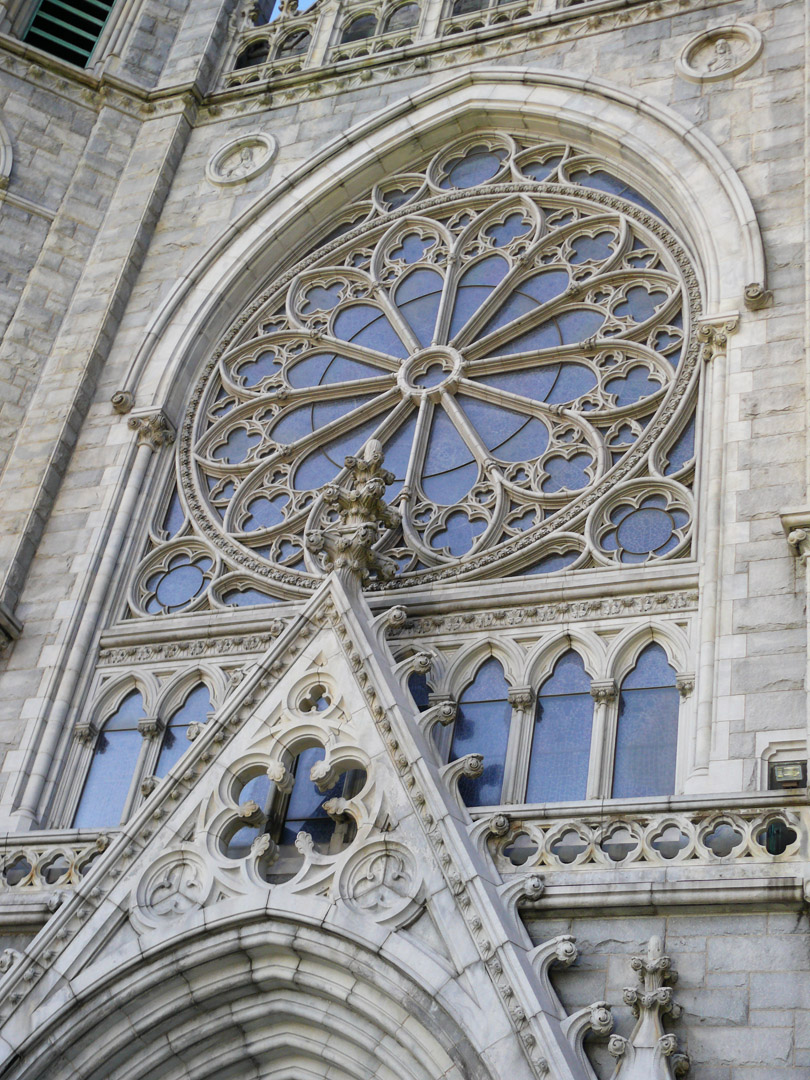
Everything about the basilica is sublime

Completed over 50+ controversy-ridden years with a final dedication in 1954, the Cathedral Basilica of the Sacred Heart is the fifth largest cathedral in North America. Seat of the Roman Catholic Archdiocese of Newark, it was designated a National Historic Site in 1976. The church remained a “lowly” cathedral until Pope John Paul II visited in 1995, at which time it was elevated to basilica status. The long history of bishops, archbishops, construction hiccups, design adjustments and historic happenings is too long to recount here, so best just to visit the Sacred Heart website for that.

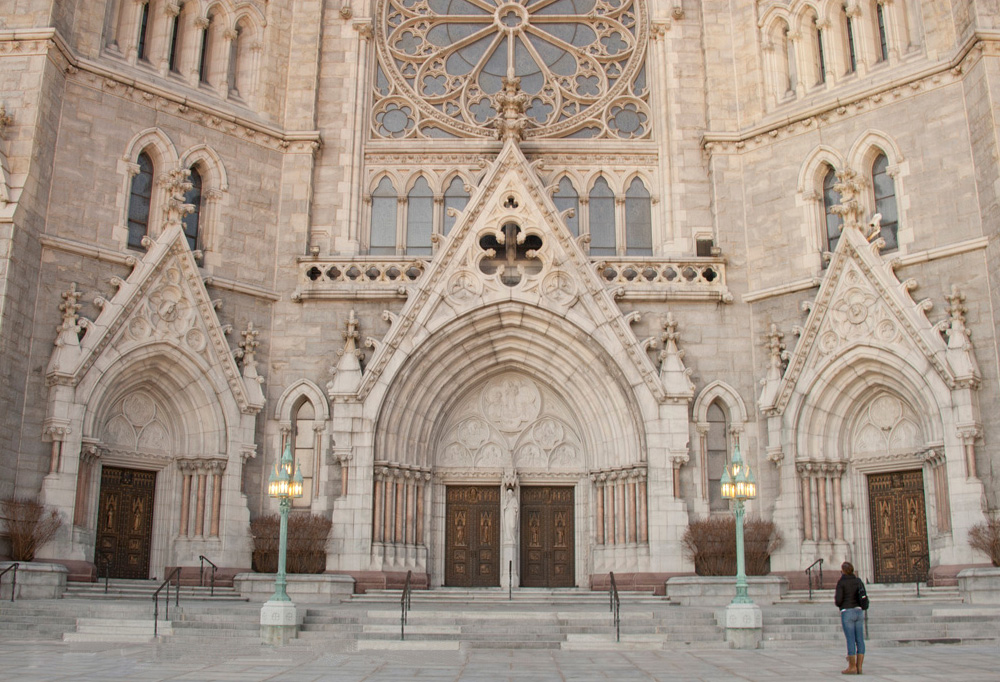
As for our experience there, well, it was just breathtaking.  Some winding through the urban decay of Newark’s North Ward led us around a corner of Ridge Street, where the massive structure rises majestically above the row homes and bodegas. The exterior and interior architecture is magnificent and imposing, with unbelievably ornate, intricate details. Absolutely awe-inspiring, as any cathedral should be.

It is almost impossible to get the entire cathedral in a photo. This one shows some scale. (thanks JB)

The basilica has a huge pipe organ and incredible stained glass windows. It hosts a robust schedule of musical events every year, including an annual Christmas Carol Sing that must be truly something to see and hear (we’ve noted this on our calendars…).  Overall, just, WOW.  Go see it for yourself!

Windows, spires and gargoyles

Culinary Sidebar–Rutt’s Hutt

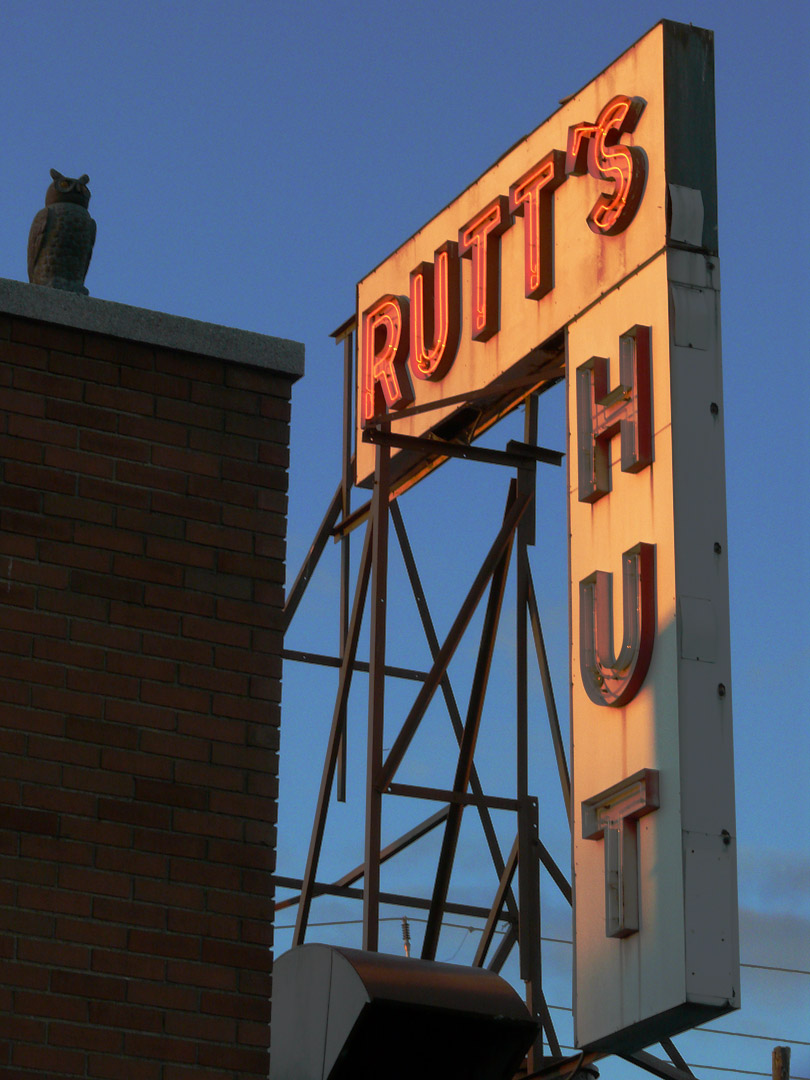
A fake owl stands guard over the sign for Rutt's

In Clifton, people have been chowing down on “rippers” (hot dogs that split down the middle during the deep frying process) since 1928, when the roadside stand called Rutt’s Hut was opened by Royal “Abe” Rutt and his wife Anna.

To enter this bastion of unhealthy foodstuffs is to travel not only to a different time, but also a different place.  It’s like a slice of backwoods 1937 Carolina bowling alley was picked up in a tornado, swirled over Lyndhurst and landed, thwump, on a patch of grass next to Route 21. The exterior is unmitigated red brick; the interior is a mish-mosh of checkered floors, unflattering lighting, weary paneling and a completely incongruent booze-bar with beaten up stools (with concomitant beaten looking patrons). The tornado apparently left nothing behind from its nostalgic origins, including the wait staff, who are bruskly efficient and totally old-skool, and a separate takeout area reminiscent of a 50s drive up diner.

We showed up off-hour on a Saturday, but there were still plenty of people–from all walks of life–face-filling on fresh-from-the-fryolator fare (try repeating that 10 times fast). Half of our group opted for classic rippers, extolling their greasy goodness and copious condiments with happy smiles.  The non-aorta-eaters among us ordered grilled cheeses, which were about as no-nonsense and white-bread forgettable as it is possible to get.

Rutt’s Hut is listed in the book 1000 Places to See in the US and Canada Before You Die.  And frankly with this menu, it might just be the last stop you make on that bucket list. That said, the unapologetically no-frills Hut is indeed an experience in itself, for world-famous hot dogs and amusingly quirky staff, clientele and surroundings.

Rutt’s Hut is located at 417 River Road in Clifton.  The website seems to be perpetually under construction and contains little more than a map.

Great Falls National Park, Paterson

We didn't find a pot of gold, but the falls are still a treasure

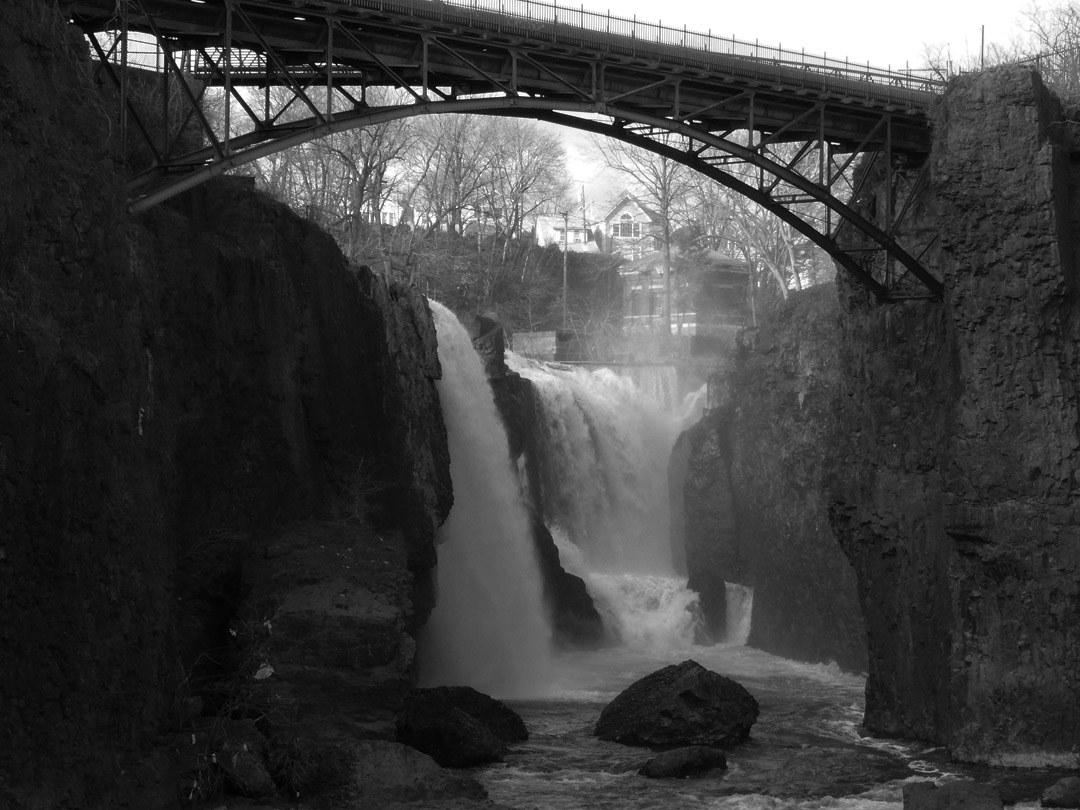
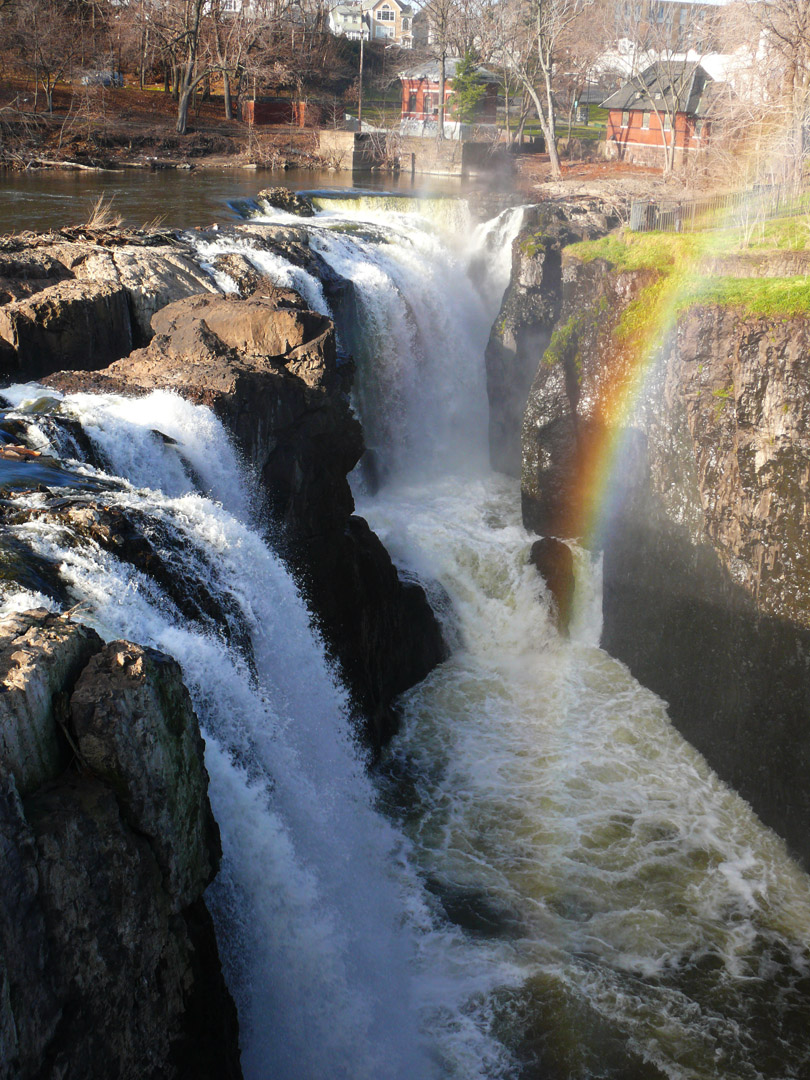
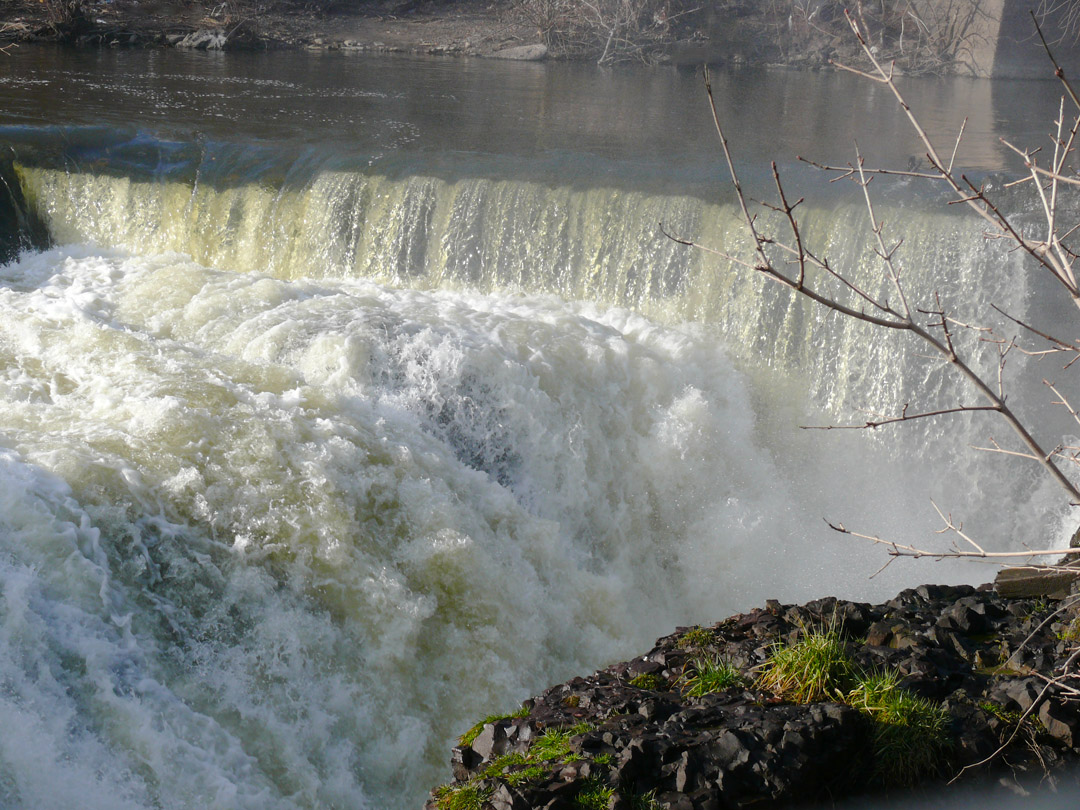
Every single day, the Passaic River sends two million gallons of water over the 77-foot summit of the Great Falls in Paterson. It is a sight to behold–the power of rushing water, the rising of rainbowed mists, the swirling and eddying of pools and flows–in the very heart of a town most associated with…the Industrial Revolution.  Who says New Jersey doesn’t know how to mix it up?

The falls were carved out of the 200-million year old basalt by some antsy glaciers about 13,000 years ago.  The Lenape Native Americans hung around for awhile, and then in 1792 the city was established when William Paterson (NJ Governor and signer of the Constitution) put his John Hancock (hehe) on the town charter.

Alex H.

Alexander Hamilton, while serving as Secretary of the Treasury under our fave prez George Washington, founded a group called the The Society for the Establishment of Useful Manufacturers (SUM).  Despite its sound, SUM was neither from a Monty Python skit nor from a low-budget espionage film.  It was, in fact, an organization to shape how to best harness the energy of Great Falls and in doing so facilitate greater economic independence from Britain. One of its chief members was the guy who designed basically the entire city of Washington DC, Peter Charles L’Enfant.

The walking path takes you up close to the falls

Through the construction of complex systems of water raceways and reservoirs, the waterfall’s power was used to fuel manufacturing mills for textiles (silk chief among them), firearms and locomotives. Paterson began to decline around the end of World War II, and though it is New Jersey’s third largest city (who would have guessed?), remains economically depressed. The Great Falls, declared a National Park in 2011, are one hope for revitalization of the area.

Adjacent to the falls: an abandoned factory

Ben makes fuzzy face at the falls

We visited on a freezing cold winter weekend, knowing little about the site except that it was once featured in a certain tv show that shall not be named. The park seems almost unreal.  You drive through the center of Paterson and at an otherwise unremarkable intersection there is a sign for the park, and almost immediately thereafter the spectacular falls come into view. Perhaps the cold kept people away that day, for the small parking lot was almost empty and the number of visitors walking around, photographing and gawking was countable on one hand.  In a word: perfect.

The falls are awesome (east of the Mississippi River, they are second only to Niagara Falls in water volume) and the footpaths and bridges allow you to get very close to the falls from various vantage points. The site is completely unexpected and unique, as only New Jersey could muster. Truly a must-see.

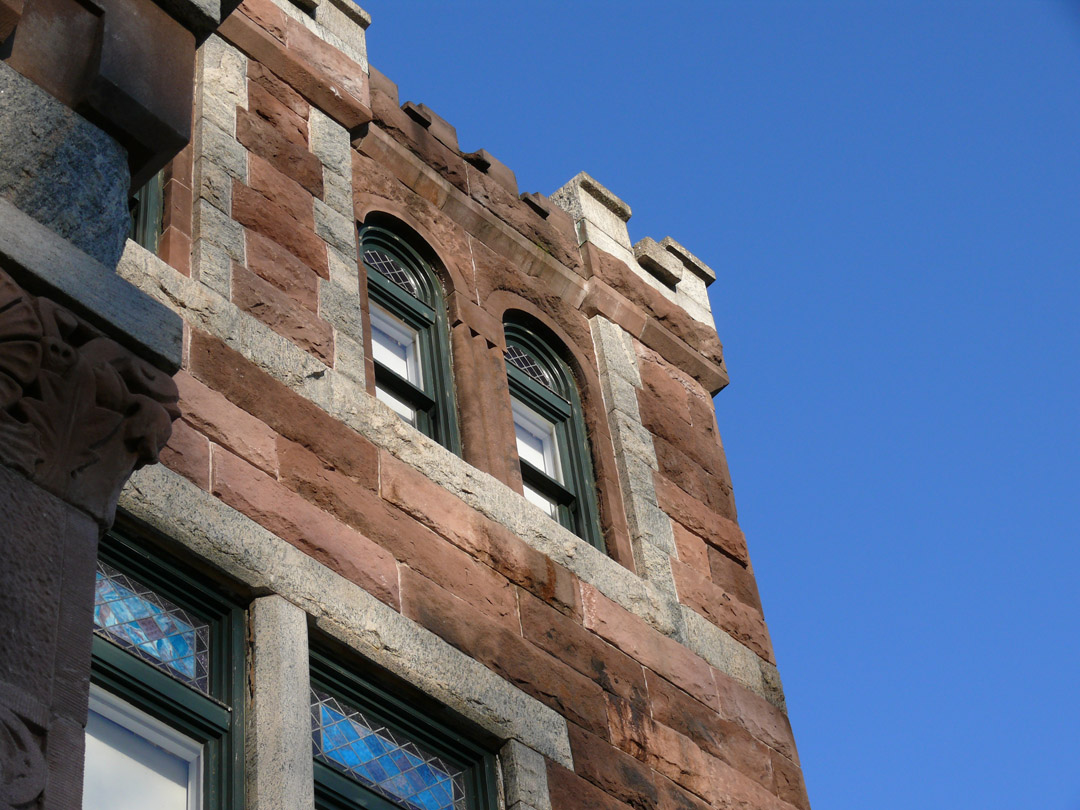
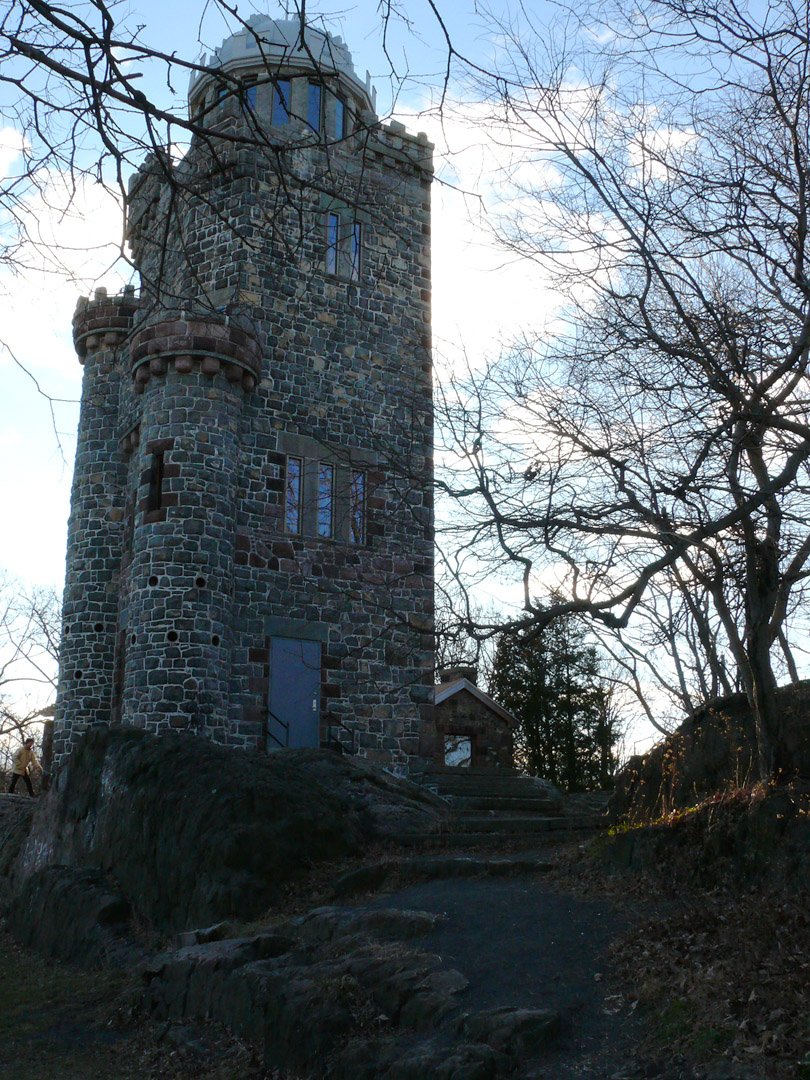
Detail of Lambert Castle

After an extended visit at Great Falls, we drove a short distance down the highway to another Paterson-area landmark: Lambert Castle. Englishman Catholina Lambert came to the US at age 17. Within a decade, he’d become successful in the silk manufacturing industry and married into a well-heeled American family. Like any good business baron, he had multiple residences in New York City, but eventually was compelled to commission the building of an estate near the mills he controlled in Paterson. His life was full of tragedy, including mysterious deaths, natural disasters and ruinous bankruptcies–you can read the full story here.

The castle is yet another incongruity in the Paterson landscape, which only adds to its colorful character. The rounded turrets, the battlements, the arched doorways and wrought iron gates (if not the police K9 training unit next door) all harken back to Lambert’s origins in Yorkshire. We were low on cash that day, so didn’t take the $10 tour, but from what we saw when warming ourselves in the entryway, the interior and art collection appeared to warrant a future visit with the necessary funding.

Observatory

The grounds surrounding Lambert Castle, known as the Garrett Mountain Reserve and Rifle Camp Park, are home to jogging trails, picnic areas, an astronomical observatory, and panoramic views of the Manhattan skyline. Perhaps it was the cold weather, but we encountered very few people at this site as well, which was…just as well.  The observatory was not open, so we walked around the grounds and took in the vista of NYC.  Then, as per usual, it was off to find food…

Part of the observatory

Culinary Sidebar–Jesse’s Cafe

A 10-minute, straight shot from Sandy Hook down Ocean Avenue will bring you to Brighton Avenue in the West End section of Long Branch, and a few corners later to Jesse’s Cafe.

Be not fooled by the simple exterior, for deliciousness lies within

We had trouble pinpointing our impression of this eatery–it is vegetarian, but also not, since it offers chicken and fish dishes among the fancified tofu, beans and tempeh. The outside looks really plain, but when you enter it is warm and homey. It is also, for lack of a better word, loose.  By loose we mean, a little rough around the edges. Works by presumably local artists were displayed on the walls, but each was hung crooked, without fail. The lighting was dim even in daylight. And the restaurant at our off-hour of arrival was manned by a single woman (Jesse perhaps, we were too shy to ask). There was a small associated lag time in the arrival of our food, but honestly it wasn’t like the ambiguous wait at a chain restaurant.  This truly felt like we were in the kitchen of a long-lost aunt, or someone else’s mom, and we could see her–alone–actually preparing our dishes in the very exposed kitchen. It left us in a state of anticipation instead of agitation.

Pianos and armoires in the dessert half of the restaurant

And the tiny wait was worthwhile, for our orders were uniformly delicious: pureed root vegetable soup; health sub with hummus and veggies; fakin-bacon/lettuce/tomato/sprouts/avocado sandwich on whole grain bread; vegan meatball sub with mozzarella, mushrooms, tomatoes and peppers. Several people came in to buy whole pies that looked divine. Our sweet endnote was a vegan chocolate chip cookie and iced pomegranate zinger tea.

The prices were average, neither a bargain nor too expensive, and Jesse only takes cash or checks, no credit.  We felt relieved to see an employee show up to help “Jesse” prior to the dinner hour. Would definitely go back again to try more of the tons of things on the menu that piqued our interest.

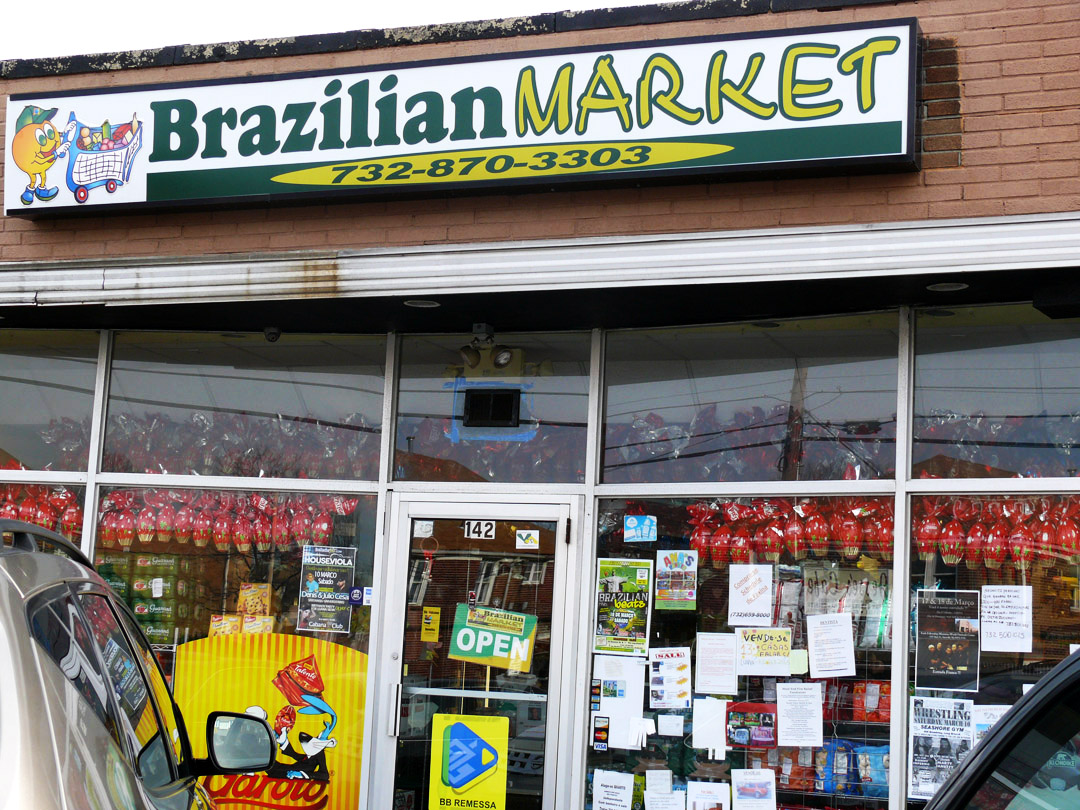
Random sidenotes:  If you are ever in the market for canned lentils, they are almost impossible to find. We were thrilled to find the Goya brand at a Brazilian market across the street from Jesse’s.

Purveyor of Guarana, farinha, smoked meats, dried fish, pao de queijo, and yes, canned lentils!

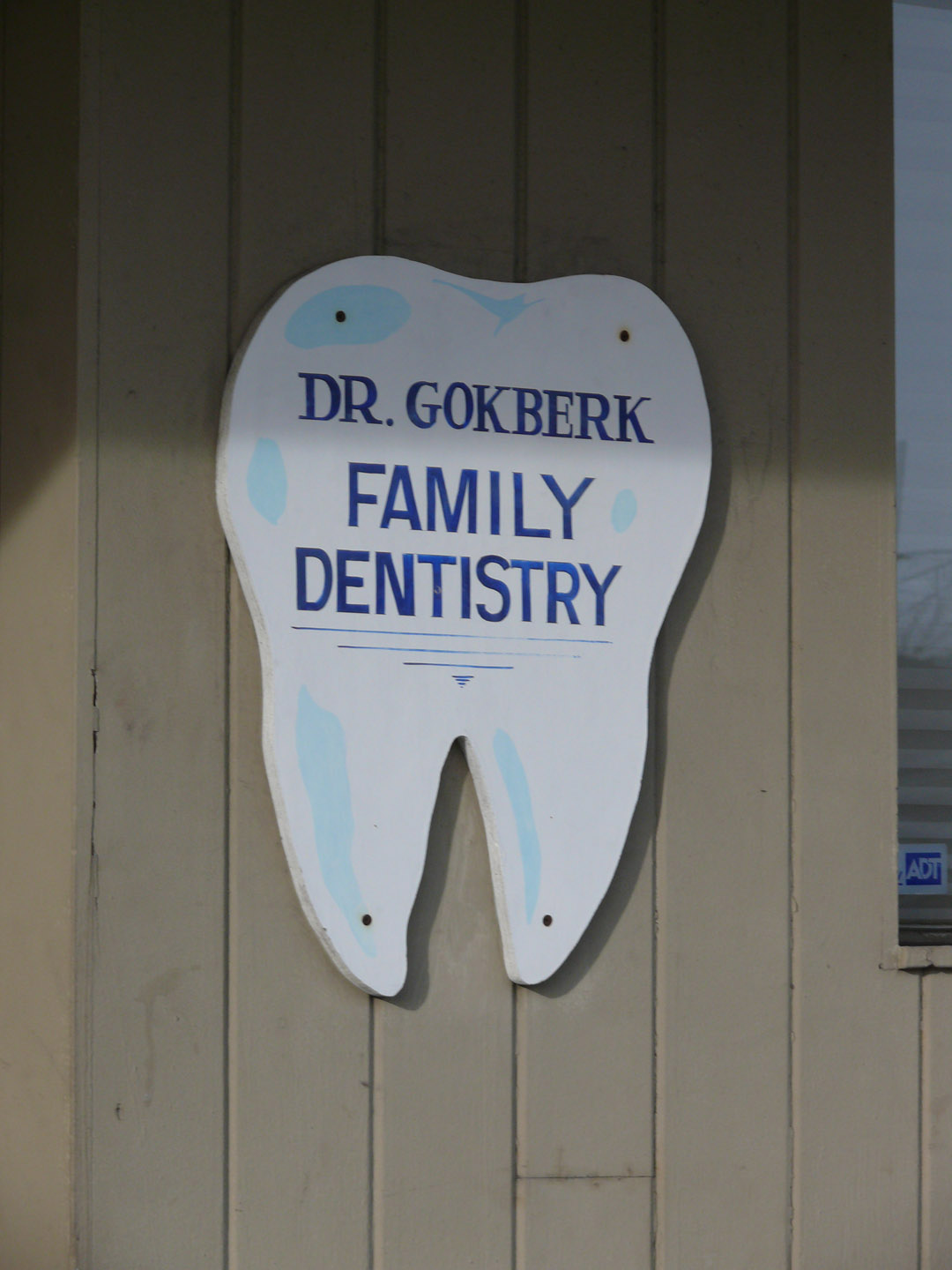
Our last image, however, will be of the sign next to our parking spot.  Not the giant spectacles of Fitzgerald’s Dr. T.J. Eckleberg, but the large tooth of Dr. Gokberk. What a name.

Paging Dr. Gokberk

Sandy Hook

The cute image on this sign was the only seal we saw during our visit

Harbor seals can be elusive critters.  We know this because despite recent confirmed sightings we could not find any during our visit to Sandy Hook.  Shy pinnipeds notwithstanding, the historic 7-mile beach park with a view of New York City had plenty to offer.

Technically known as a barrier peninsula, Sandy Hook extends along the Atlantic into New York Bay.  At its tip is Fort Hancock, a military base active from 1899 to 1974.  The fort contains many abandoned, and sadly crumbling, military houses, former mortar batteries and Nike missile sites, and other buildings currently in use by the National Park Service, oceanic studies organizations and schools.  The views are beautiful from almost every vantage point, but nowhere more so than from Sandy Hook Lighthouse.

The oldest working lighthouse in the US

The lighthouse exterior is made from crushed ship ballast

View through the trees on a sunny blue-sky day

The beacon was built by NYC stonemason Isaac Conro in 1764 with funds raised from two public lotteries; it is the oldest working lighthouse in the United States.  Standing at 103 feet high, it contains a spiral staircase of 95 steps that lead to the top.  We visited the combination office and shop next door to sign up for the free guided tour and stock up on tourist maps.  The shop was tiny, but still had some cute items–cross stitch kits, plush horseshoe crabs, relevant books and so on.  We curbed our spending and wrote our names on the register for the next climb.

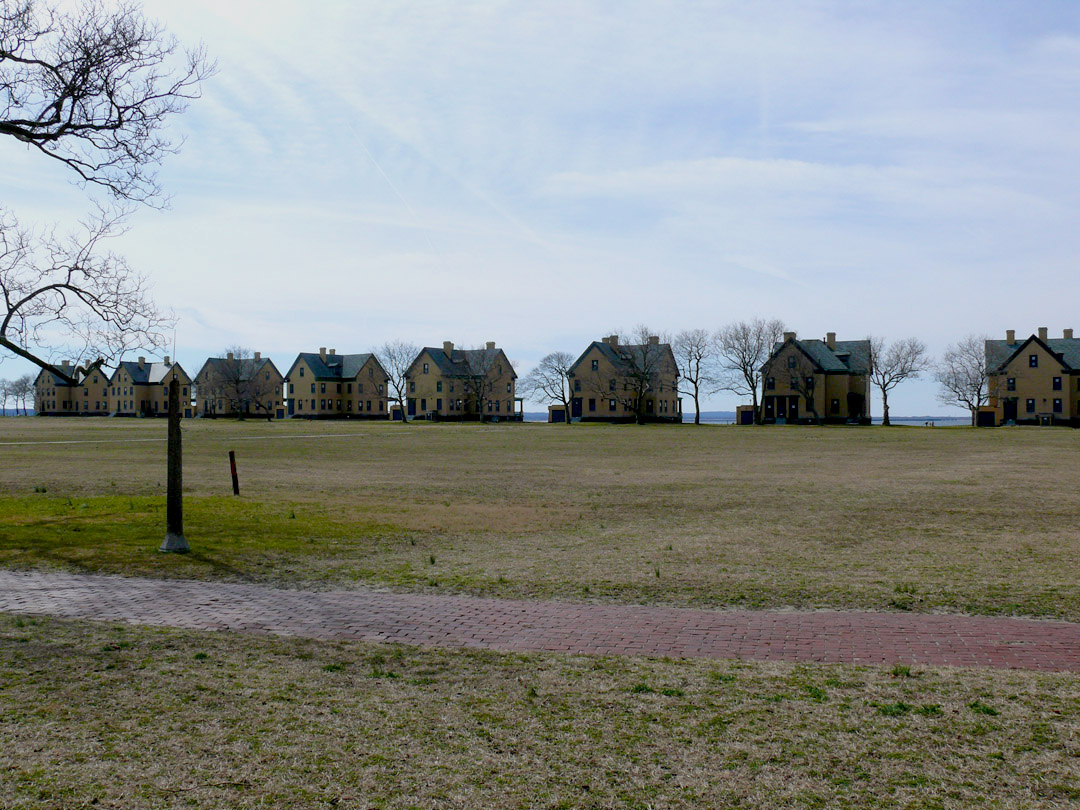
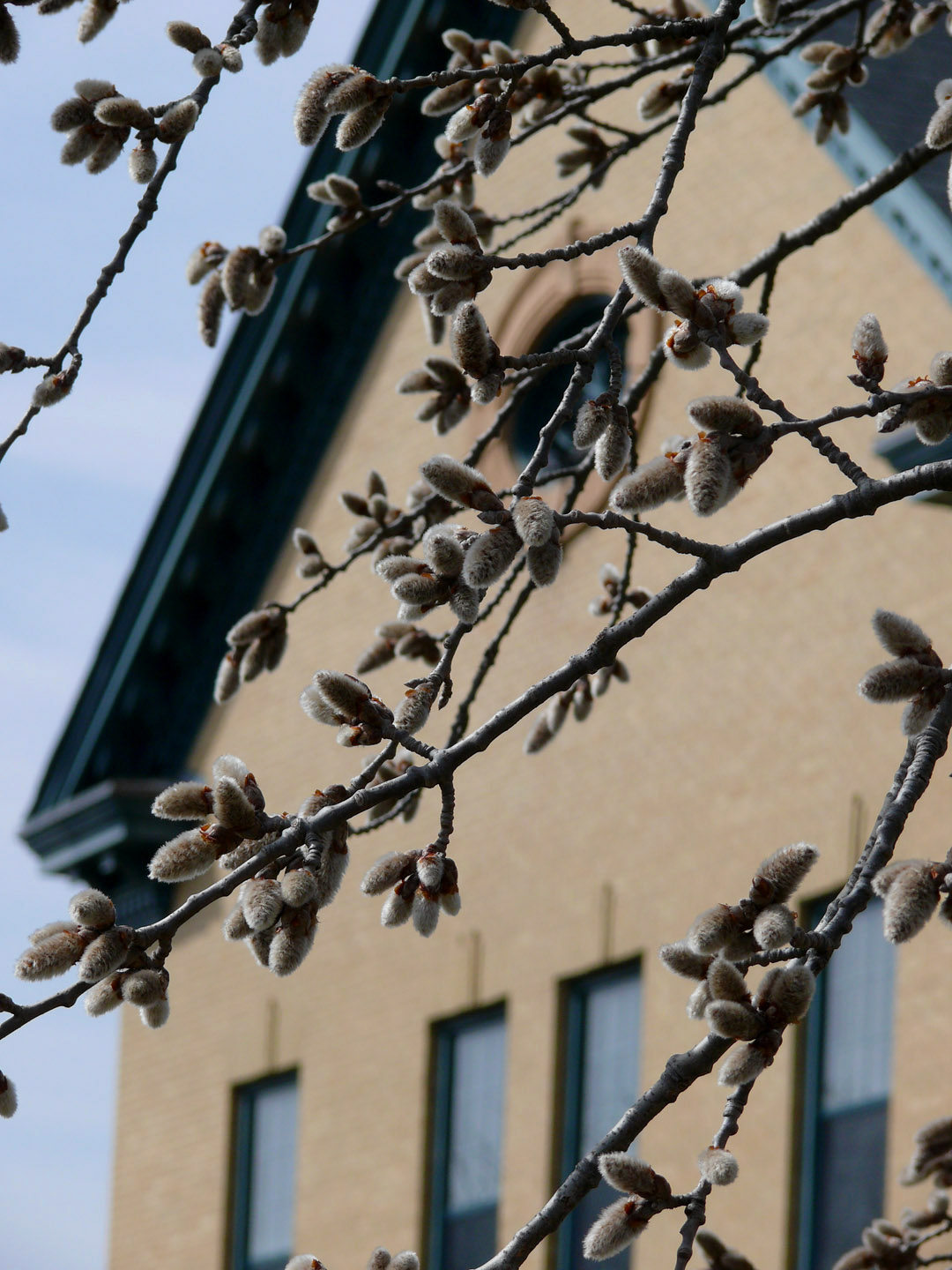
Since it was a beautiful day and we had 30 minutes to kill, we sauntered around the grounds for a bit, checking out the one of the mortar battery areas, viewing the military barracks and Officer’s Row, and taking a moment to appreciate some of the pretty trees on the grounds.

Officers' Row

Entrance to the mortar battery

Tree with fuzzy buds in front of the barracks

Disrepair makes for an interesting photo

Hitchcock-like stairs

Back at the lighthouse, we began our ascent (guide name later escaped us), taking up the rear in a group of about 10. With a red brick interior and what looked like windowed sleeping nooks, the lighthouse could double as a tony loft living space. And in fact it was (ok, maybe not so tony), for its keepers over the years, who had to fuel its lamp with whale oil and kerosene before it was automated to electricity in 1965.

Each stair is numbered on the center column

The climb isn’t so bad, with reasonably wide steps, well placed rails and handles, and two brief cardio recovery stops. Once near the top, visitors must navigate up a 10-rung ladder that posed a bit more challenge for some of our cohorts:  an older and very out of shape woman took it slow, but made it; a twenty-something Asian woman was unwittingly kicked in the face by her mother.  Both survived to see the summit.

Awaiting at the top are a bunch of gargoyles, a massive Fresnel lens that allows the always-on light to be seen 19 miles away, and a spectacular view that includes the coastline, the Verazzano Bridge, Jersey City, Long Island, Manhattan and even one of the rides at Coney Island. Interesting factoid–the lighthouse was originally built about 500 feet from the water, but since that time nature had deposited so much sediment on Sandy Hook that the lighthouse is now almost 1.5 miles inland.

Closeup of the Fresnel lens

Gargoyle atop lighthouse

Outward view: the Verazzano Bridge with unexplained smoke plumes nearby

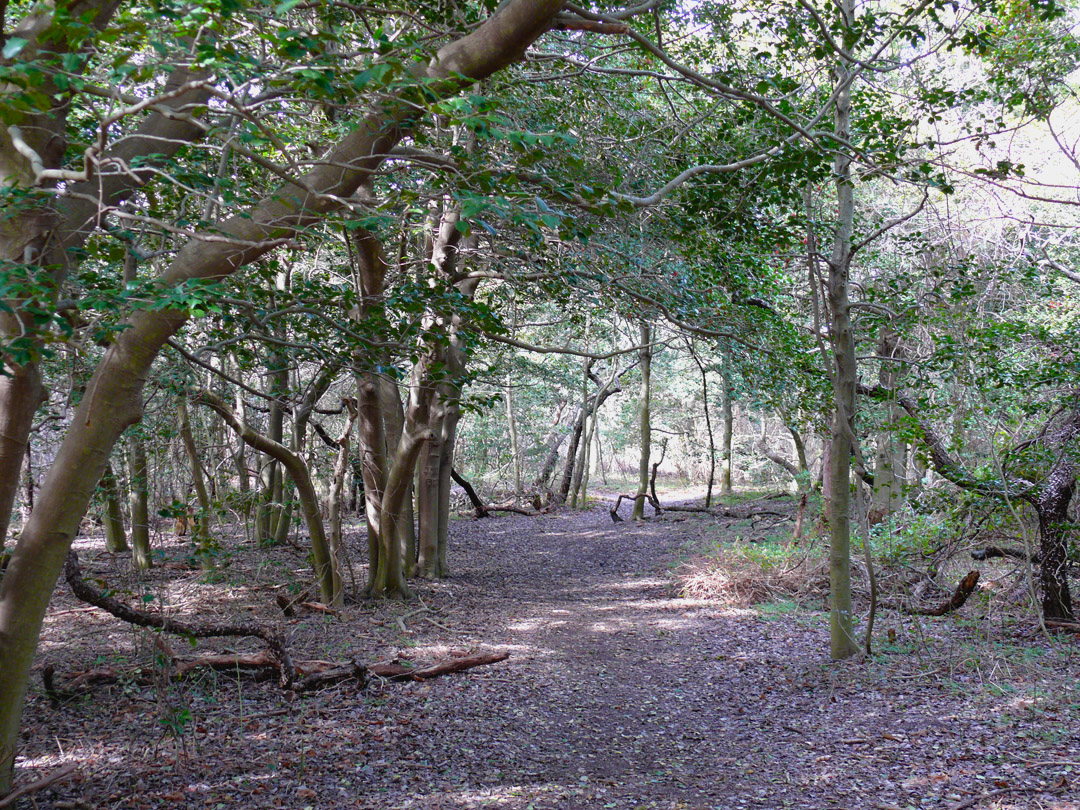
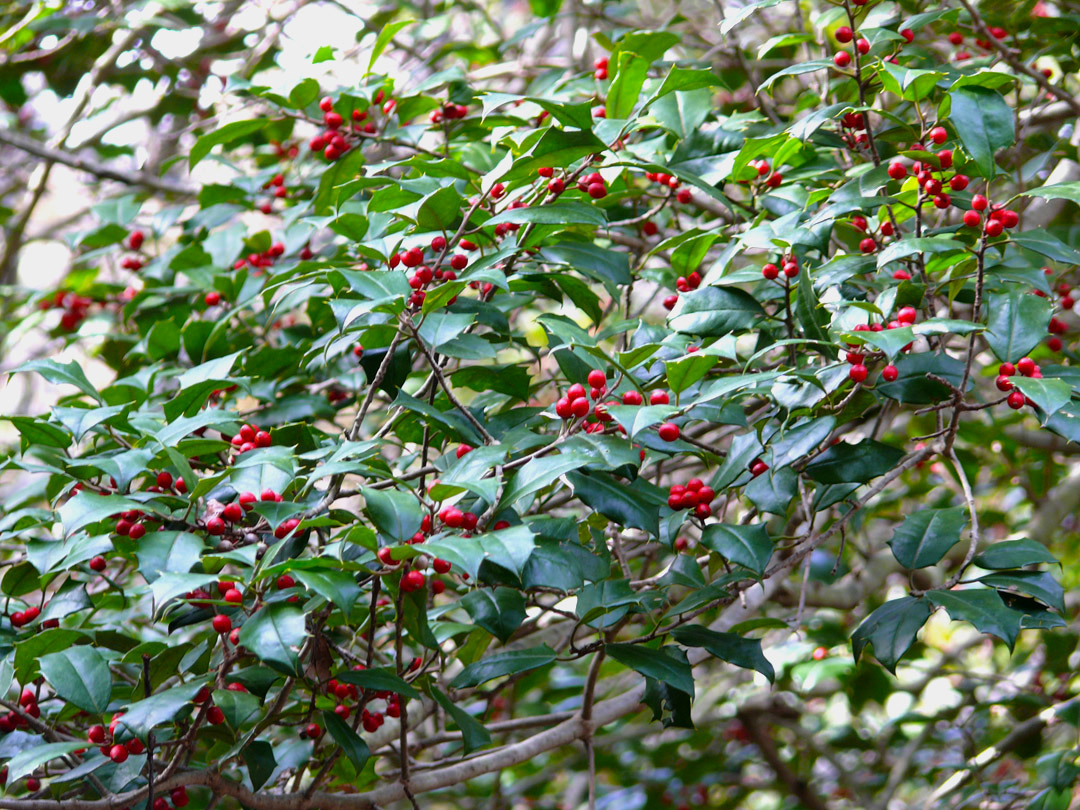
The 30-minute tour concluded without further ado. We drove out of the fort area, passing a huge old gunnery installment and making a pit-stop at a scenic observation deck (not as impressive as the lighthouse view). Back in the park proper we drove past Gunnison Beach (one of the only nude beaches on the East Coast) and to Parking Area E, which is adjacent to a forest of holly trees, some 150 years old.  It was a magical walk.

A copse of holly trees was filled with birds

Holly tree closeup

The many holes in the bark of this black cherry tree were drilled by yellow-bellied sapsuckers

We barely touched the trails, but frankly were getting hungry and couldn’t go much further without sustenance.  One more stop before chow:  Skeleton Hill Island in search of seals. We parked in area C and then walked to the bay/inlet side of the peninsula, in the shadows of the houses of Atlantic Highlands. Not a seal in sight, but we did take a short walk during which time we were squirted by an embedded mollusk and had some adventures with razor clams.

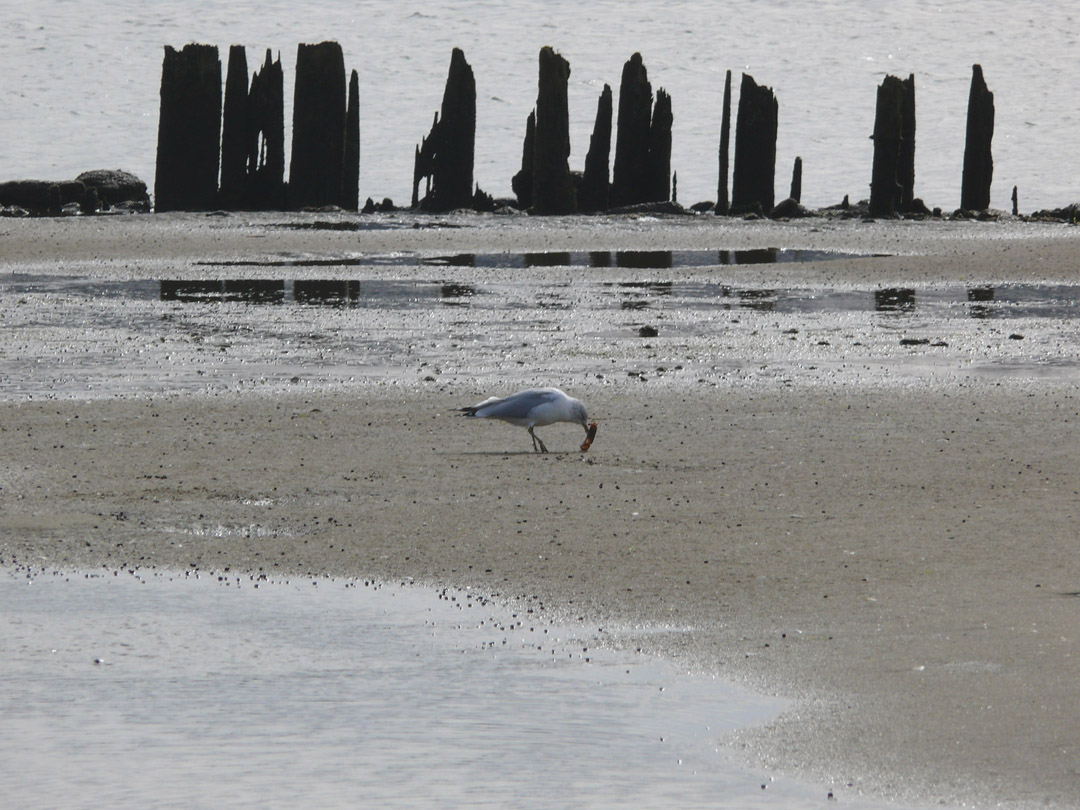
Gull eating a razor clam

Lee Press-On Razor Clam Nails

Gull in flight

Our stomachs then got the best of us, so we departed this wildlife and nature wonderland, past the Twin Lights of Navesink and onward to our lunch destination in Long Branch.

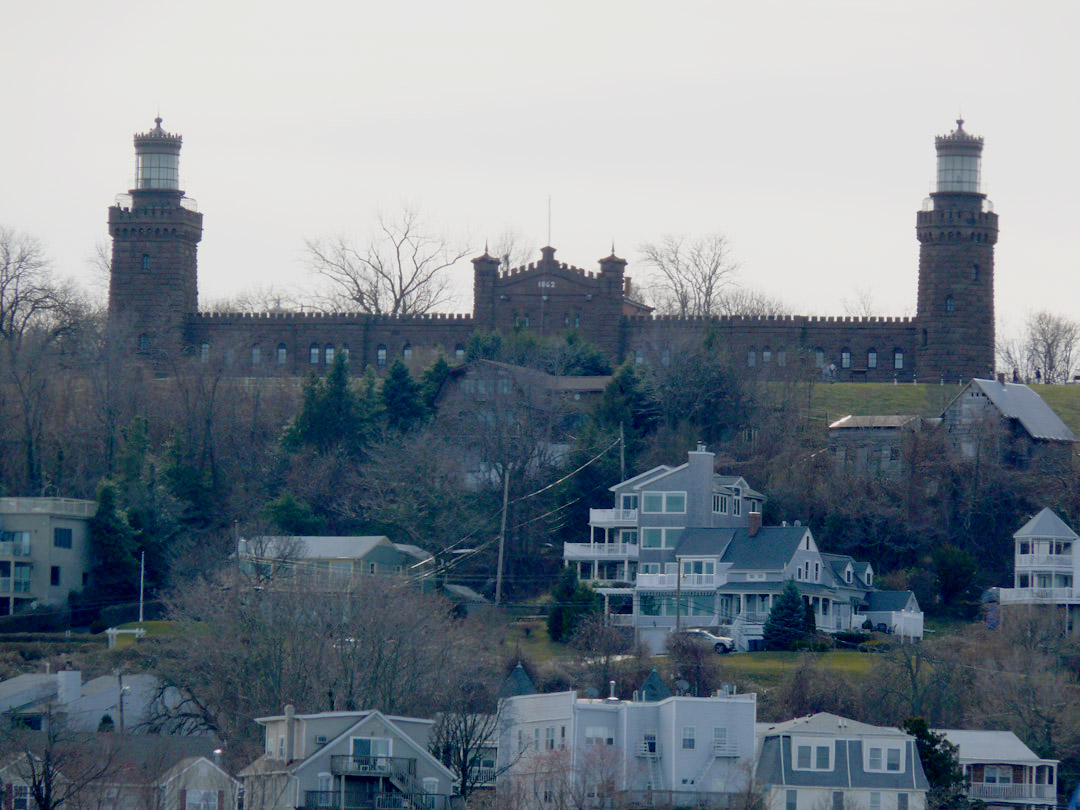
A trip for another day: the Twin Lights of Navesink

Asbury Park

Bruce Springsteen.  There, we’ve said it, and shall endeavor not to utter his name again, even though we’re now going to talk about a town inextricably associated with His Bossness.
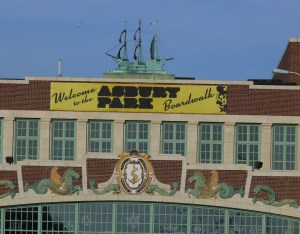
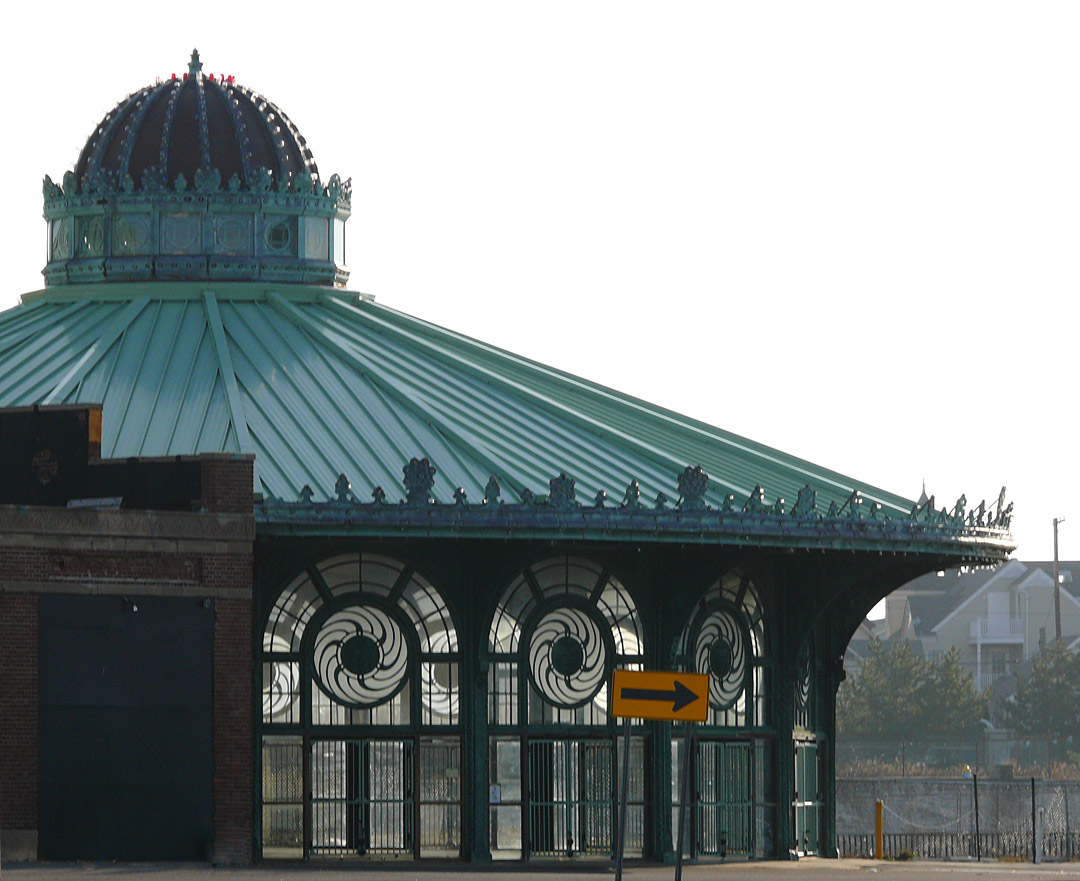
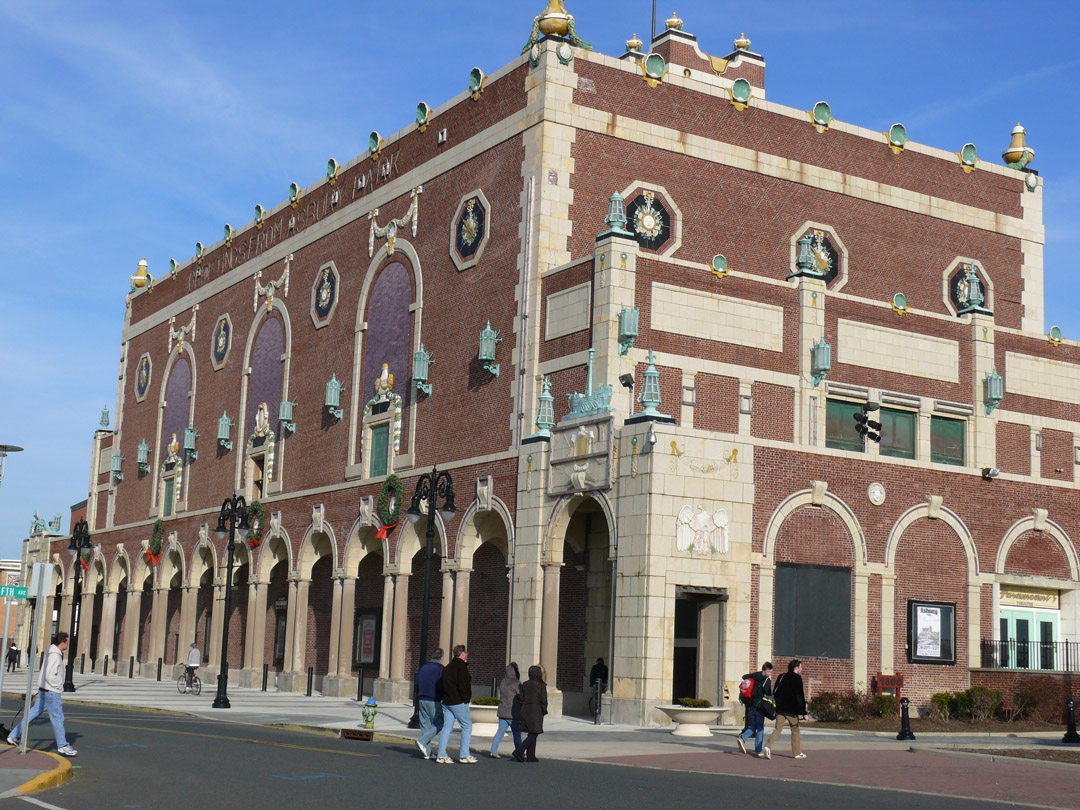
Self explanatory, with beautiful architectural details
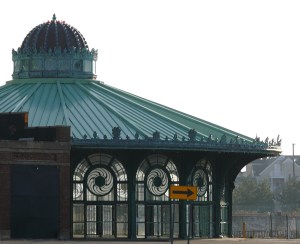
We hope they restore the carousel that once inhabited this gorgeous building

If you’ve ever wondered what it would be like to visit a post-apocalyptic beach resort, head either to Coney Island, or to the little stretch of the New Jersey coast called Asbury Park—but hurry because things are changing fast.  Asbury Park was once a thriving destination, with glittering casinos, fancy bath houses, multi-star restaurants, big name entertainment and pretty much anything else you can imagine.  During the 1960s and 1970s, it entered a period of gradual decline, with residents moving to outlying suburbs, Great Adventure stealing away tourists and the Garden State Parkway providing a direct drive to “shore points” further south. For about 30 years the town languished in poverty and desolation, but circa 2002 signs of life began to spring up everywhere.

Huge crustacean at the hip Langosta Lounge

Today it’s still a mix, but heading in the right direction.  Several waterfront cool-cat lounges have opened, Convention Hall attracts top name acts and an artsy (gentrified thanks to the presence of the gay community) downtown of restaurants, shops and the unique Paranormal Museum is thriving.  The boardwalk itself is experiencing a return to vibrancy—the casino walkway has reopened, snack bars are hopping and the beach is dotted with kite-flyers and exercisers (we visited in the dead of winter, so no sunbathers).  And of course, the Wonderbar (they hold dog-friendly “yappy hours” so are ok in our book!) keeps serving and the Stone Pony gallops on.

Plain but legendary

Some unsightly high rise condos, a hypodermic needle in the grass around the inlet, discarded pork bones on the streets (that nearly choked Ben to death), and depressed-looking outlying areas admittedly detracted from the charm. But we’re thinking positive. With some additional investment of capital, Asbury Park could easily return to its former glory, and then some.

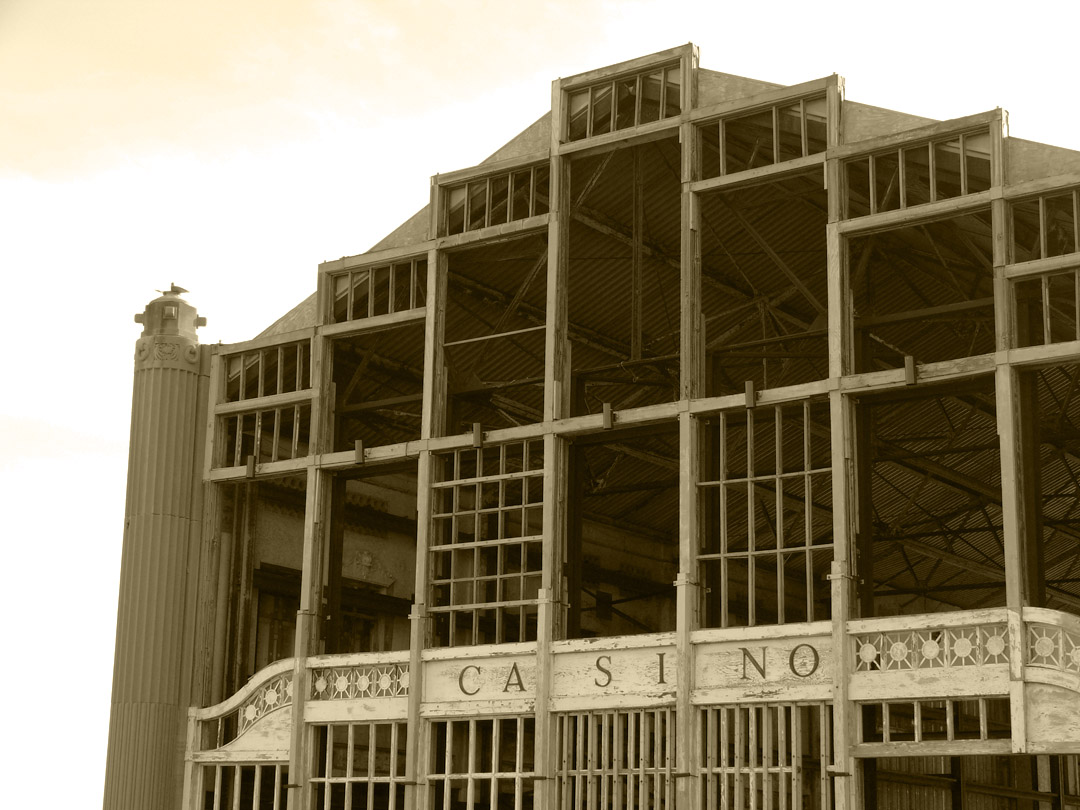
The casino was closed for many years.  It showed signs of renovation, but we’re not quite sure of its intended use or timeframe.  In the meantime, the boardwalk path through it has been reopened and temporarily decorated by local artists, leading to the neighboring town-that-time-forgot of Ocean Grove.

This photo looks antique, but actually shows the current state of the Asbury Park casino
Convention Hall has lots of good concerts we've never attended

At the other end of the wooden pathway is Convention Hall, which in contrast was busy with musicians, artists and visitors.  During our visit, a boisterous group of polar bear swimmers were celebrating, post-dunk, in the pavilion with music and food. We didn’t pay the admission, and instead explored the curiosities of the boardwalk–and there are a few.

Like him? I love him!

A statue of the Greek Orthodox “Man of Love” is the first thing we noticed.  Haven’t been able to find a whole lot of background on that one…  Just behind him we took a look at the black granite monument commemorating the SS Morro Castle disaster.  Some background: On September 8, 1934, as the ship was making its way from Havana to New York, an odd and tragic series of events were put in motion.  First, the boat’s captain, Robert Willmott, died of a heart attack right on the bridge. Six hours later, the ship burst into flames at sea off the coast of Long Beach Island, killing 130+ passengers and crew before beaching its smoldering innards on the sands of Asbury Park.
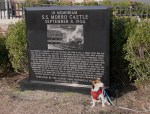
The ship manifests of the Morro Castle did not contain any reports of Jack Russells aboard

Chaos reigned during the disaster–disorganization, poor training, thick smoke and a storm with gale force winds exacerbated the emergency. Life boats with a combined capacity of 350 passengers were deployed, but they evacuated only 85 people.  Many of the ship’s passengers perished jumping overboard, either due to the tempestuous ocean waves or from improper use of life preservers; bodies washed up from Point Pleasant to Spring Lake. Still, rescue operations (including a plane piloted by the Harry Moore, Governor of New Jersey at the time) saved hundreds, and some even swam to shore unaided. Eventually the smoke cleared and a year or so later the wreckage was towed away and scrapped. RIP to the unfortunate souls lost on the Morro Castle.

Onward to less depressing sights:
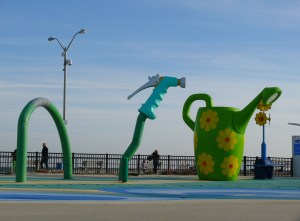
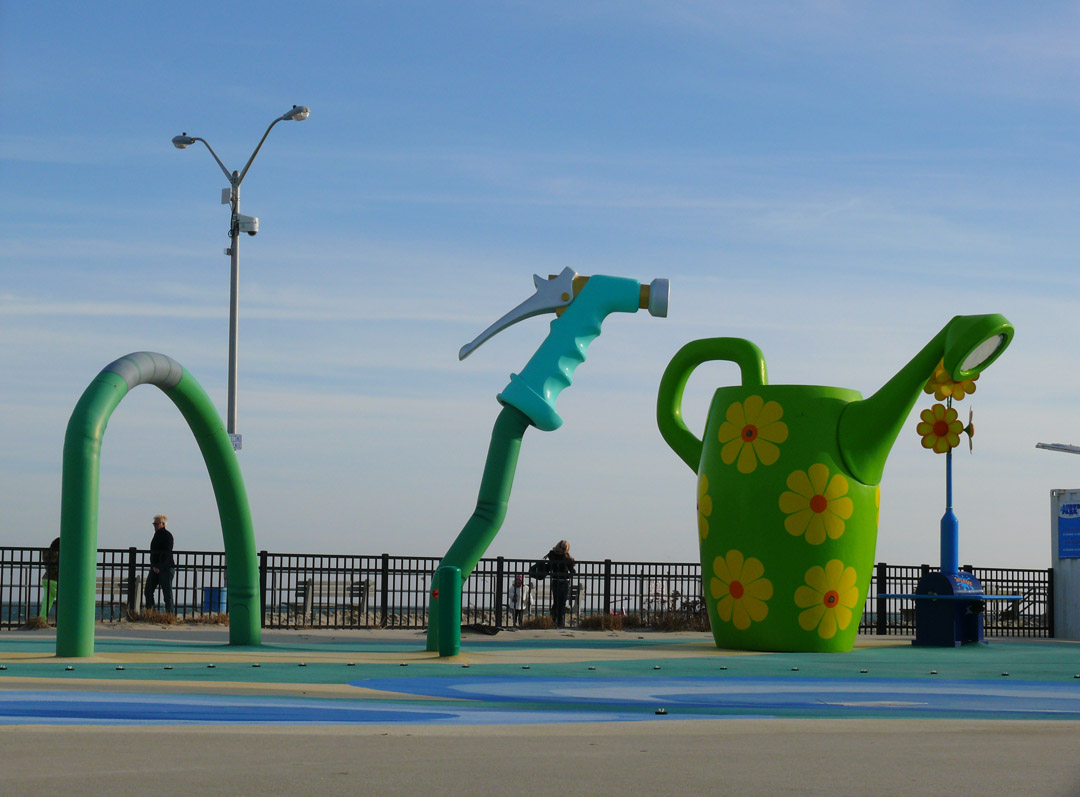
Giant garden implements
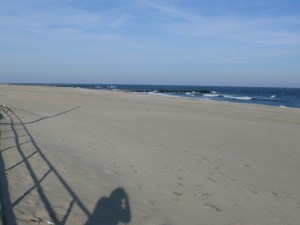
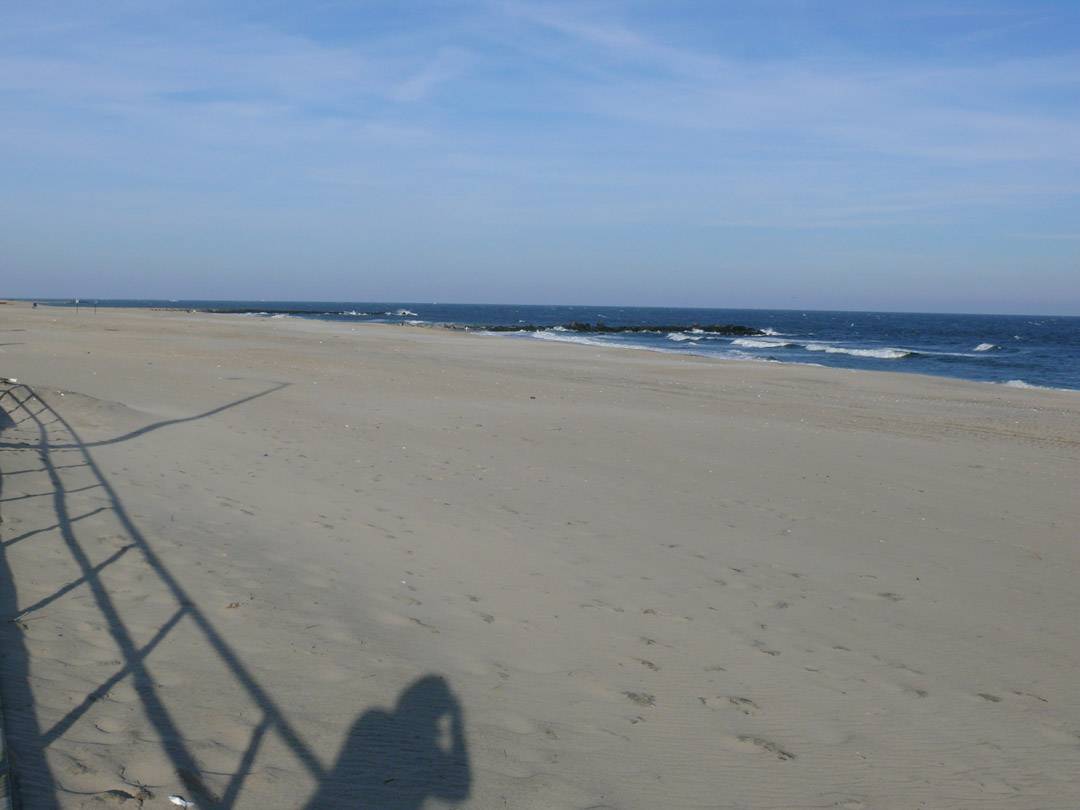
A pristine stretch of beach
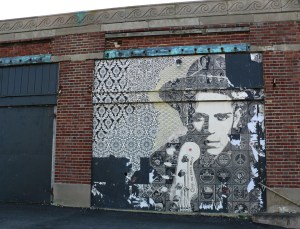
Graffiti-art from world-famous graphic designer Shepard Fairey

Then we went downtown.  The revitalized area had some nice shops and restaurants that we ran out of time to sample.  One store had many kischy treasures, including Two Guys t-shirts (for those who are old enough to remember) and these incredible cereal-themed clocks:

Choculantastic!
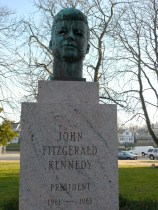
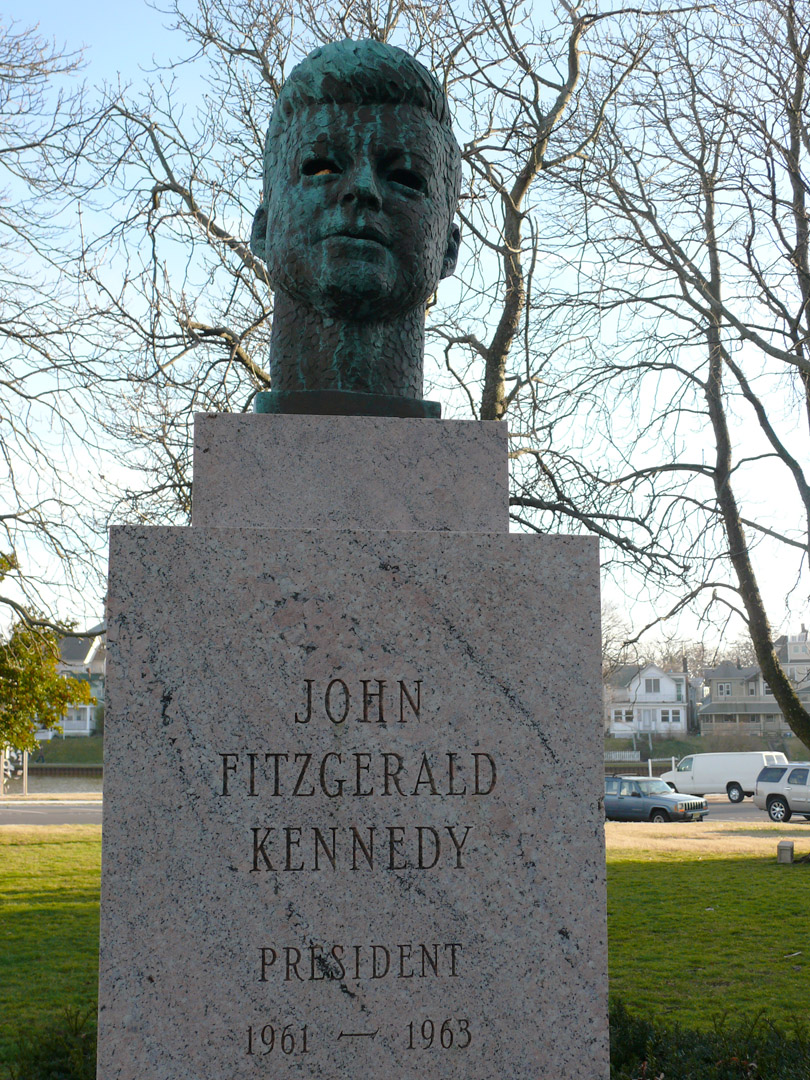
He'd be better off as a jelly donut

We’d heard of a fantastically bad statue of The Rock Star Who Shall Remain Nameless that had been put up in Kennedy Park and investigated toward the end of our trip.  We found the park, but the BS bust was a bust. Instead, the only statue we could locate was this bizarre, scaly and eyeless head of John F. Kennedy.

Just around the corner is yet another strange site: a telephone pole graveyard (or forest, depending on how optimistic you are).  We had read about the Great Telephone Pole Farm of Chester (a future road trip, no doubt), but never heard even a murmur about this humble triangle of former trees. They are a little shorter than Chester’s collection, but no less odd.  Look for them on Cookman Avenue at Kingsley Street.
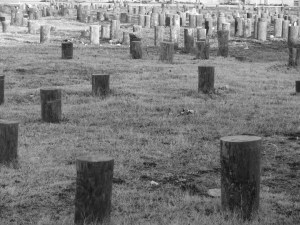
We think it is a graveyard

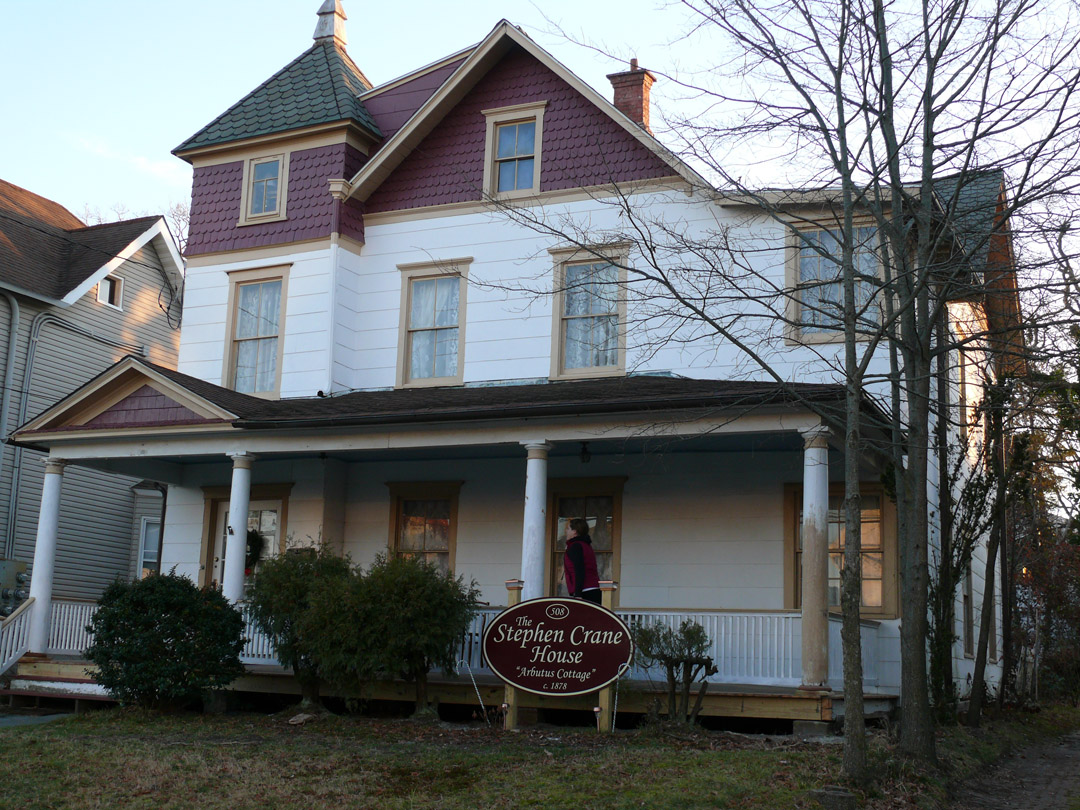
Solidifying our impression of Asbury Park as a truly eclectic place, our last stop was at the Fourth Avenue home of Stephen Crane, author of the Civil War classic, The Red Badge of Courage.  Crane was a New Jerseyan through and through.  He was born in Newark in 1871, and moved to Asbury Park at the age of twelve. Though he began writing while in AP, he didn’t pen his most famous novel until he got to New York City. Doesn’t it always seem to happen that way?  Poor Stephen wasn’t long for this world:  he succumbed to tuberculosis at 28 years old while living in England. The house changed hands a few times after 1899, and was turned into a museum in 1995.  It wasn’t open when we visited, so we just took a photo of the exterior.
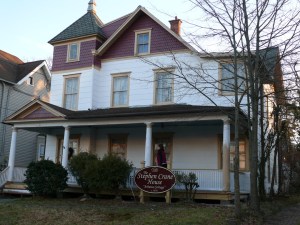
You could be awarded a badge of courage for risking a visit to the neighborhood of Crane's house/museum, which is a little iffy