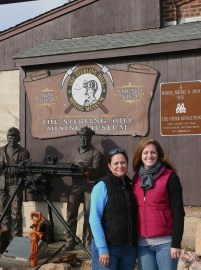
Outside the mine offices
Despite a late start we made perfect time to the Sterling Hill Mining Museum in Ogdensburg, located about midway between Route 80 and the New York State border.
A little background: This zinc mine was operational from 1913 until 1986, when low zinc prices at market combined with a township back-taxes dispute forced The New Jersey Zinc Company to forfeit the property back to the Borough of Ogdensburg. In 1989 it the site was purchased at public auction by brothers Robert and Richard Hauck, who opened the site as a museum in 1990 despite it still containing 10 years worth of zinc ore; it is now run by a dedicated group of employees and volunteers.
It’s a bit of a rag-tag entrance, with what look like giant carriage wheels painted different colors, a seemingly incongruous astronomical observatory, and random piles of rubble greeting your arrival. The drive leads you past the main mine shaft and underneath the ore conveyor to an unassuming group of buildings, mine entrances, heavy equipment, mining statues and fenced areas for fossil digging.
We pulled into the little parking lot and like all good tourists immediately made a bee-line for the restrooms and snack bar, which charmingly offered a “traditional miner’s lunch” of Cornish meat pies and multi-hued rock candy in addition to a variety of chips, candy and incredibly tiny, limp, pizzas. (In fairness, the Sterling Hill website itself readily admits that the snack bar is for “the hungry and desperate.”) We opted for the safety of bagged trail mix, candy and mini versions of the Linden’s chocolate chip cookies we’d grown up on in elementary school…mmm…and noted that the bare-bones facility was humming with activity.

A crooked donkey toiling in the mines
Next we perused the gift shop, which was nicely stocked with all sorts of ore samples, rock-based statuettes, books, mineral collecting supplies, high-quality black lights and the curious piece of decor pictured left. We purchased only tickets—$10 a pop—and headed outside.
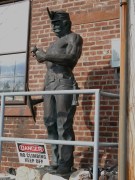
Nature’s steroids
Next to a pile of good-sized rocks with beautiful striations and crystal formations ($4 a pound, tempting for the garden, but we resisted) we met this eye-popping miner statue.
Honestly, who needed steroids when you worked 10 hour days, 6 days a week smashing through Earth’s crust? Oh and hey, real men are kind to canaries too!
Our guide (for the moment) then directed all 58 or so of us past random two-legged horse statues into the Zobel Exhibit Hall, where we got an introduction to the mine’s history and some background on zinc and the other minerals found onsite. It was very interesting despite the several young children on the tour complaining of being cold and making general annoyances of themselves.
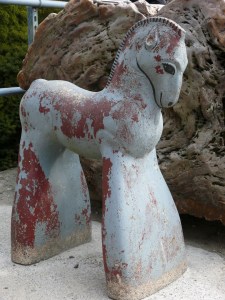
Two legged horse

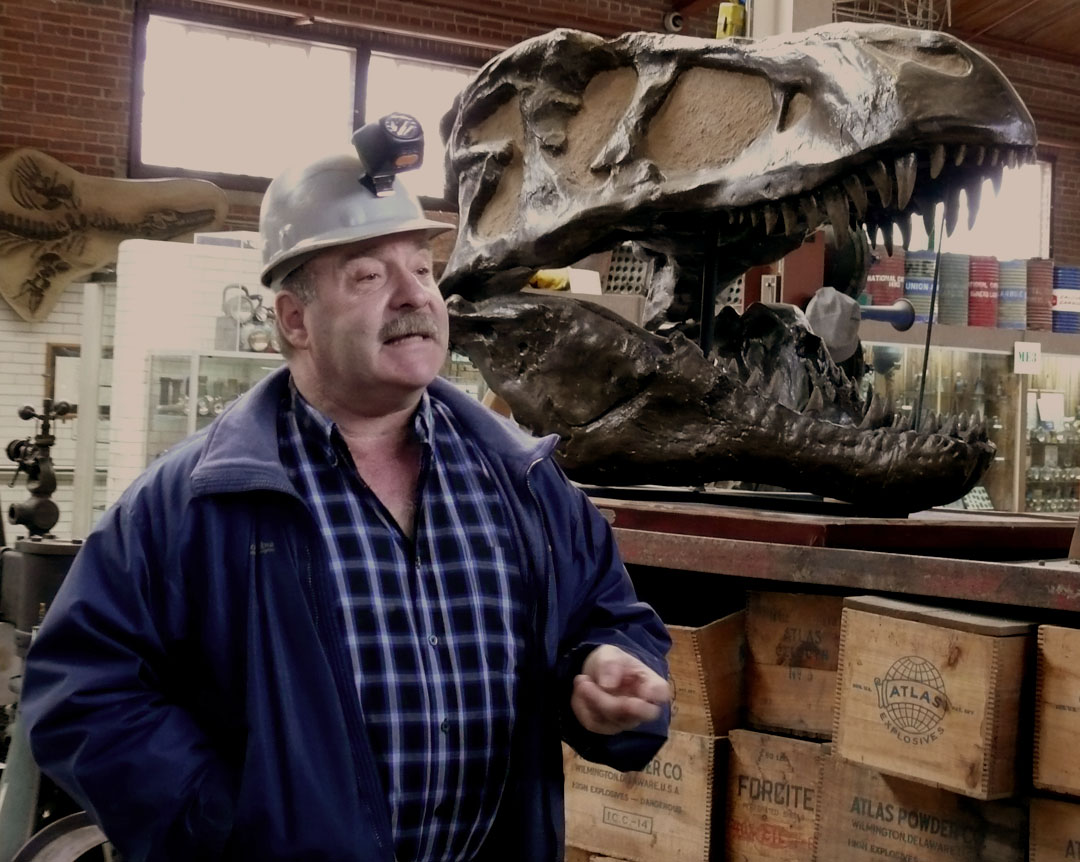
Our first guide, with dino-pal

Kaboom!
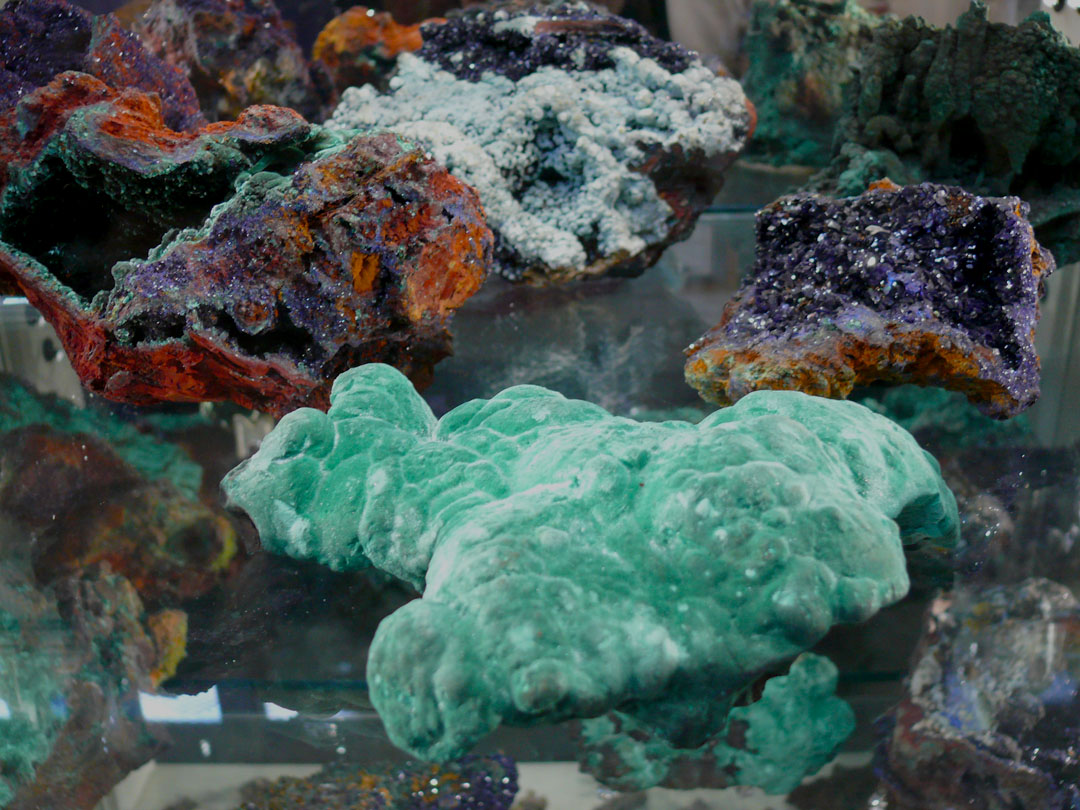
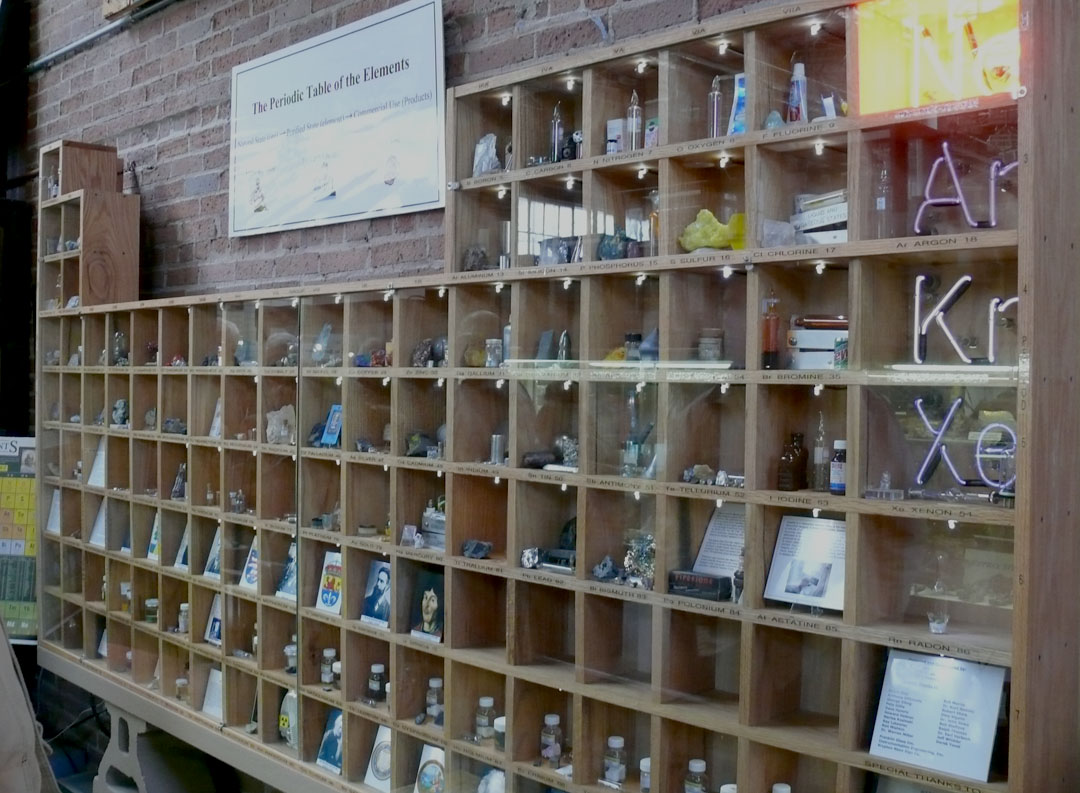
Apparently, the many boxes of now-empty blasting explosives were not enough to stop the Exhibit Hall from being robbed of a significant purse of gold a few years back. It nonetheless remains packed with riches, including an exotic collection of mineral specimens donated by guy who owns the Oreck vacuum cleaner company (of all people), and one of the world’s most impressive Periodic Table of Elements. Thankfully, no reports so far of thieves targeting the Table’s samples of Uranium and Plutonium.
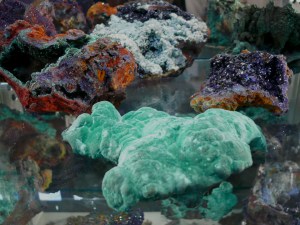
Sampling of Oreck’s minerals

Periodic table of elements

Oopsie!
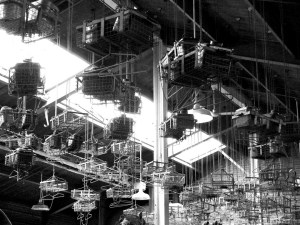
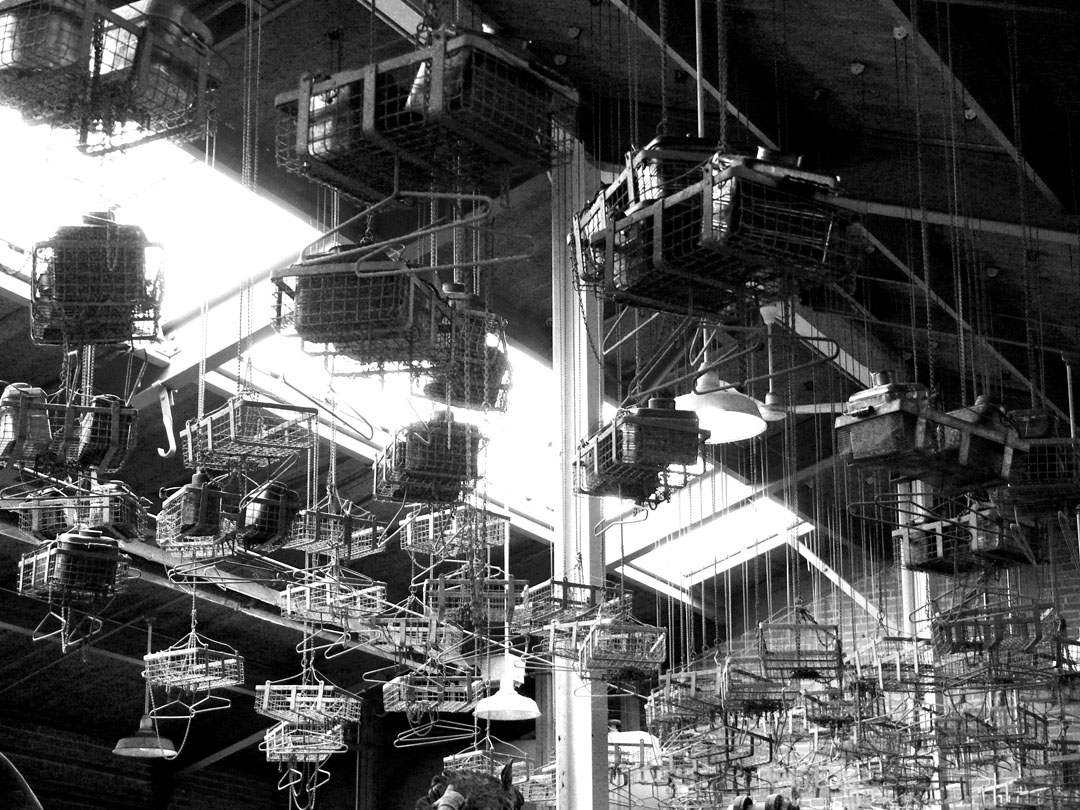
Laundry baskets
The Exhibit Hall is festooned with innumerable cage-like contraptions hanging on chains from the ceiling—not traps for underground blue claw crab-dwellers, as would be a natural supposition by any SyFy watcher worth their salt—but rather a way for miners to send their clothing to the surface for laundering by other people. Every teenager’s (ok, and adult’s) dream!
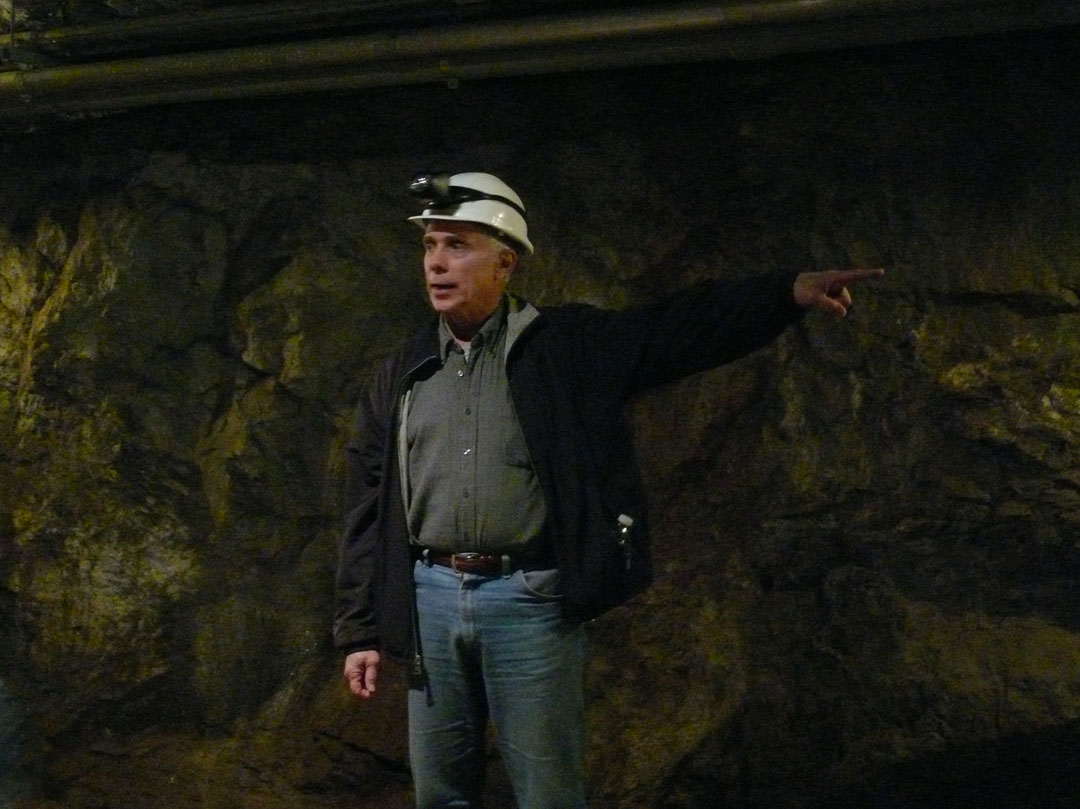
We broke into two groups and headed for the mine proper with our new and sassy guide, Gordon, a consultant engineer at the nearby Picatinny Arsenal, a military research and manufacturing facility specializing in small arms cartridge ammunition and home of the US Army’s Explosive Ordnance Disposal Technology Directorate. Mines, arsenals, buff statues…surely Sylvester Stallone has filmed a movie here? According to Gordon, no, only Ben Stiller, who set a scene in one of the mine’s rooms for Zoolander…

Gordon, our trusty guide
As soon as the steel door clanged shut, we couldn’t help but feel a tiny urge to…claw our hands raw, Edgar Allan Poe-style, digging back out into the fresh air and sunlight. But the pang quickly passed and we moved onward, into the 1300 feet of dank, dripping tunnels. We passed a lot of things that we can’t remember the names of now…but all decidedly fascinating: Stalactites that look eerily like teeth, water-filled shafts, mineral drips on the walls, bucket-of-lime toilets, arm-shearing transport systems, and a “mock” detonation demonstration of precisely 9 explosions performed in the nerve-wracking dark (Gordon has a sick sense of humor). And we learned: about light-up hats from candles to LED, the infamous tag system for monitoring staff whereabouts, gas leaks and black lung and respirators, technological advances in drill bits, mine flooding and much more. (Well, we did stump Gordon with one question about harvesting core samples…but we shall overlook it in deference to his charm.)
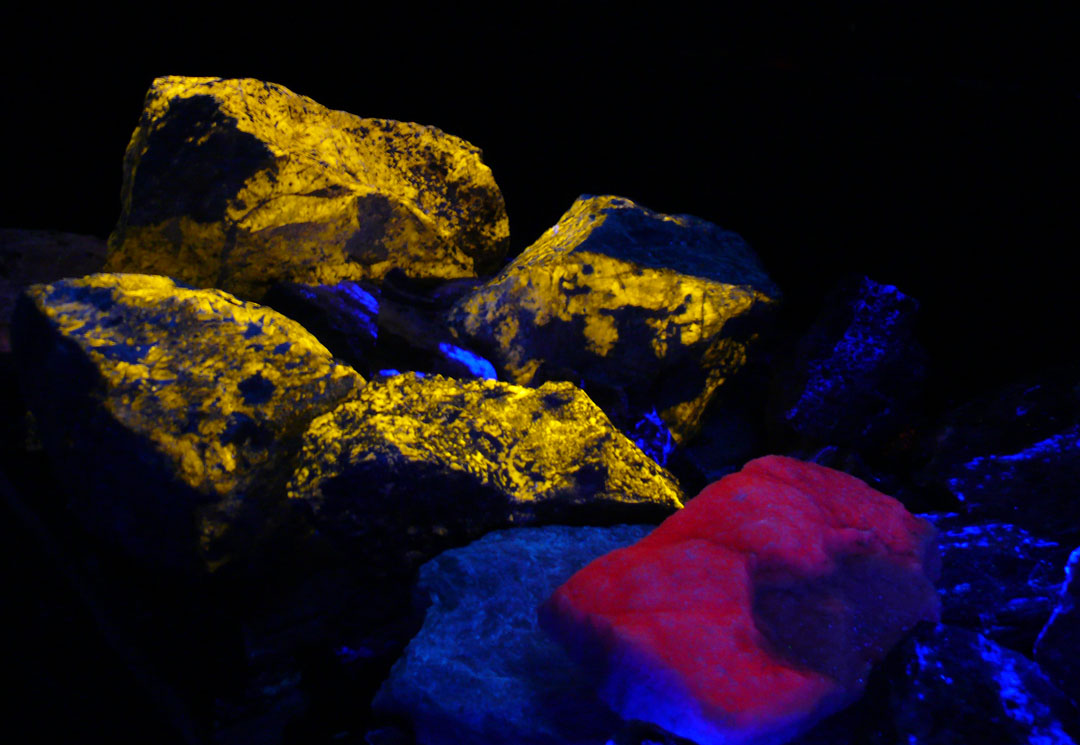
The mine’s Rainbow Room is a far cry from, and frankly an improvement over, New York’s now-defunct opulent restaurant-lounge (okay, it is now called Top of the Rock and still has fairly cool views too…). Its carved-out walls are inlaid with veins of fluorescent red and green zinc and willemite, which flared into spectacular view at the switch of the black light. To boot, everyone got their own little glowing chunk to take home, which made us all feel like happy schoolchildren despite some of us having graduated <unintelligible> years ago.

Fluorescence!
The Rainbow Room is just a precursor to the highlight around the dank, dripping corner: The Thomas S. Warren Museum of Fluorescence. Few things are as cool as this grouping of four rooms. The seemingly unremarkable collection turns into a prehistoric rave of phosphorescent color, shape and texture under black light. In addition to the minerals, there are a bunch of fluorescent household items (think wine glasses and cookie tins) on display, and also a black-lit mirror that horrifyingly revealed our mottled purple skin, straw-like hair, ping-pong ball eyes, lime green teeth and lint-covered hoodies. Fluorescent Funhouse, anyone?

Load of fuzzy cuteness!
A short jog through the Geotechnology Center, where we correctly identified a meteor and Earth-based rock to Gordon’s glee, and the tour was over. We took a moment to force Ben into one of the old mine cars outside of Edison’s Tunnel (named so for Thomas Alva, who seemingly has had a hand in all things in New Jersey, including this mine) for a photo opp and headed off for an early dinner.
Synopsis: The Sterling Hill Mining Museum was a NJ venue well worth the trip and price of admission. We got our money’s worth, with a really unique 2+ hour tour (flat walking surface a plus for those with old broken ankle injuries), take-home rock sample and ample entertainment from feisty guides.





















 NewJerseyology