• About
  • Welcome

NewJerseyology

~ Unearthing treasures in the Garden State

NewJerseyology

Category Archives: Main Event

Natirar, Peapack-Gladstone

05 Sunday Aug 2012

Posted by newjerseyology in Main Event

≈ Leave a comment

A profusion of phlox-like wildflowers along the walking trail

Nestled in the hills of Somerset County is an unexpected natural hideaway with an odd name:  Natirar.  This swath of gorgeous country has a rich history behind it:

In April 1905, Walter Graeme Ladd and his wife, Catherine (“Kate”) Everit Macy Ladd, began to buy up land in the area, eventually amassing one of the largest estates in the area at 1,000 acres. They named their estate “Natirar,” an anagram for the Raritan River that meanders for two miles across the property.  In 1912, the 33,000 square-foot Ladd residence was completed by the prominent Boston architect, Guy Lowell, who is famous for a bunch of buildings like the Boston Museum of Fine Arts and New York County Courthouse on Foley Square in Manhattan, and Henry J. Hardenberg who designed Copley Plaza in Boston and the Plaza Hotel in New York City.

Amidst this grandeur, the home incongruously was used by its owners also as a convalescent center for women, a purpose it served until 1983, when it was sold for $8.5 million to King Hassan II of Morocco, in accordance with the provisions of Mr. Ladd’s will.  King Hassan died in 1999 and Natirar was inherited by his son, Mohammed VI. The property as it stands now is owned partially by the Somerset County Parks Department (the lower portions encompassing the fields and river) and Virgin magnate Richard Branson who is converting the upper portion (residence and outbuildings) into a high end spa resort. Behind the main residence, an imposing but partially crumbling structure becoming popular with the wedding planner set, is a chic restaurant called Ninety Acres with a huge wine selection and trendy dining options.

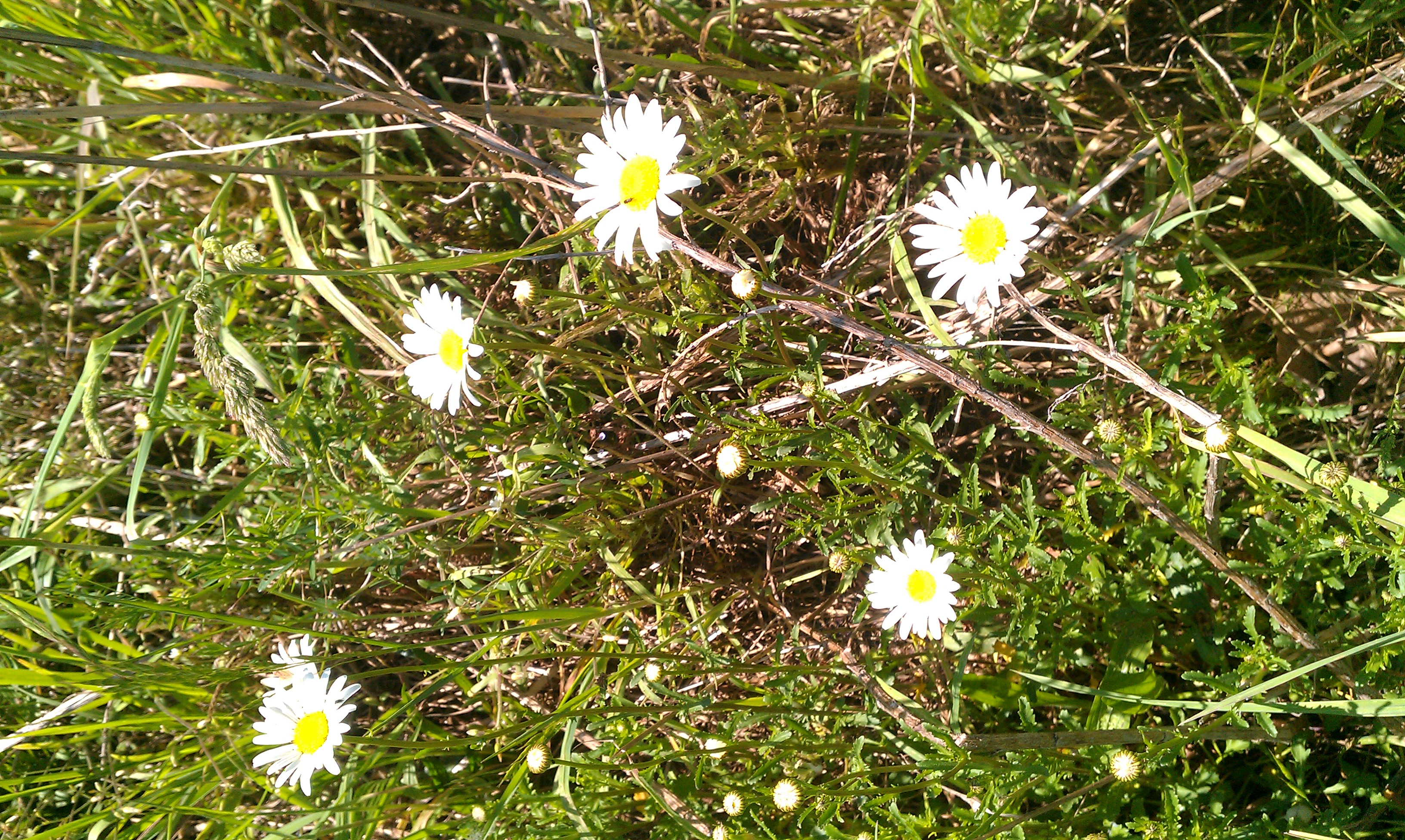
Daisies smiling at us at Natirar

The Raritan River flows through the lower fields and offers a picturesque walk that leads up a hill to rear pastures filled with wildflowers and charmingly dilapidated barns and outbuildings.  The path is dotted with benches for rest and butterfly watching. Like a Milton Bradley puzzle come to life, a train trestle is visible through the foliage of the surrounding trees.  A totally peaceful spot.

Cathedral Basilica of the Sacred Heart, Newark

18 Sunday Mar 2012

Posted by newjerseyology in Main Event

≈ Leave a comment

A visit to one of the largest and most beautiful cathedrals in the world, nestled in one of the most lawless and crime-ridden cities in America?  Just another day in New Jersey.

Everything about the basilica is sublime

Completed over 50+ controversy-ridden years with a final dedication in 1954, the Cathedral Basilica of the Sacred Heart is the fifth largest cathedral in North America. Seat of the Roman Catholic Archdiocese of Newark, it was designated a National Historic Site in 1976. The church remained a “lowly” cathedral until Pope John Paul II visited in 1995, at which time it was elevated to basilica status. The long history of bishops, archbishops, construction hiccups, design adjustments and historic happenings is too long to recount here, so best just to visit the Sacred Heart website for that.

As for our experience there, well, it was just breathtaking.  Some winding through the urban decay of Newark’s North Ward led us around a corner of Ridge Street, where the massive structure rises majestically above the row homes and bodegas. The exterior and interior architecture is magnificent and imposing, with unbelievably ornate, intricate details. Absolutely awe-inspiring, as any cathedral should be.

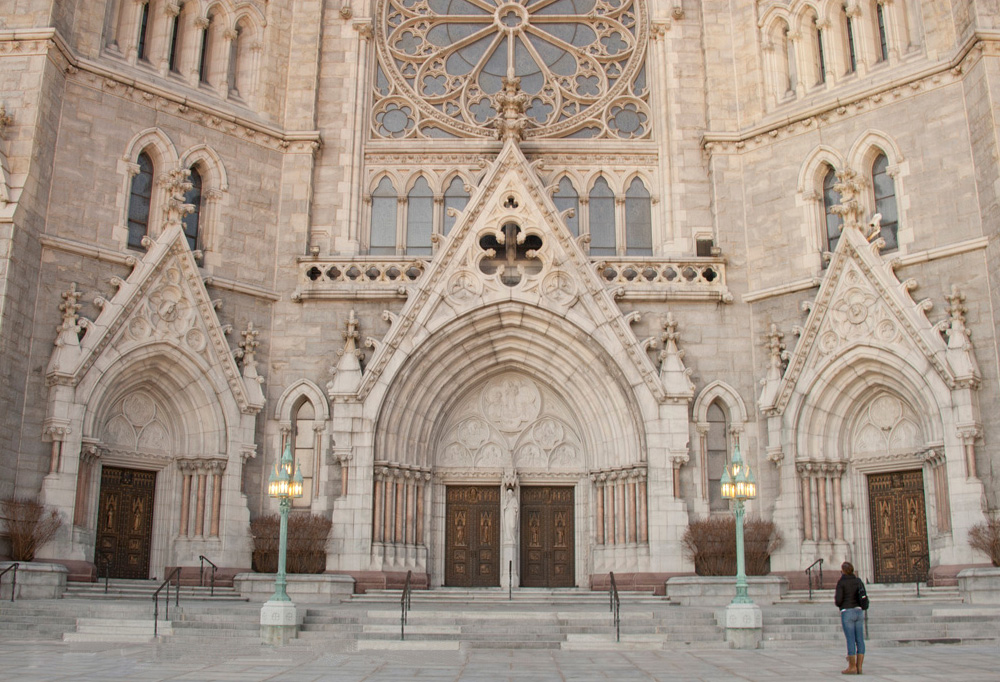
It is almost impossible to get the entire cathedral in a photo. This one shows some scale. (thanks JB)

The basilica has a huge pipe organ and incredible stained glass windows. It hosts a robust schedule of musical events every year, including an annual Christmas Carol Sing that must be truly something to see and hear (we’ve noted this on our calendars…).  Overall, just, WOW.  Go see it for yourself!

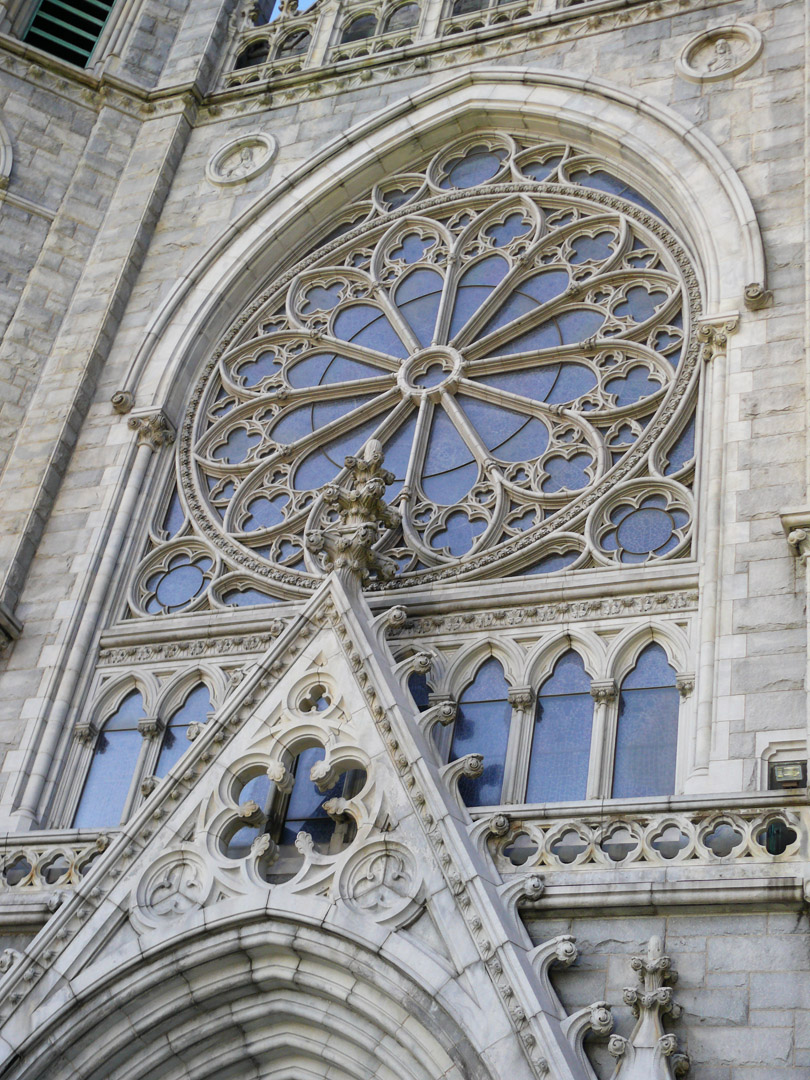
Windows, spires and gargoyles

Great Falls National Park, Paterson

18 Sunday Mar 2012

Posted by newjerseyology in Main Event

≈ Leave a comment

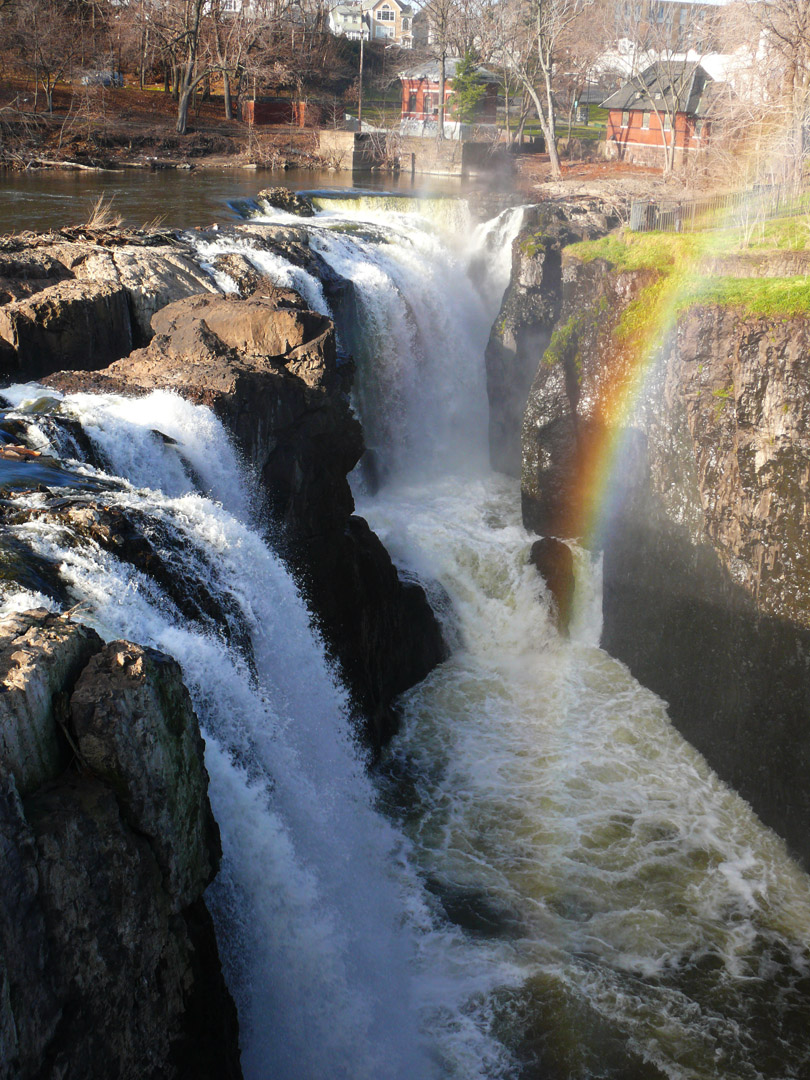
We didn't find a pot of gold, but the falls are still a treasure

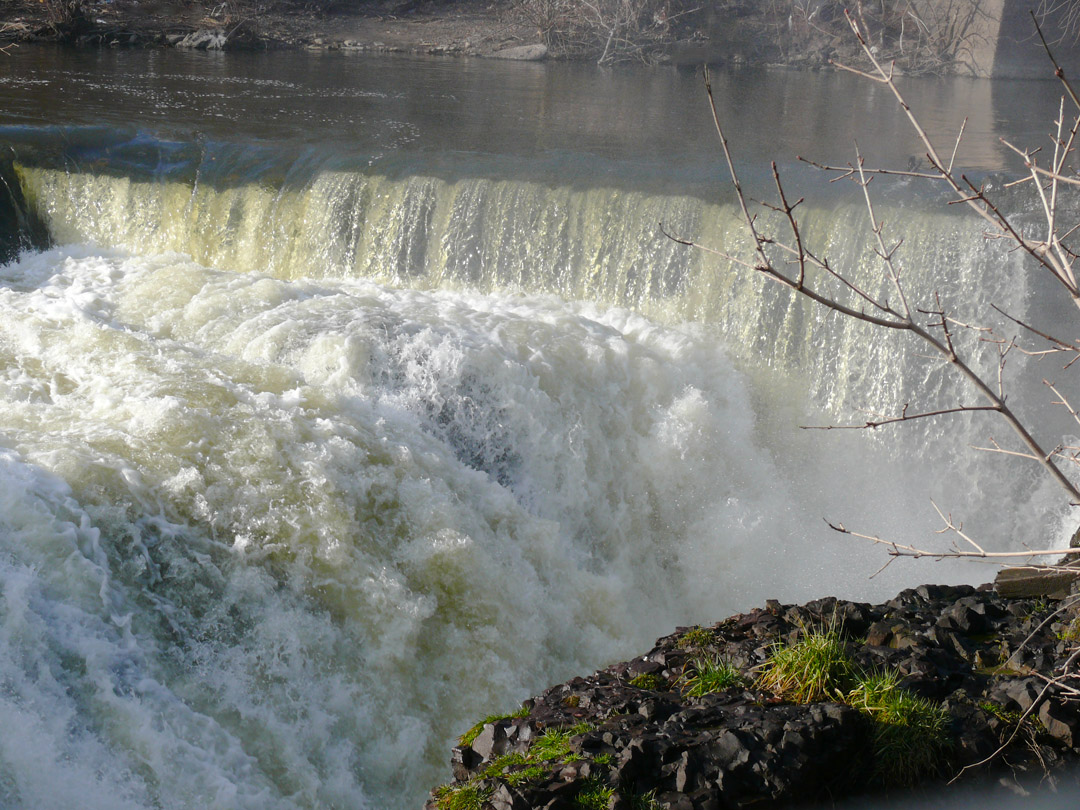
Every single day, the Passaic River sends two million gallons of water over the 77-foot summit of the Great Falls in Paterson. It is a sight to behold–the power of rushing water, the rising of rainbowed mists, the swirling and eddying of pools and flows–in the very heart of a town most associated with…the Industrial Revolution.  Who says New Jersey doesn’t know how to mix it up?

The falls were carved out of the 200-million year old basalt by some antsy glaciers about 13,000 years ago.  The Lenape Native Americans hung around for awhile, and then in 1792 the city was established when William Paterson (NJ Governor and signer of the Constitution) put his John Hancock (hehe) on the town charter.

Alex H.

Alexander Hamilton, while serving as Secretary of the Treasury under our fave prez George Washington, founded a group called the The Society for the Establishment of Useful Manufacturers (SUM).  Despite its sound, SUM was neither from a Monty Python skit nor from a low-budget espionage film.  It was, in fact, an organization to shape how to best harness the energy of Great Falls and in doing so facilitate greater economic independence from Britain. One of its chief members was the guy who designed basically the entire city of Washington DC, Peter Charles L’Enfant.

The walking path takes you up close to the falls

Through the construction of complex systems of water raceways and reservoirs, the waterfall’s power was used to fuel manufacturing mills for textiles (silk chief among them), firearms and locomotives. Paterson began to decline around the end of World War II, and though it is New Jersey’s third largest city (who would have guessed?), remains economically depressed. The Great Falls, declared a National Park in 2011, are one hope for revitalization of the area.

Adjacent to the falls: an abandoned factory

Ben makes fuzzy face at the falls

We visited on a freezing cold winter weekend, knowing little about the site except that it was once featured in a certain tv show that shall not be named. The park seems almost unreal.  You drive through the center of Paterson and at an otherwise unremarkable intersection there is a sign for the park, and almost immediately thereafter the spectacular falls come into view. Perhaps the cold kept people away that day, for the small parking lot was almost empty and the number of visitors walking around, photographing and gawking was countable on one hand.  In a word: perfect.

The falls are awesome (east of the Mississippi River, they are second only to Niagara Falls in water volume) and the footpaths and bridges allow you to get very close to the falls from various vantage points. The site is completely unexpected and unique, as only New Jersey could muster. Truly a must-see.

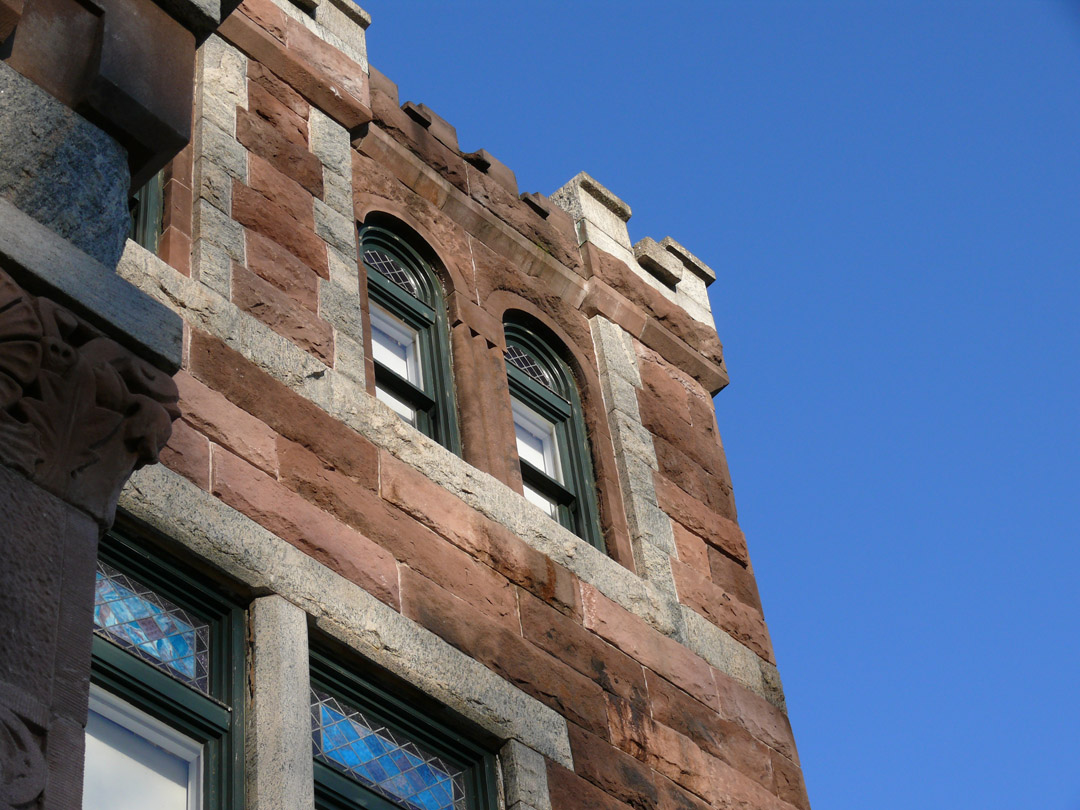
Detail of Lambert Castle

After an extended visit at Great Falls, we drove a short distance down the highway to another Paterson-area landmark: Lambert Castle. Englishman Catholina Lambert came to the US at age 17. Within a decade, he’d become successful in the silk manufacturing industry and married into a well-heeled American family. Like any good business baron, he had multiple residences in New York City, but eventually was compelled to commission the building of an estate near the mills he controlled in Paterson. His life was full of tragedy, including mysterious deaths, natural disasters and ruinous bankruptcies–you can read the full story here.

The castle is yet another incongruity in the Paterson landscape, which only adds to its colorful character. The rounded turrets, the battlements, the arched doorways and wrought iron gates (if not the police K9 training unit next door) all harken back to Lambert’s origins in Yorkshire. We were low on cash that day, so didn’t take the $10 tour, but from what we saw when warming ourselves in the entryway, the interior and art collection appeared to warrant a future visit with the necessary funding.

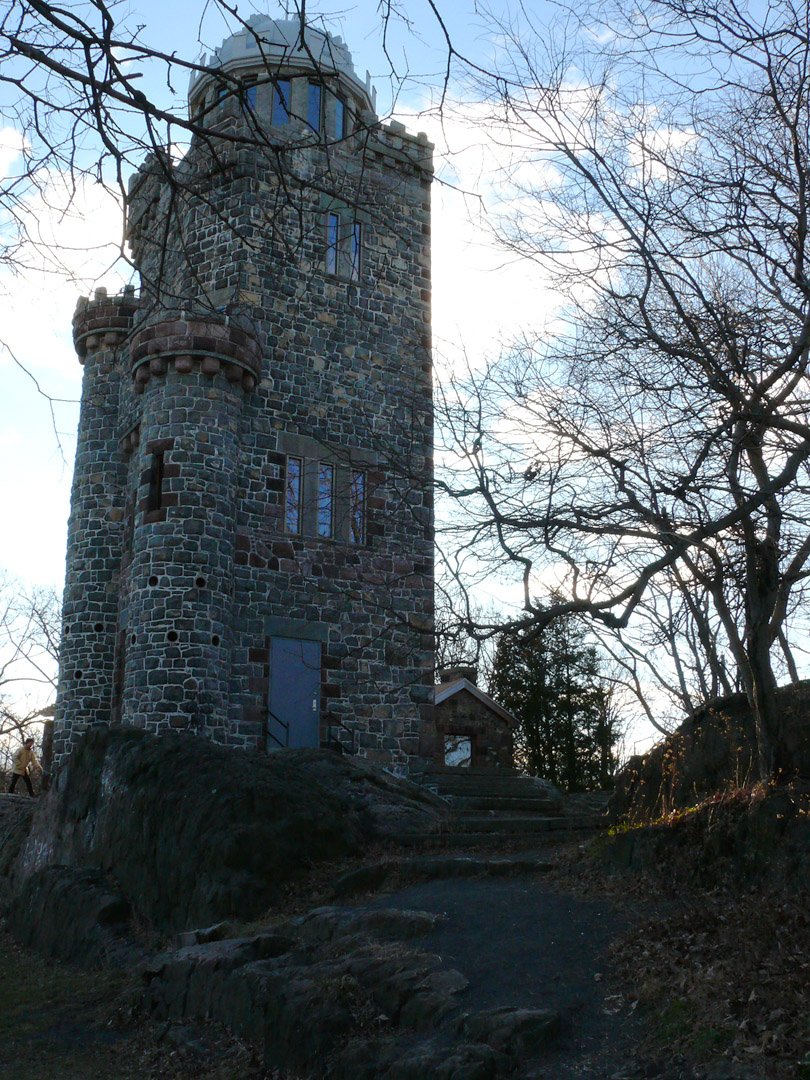
Observatory

The grounds surrounding Lambert Castle, known as the Garrett Mountain Reserve and Rifle Camp Park, are home to jogging trails, picnic areas, an astronomical observatory, and panoramic views of the Manhattan skyline. Perhaps it was the cold weather, but we encountered very few people at this site as well, which was…just as well.  The observatory was not open, so we walked around the grounds and took in the vista of NYC.  Then, as per usual, it was off to find food…

Part of the observatory

Sandy Hook

12 Monday Mar 2012

Posted by newjerseyology in Main Event

≈ Leave a comment

The cute image on this sign was the only seal we saw during our visit

Harbor seals can be elusive critters.  We know this because despite recent confirmed sightings we could not find any during our visit to Sandy Hook.  Shy pinnipeds notwithstanding, the historic 7-mile beach park with a view of New York City had plenty to offer.

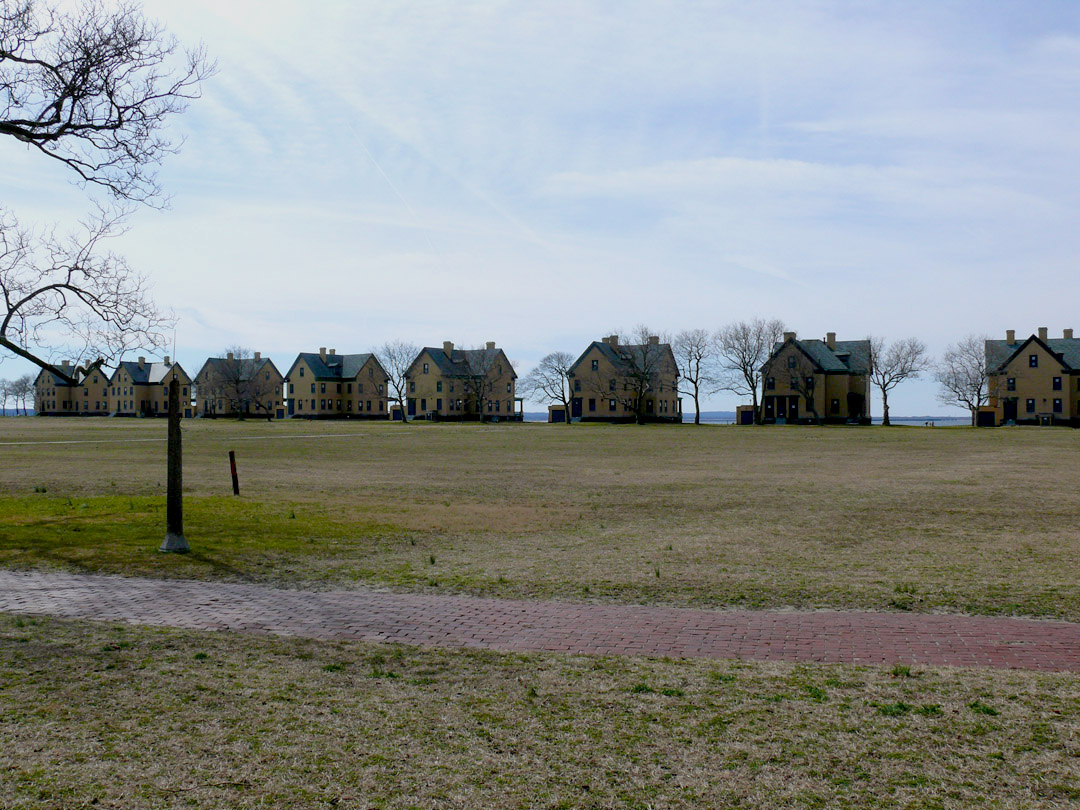
Technically known as a barrier peninsula, Sandy Hook extends along the Atlantic into New York Bay.  At its tip is Fort Hancock, a military base active from 1899 to 1974.  The fort contains many abandoned, and sadly crumbling, military houses, former mortar batteries and Nike missile sites, and other buildings currently in use by the National Park Service, oceanic studies organizations and schools.  The views are beautiful from almost every vantage point, but nowhere more so than from Sandy Hook Lighthouse.

The oldest working lighthouse in the US

The lighthouse exterior is made from crushed ship ballast

View through the trees on a sunny blue-sky day

The beacon was built by NYC stonemason Isaac Conro in 1764 with funds raised from two public lotteries; it is the oldest working lighthouse in the United States.  Standing at 103 feet high, it contains a spiral staircase of 95 steps that lead to the top.  We visited the combination office and shop next door to sign up for the free guided tour and stock up on tourist maps.  The shop was tiny, but still had some cute items–cross stitch kits, plush horseshoe crabs, relevant books and so on.  We curbed our spending and wrote our names on the register for the next climb.

Since it was a beautiful day and we had 30 minutes to kill, we sauntered around the grounds for a bit, checking out the one of the mortar battery areas, viewing the military barracks and Officer’s Row, and taking a moment to appreciate some of the pretty trees on the grounds.

Officers' Row

Entrance to the mortar battery

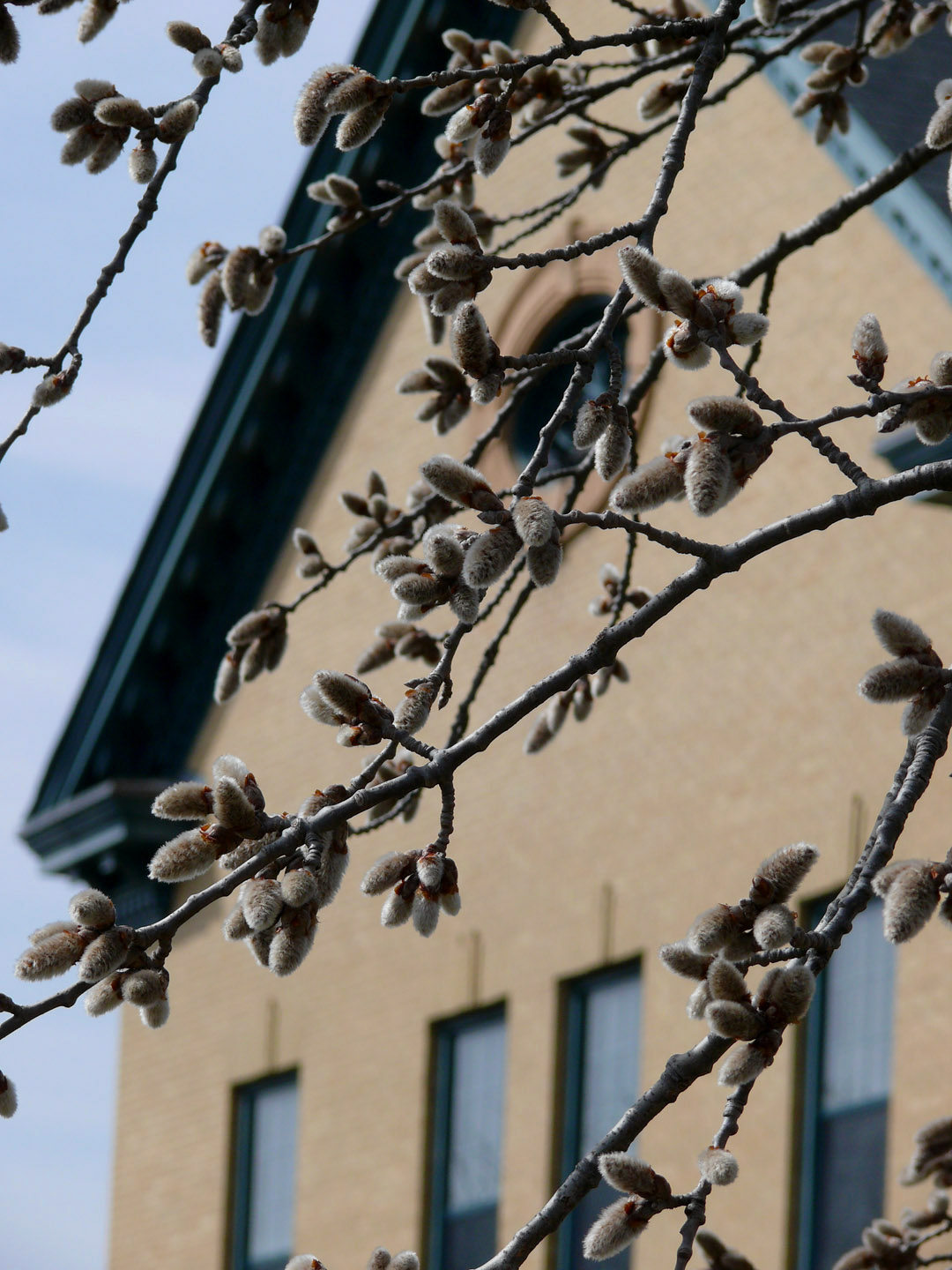
Tree with fuzzy buds in front of the barracks

Disrepair makes for an interesting photo

Hitchcock-like stairs

Back at the lighthouse, we began our ascent (guide name later escaped us), taking up the rear in a group of about 10. With a red brick interior and what looked like windowed sleeping nooks, the lighthouse could double as a tony loft living space. And in fact it was (ok, maybe not so tony), for its keepers over the years, who had to fuel its lamp with whale oil and kerosene before it was automated to electricity in 1965.

Each stair is numbered on the center column

The climb isn’t so bad, with reasonably wide steps, well placed rails and handles, and two brief cardio recovery stops. Once near the top, visitors must navigate up a 10-rung ladder that posed a bit more challenge for some of our cohorts:  an older and very out of shape woman took it slow, but made it; a twenty-something Asian woman was unwittingly kicked in the face by her mother.  Both survived to see the summit.

Awaiting at the top are a bunch of gargoyles, a massive Fresnel lens that allows the always-on light to be seen 19 miles away, and a spectacular view that includes the coastline, the Verazzano Bridge, Jersey City, Long Island, Manhattan and even one of the rides at Coney Island. Interesting factoid–the lighthouse was originally built about 500 feet from the water, but since that time nature had deposited so much sediment on Sandy Hook that the lighthouse is now almost 1.5 miles inland.

Closeup of the Fresnel lens

Gargoyle atop lighthouse

Outward view: the Verazzano Bridge with unexplained smoke plumes nearby

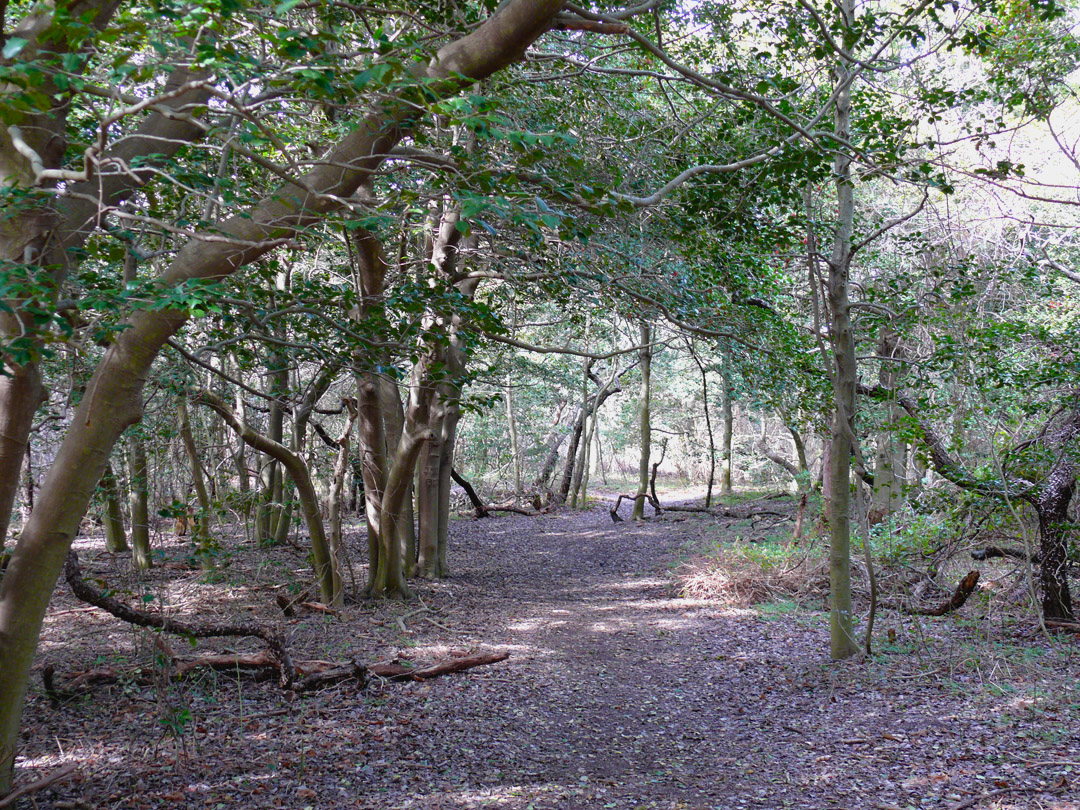
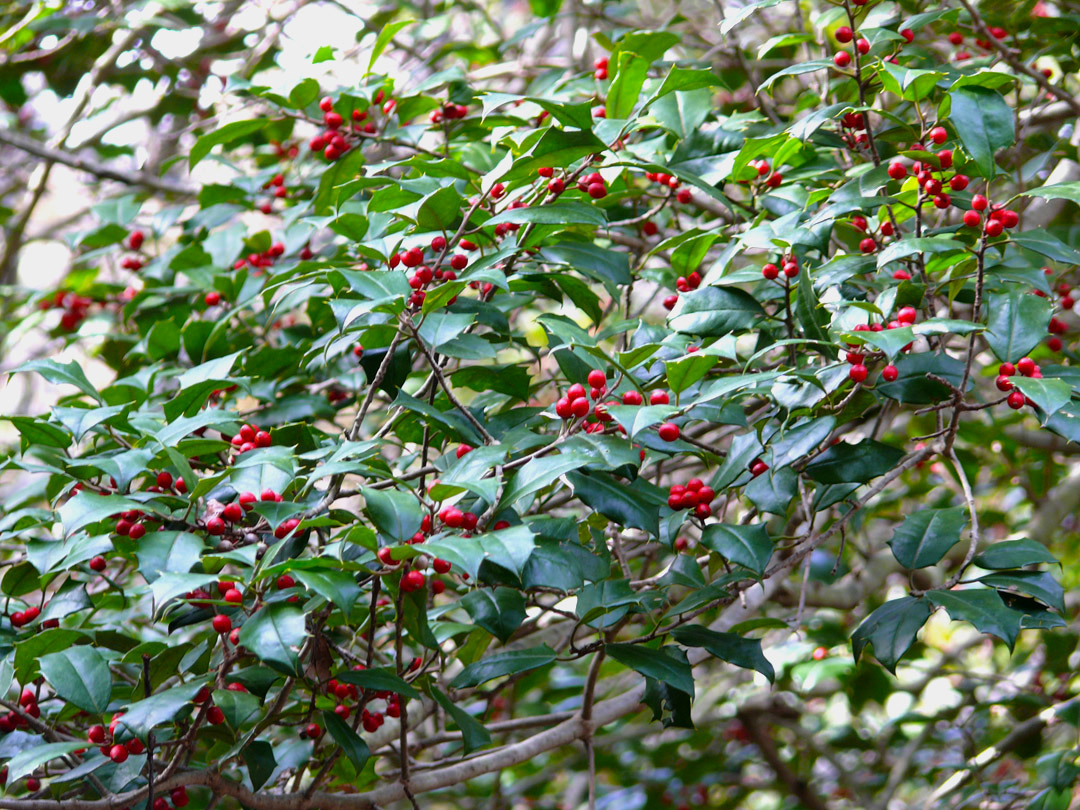
The 30-minute tour concluded without further ado. We drove out of the fort area, passing a huge old gunnery installment and making a pit-stop at a scenic observation deck (not as impressive as the lighthouse view). Back in the park proper we drove past Gunnison Beach (one of the only nude beaches on the East Coast) and to Parking Area E, which is adjacent to a forest of holly trees, some 150 years old.  It was a magical walk.

A copse of holly trees was filled with birds

Holly tree closeup

The many holes in the bark of this black cherry tree were drilled by yellow-bellied sapsuckers

We barely touched the trails, but frankly were getting hungry and couldn’t go much further without sustenance.  One more stop before chow:  Skeleton Hill Island in search of seals. We parked in area C and then walked to the bay/inlet side of the peninsula, in the shadows of the houses of Atlantic Highlands. Not a seal in sight, but we did take a short walk during which time we were squirted by an embedded mollusk and had some adventures with razor clams.

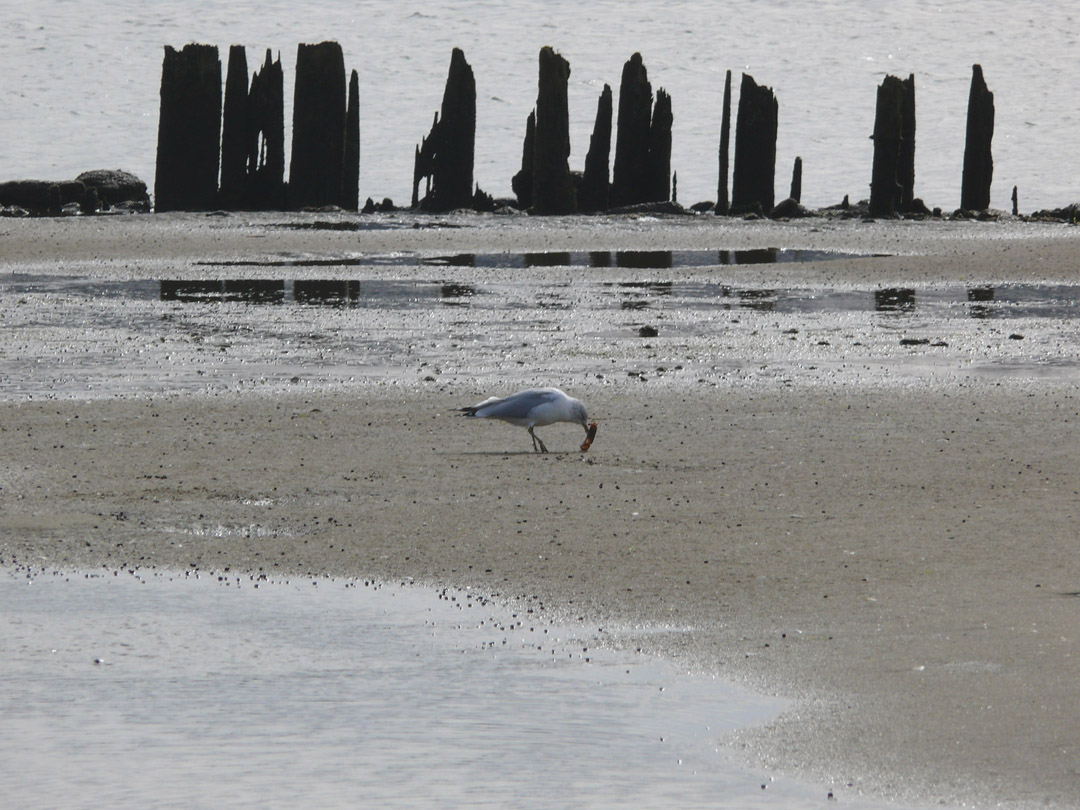
Gull eating a razor clam

Lee Press-On Razor Clam Nails

Gull in flight

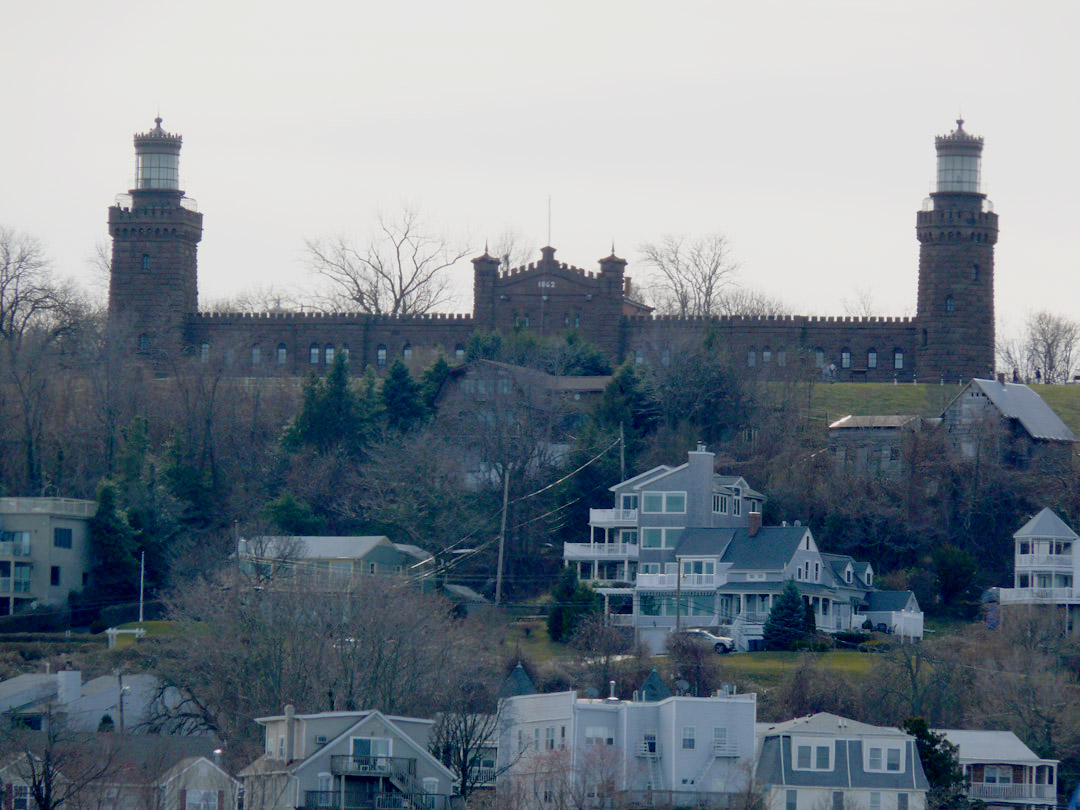
Our stomachs then got the best of us, so we departed this wildlife and nature wonderland, past the Twin Lights of Navesink and onward to our lunch destination in Long Branch.

A trip for another day: the Twin Lights of Navesink

Asbury Park

08 Thursday Mar 2012

Posted by newjerseyology in Main Event

≈ Leave a comment

Bruce Springsteen.  There, we’ve said it, and shall endeavor not to utter his name again, even though we’re now going to talk about a town inextricably associated with His Bossness.

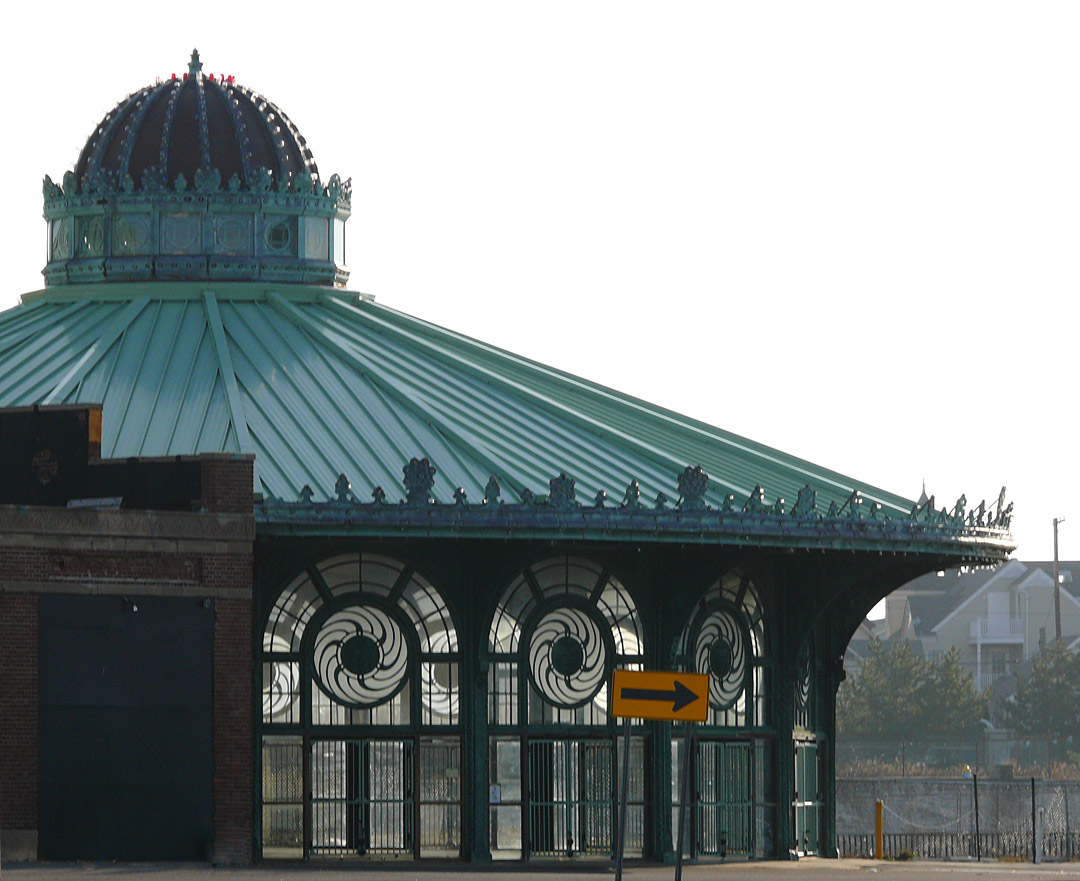
Self explanatory, with beautiful architectural details

We hope they restore the carousel that once inhabited this gorgeous building

If you’ve ever wondered what it would be like to visit a post-apocalyptic beach resort, head either to Coney Island, or to the little stretch of the New Jersey coast called Asbury Park—but hurry because things are changing fast.  Asbury Park was once a thriving destination, with glittering casinos, fancy bath houses, multi-star restaurants, big name entertainment and pretty much anything else you can imagine.  During the 1960s and 1970s, it entered a period of gradual decline, with residents moving to outlying suburbs, Great Adventure stealing away tourists and the Garden State Parkway providing a direct drive to “shore points” further south. For about 30 years the town languished in poverty and desolation, but circa 2002 signs of life began to spring up everywhere.

Huge crustacean at the hip Langosta Lounge

Today it’s still a mix, but heading in the right direction.  Several waterfront cool-cat lounges have opened, Convention Hall attracts top name acts and an artsy (gentrified thanks to the presence of the gay community) downtown of restaurants, shops and the unique Paranormal Museum is thriving.  The boardwalk itself is experiencing a return to vibrancy—the casino walkway has reopened, snack bars are hopping and the beach is dotted with kite-flyers and exercisers (we visited in the dead of winter, so no sunbathers).  And of course, the Wonderbar (they hold dog-friendly “yappy hours” so are ok in our book!) keeps serving and the Stone Pony gallops on.

Plain but legendary

Some unsightly high rise condos, a hypodermic needle in the grass around the inlet, discarded pork bones on the streets (that nearly choked Ben to death), and depressed-looking outlying areas admittedly detracted from the charm. But we’re thinking positive. With some additional investment of capital, Asbury Park could easily return to its former glory, and then some.

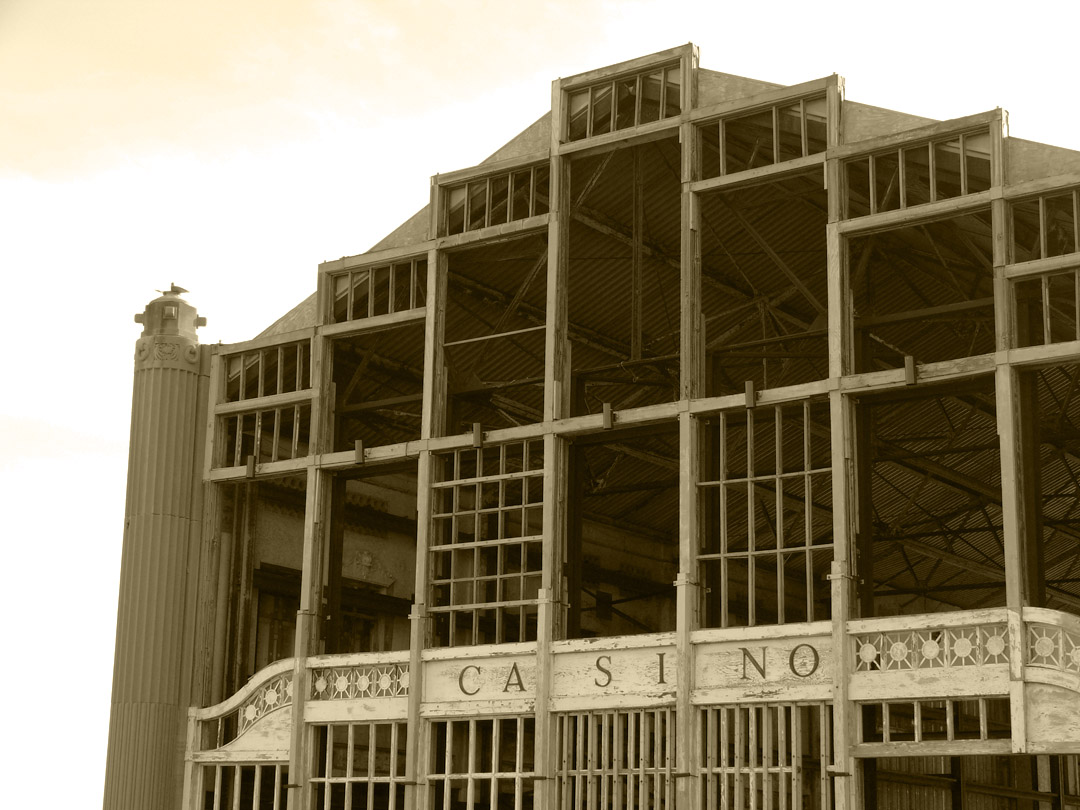
The casino was closed for many years.  It showed signs of renovation, but we’re not quite sure of its intended use or timeframe.  In the meantime, the boardwalk path through it has been reopened and temporarily decorated by local artists, leading to the neighboring town-that-time-forgot of Ocean Grove.

This photo looks antique, but actually shows the current state of the Asbury Park casino

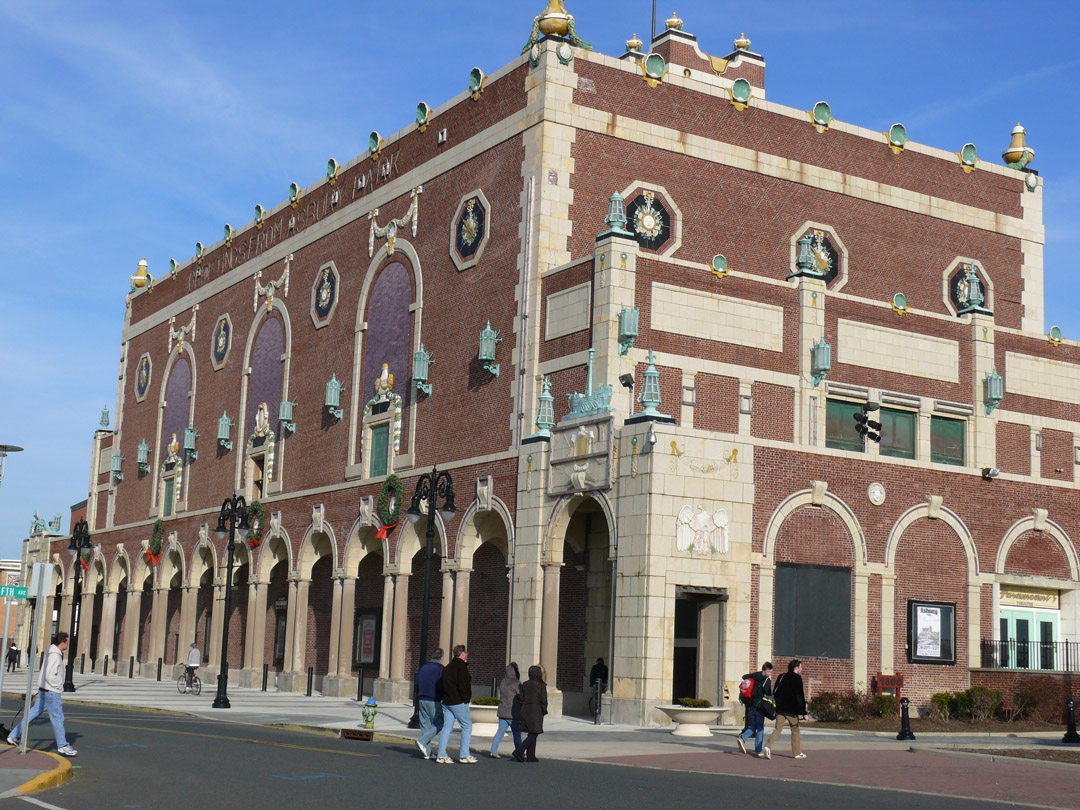
Convention Hall has lots of good concerts we've never attended

At the other end of the wooden pathway is Convention Hall, which in contrast was busy with musicians, artists and visitors.  During our visit, a boisterous group of polar bear swimmers were celebrating, post-dunk, in the pavilion with music and food. We didn’t pay the admission, and instead explored the curiosities of the boardwalk–and there are a few.

Like him? I love him!

A statue of the Greek Orthodox “Man of Love” is the first thing we noticed.  Haven’t been able to find a whole lot of background on that one…  Just behind him we took a look at the black granite monument commemorating the SS Morro Castle disaster.  Some background: On September 8, 1934, as the ship was making its way from Havana to New York, an odd and tragic series of events were put in motion.  First, the boat’s captain, Robert Willmott, died of a heart attack right on the bridge. Six hours later, the ship burst into flames at sea off the coast of Long Beach Island, killing 130+ passengers and crew before beaching its smoldering innards on the sands of Asbury Park.

The ship manifests of the Morro Castle did not contain any reports of Jack Russells aboard

Chaos reigned during the disaster–disorganization, poor training, thick smoke and a storm with gale force winds exacerbated the emergency. Life boats with a combined capacity of 350 passengers were deployed, but they evacuated only 85 people.  Many of the ship’s passengers perished jumping overboard, either due to the tempestuous ocean waves or from improper use of life preservers; bodies washed up from Point Pleasant to Spring Lake. Still, rescue operations (including a plane piloted by the Harry Moore, Governor of New Jersey at the time) saved hundreds, and some even swam to shore unaided. Eventually the smoke cleared and a year or so later the wreckage was towed away and scrapped. RIP to the unfortunate souls lost on the Morro Castle.

Onward to less depressing sights:

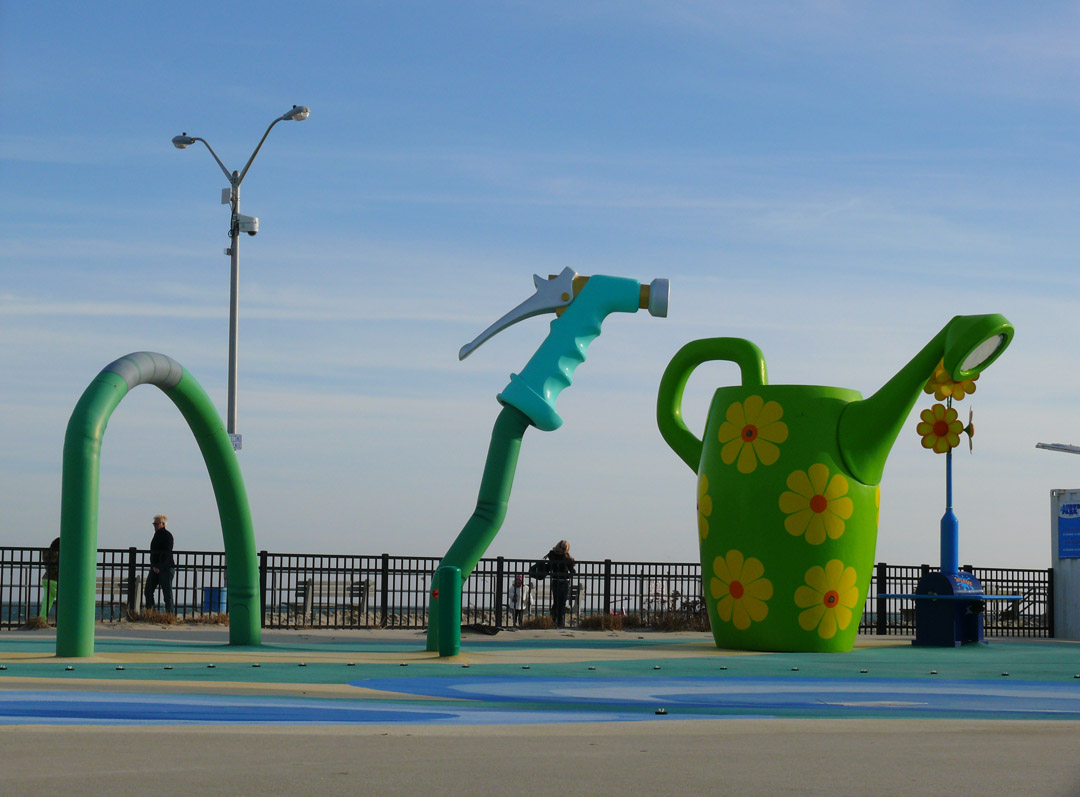
Giant garden implements

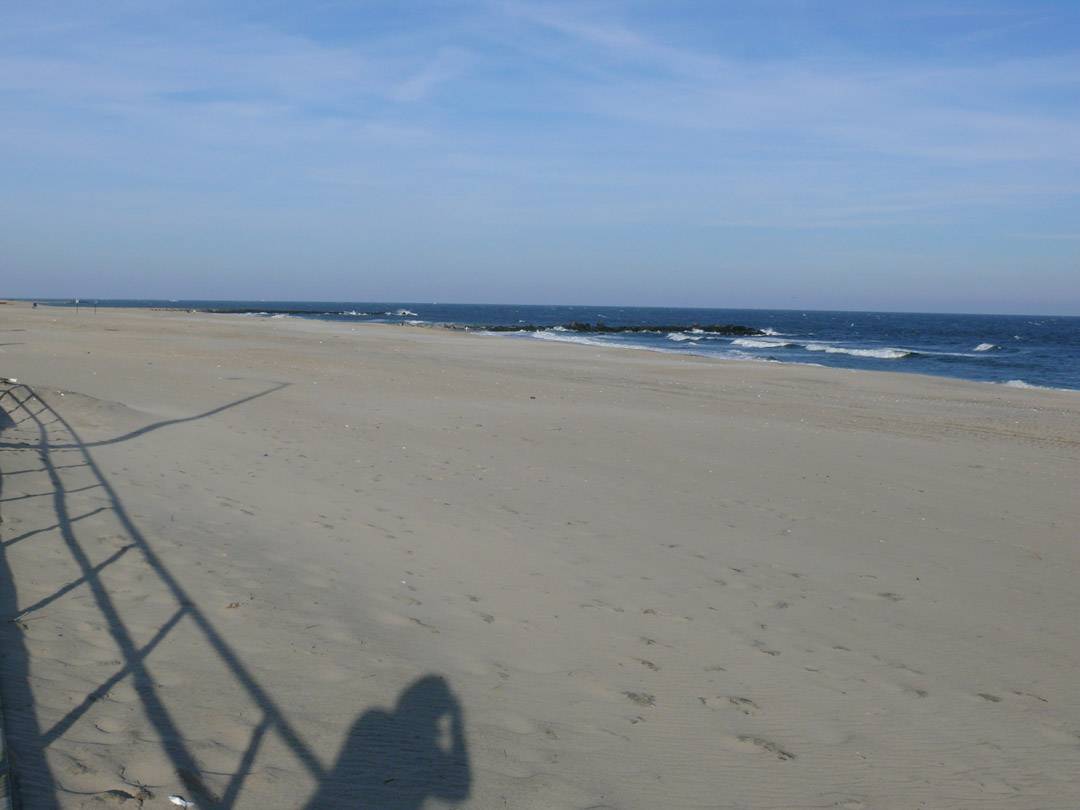
A pristine stretch of beach

Graffiti-art from world-famous graphic designer Shepard Fairey

Then we went downtown.  The revitalized area had some nice shops and restaurants that we ran out of time to sample.  One store had many kischy treasures, including Two Guys t-shirts (for those who are old enough to remember) and these incredible cereal-themed clocks:

Choculantastic!

He'd be better off as a jelly donut

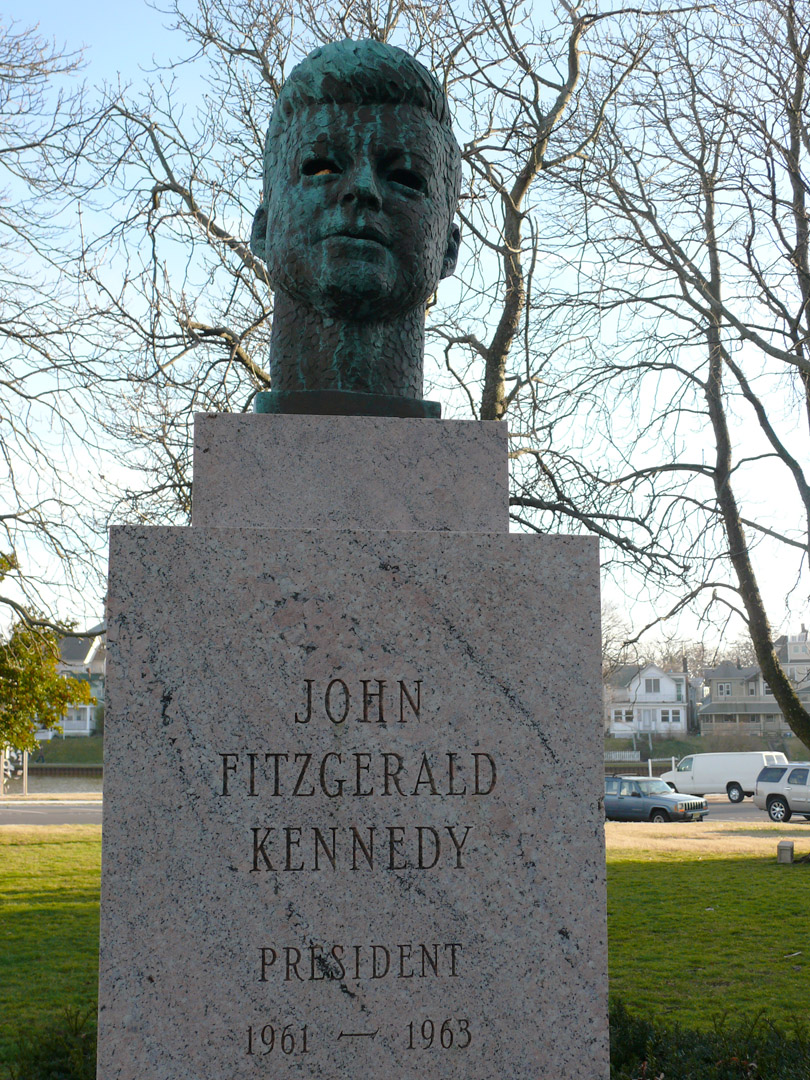
We’d heard of a fantastically bad statue of The Rock Star Who Shall Remain Nameless that had been put up in Kennedy Park and investigated toward the end of our trip.  We found the park, but the BS bust was a bust. Instead, the only statue we could locate was this bizarre, scaly and eyeless head of John F. Kennedy.

Just around the corner is yet another strange site: a telephone pole graveyard (or forest, depending on how optimistic you are).  We had read about the Great Telephone Pole Farm of Chester (a future road trip, no doubt), but never heard even a murmur about this humble triangle of former trees. They are a little shorter than Chester’s collection, but no less odd.  Look for them on Cookman Avenue at Kingsley Street.

We think it is a graveyard

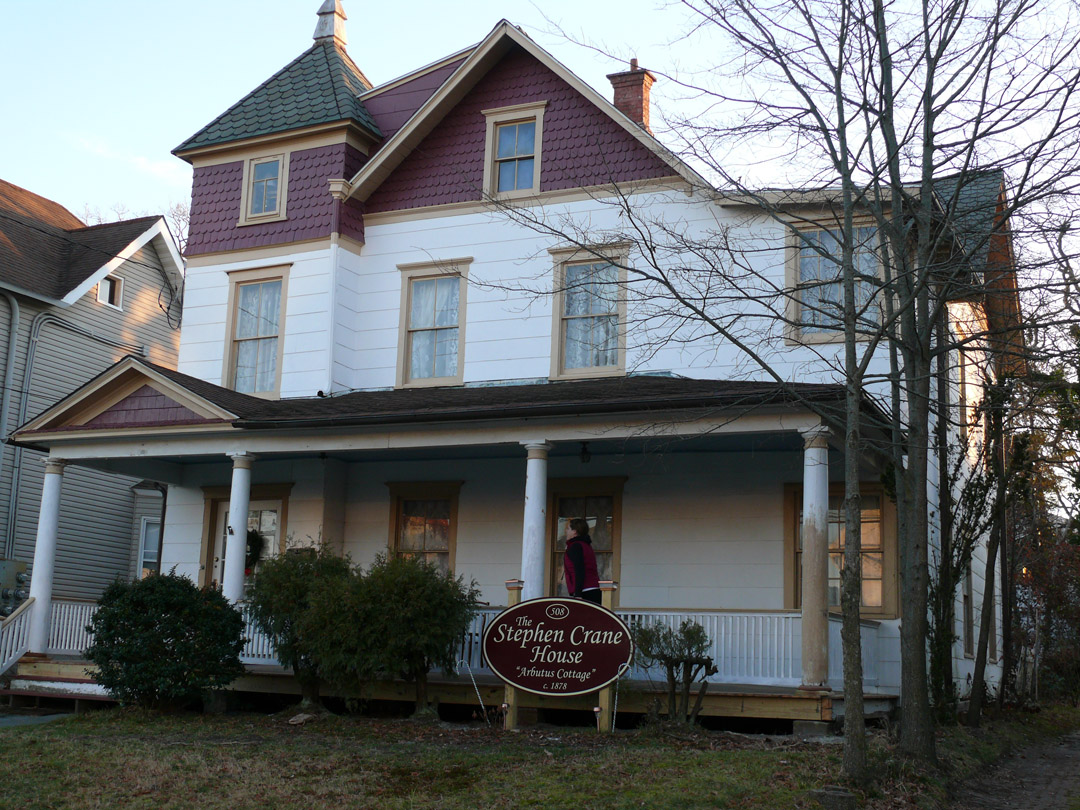
Solidifying our impression of Asbury Park as a truly eclectic place, our last stop was at the Fourth Avenue home of Stephen Crane, author of the Civil War classic, The Red Badge of Courage.  Crane was a New Jerseyan through and through.  He was born in Newark in 1871, and moved to Asbury Park at the age of twelve. Though he began writing while in AP, he didn’t pen his most famous novel until he got to New York City. Doesn’t it always seem to happen that way?  Poor Stephen wasn’t long for this world:  he succumbed to tuberculosis at 28 years old while living in England. The house changed hands a few times after 1899, and was turned into a museum in 1995.  It wasn’t open when we visited, so we just took a photo of the exterior.

You could be awarded a badge of courage for risking a visit to the neighborhood of Crane's house/museum, which is a little iffy

George Washington in Morristown

07 Wednesday Mar 2012

Posted by newjerseyology in Main Event

≈ Leave a comment

In 1779, Long Island Sound froze so solid that Connecticut yentas could skate to New York City to shop for shoes.

George, wishing for a day off with Elios frozen pizza and bad tv

OK, the part about yentas isn’t really true.  But the rest is accurate.  Accounts from the Revolutionary War detail the brutal winter, when temperatures of 13 degrees below zero were commonplace in New Jersey, people could walk across the thick ice of New York Harbor, and transportation by horse was impossible due to snow six feet deep. Where was this weather when we were children hoping to get a day off from school?  Unfortunately for George Washington and his troops, there was no time for sledding and eating Hot Pockets in front of I Love Lucy reruns.  More serious endeavors were at hand, namely fighting the war of independence from England.

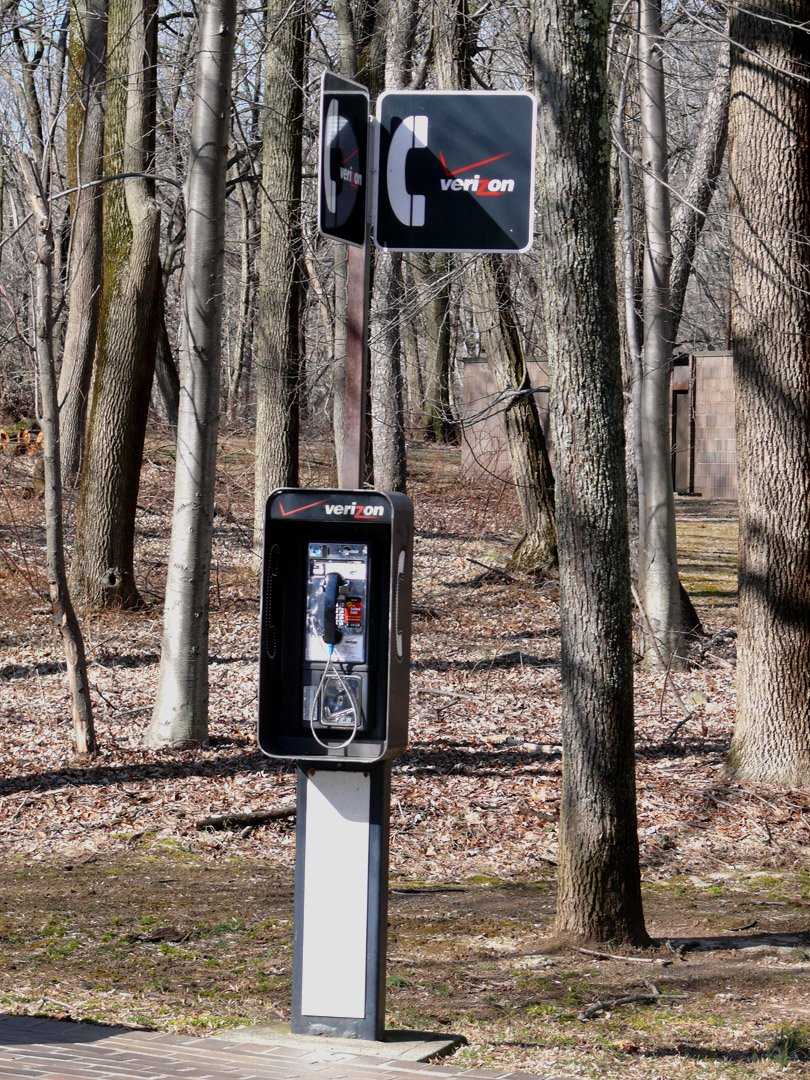
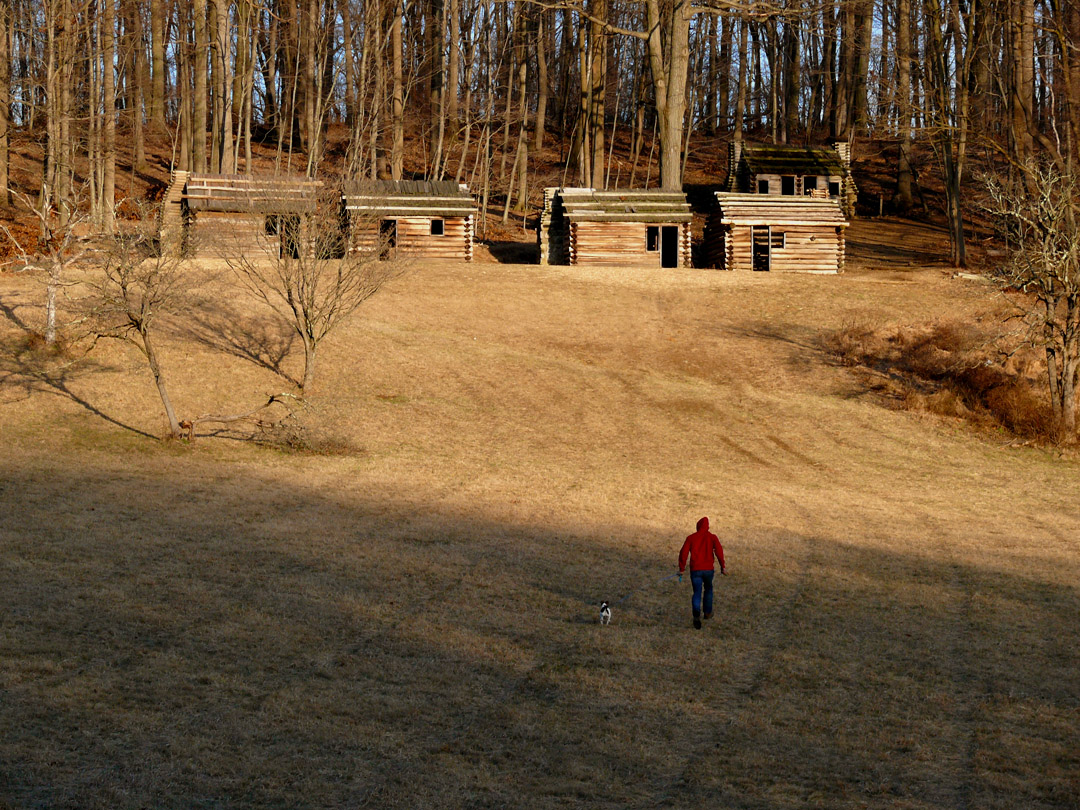
Washington set up headquarters in a private home in Morristown and installed his troops five miles away at Jockey Hollow, an expansive park of forest and field, and in modern day, a visitor’s center and world-class pay phone.

You don't see public blowers like this too often in 2012, never mind 1779

The visitor center store had a cute collection of Revolutionary memorabilia for sale and a jovial attendant who was very knowledgeable about the rest rooms.  A short walk up the path behind the building is the Wick House, an idyllic little farm with gardens, orchards and an invitingly puffing chimney.

The Wick House--adorbs!

The property, owned by Captain Henry Wick, was commandeered by the Continental Army in 1779. Major General Arthur St. Clair inhabited the house, while his troops (known as the Pennsylvania Line) summarily denuded 600 of the estate’s 1400 lush acres for food, hut-building and fire-making.  The winter was rough, with soldiers reportedly boiling and eating their shoes in famished desperation.  Still, we think it must have been lovely in peacetime.

Cole Haan, yum!

Make room for George

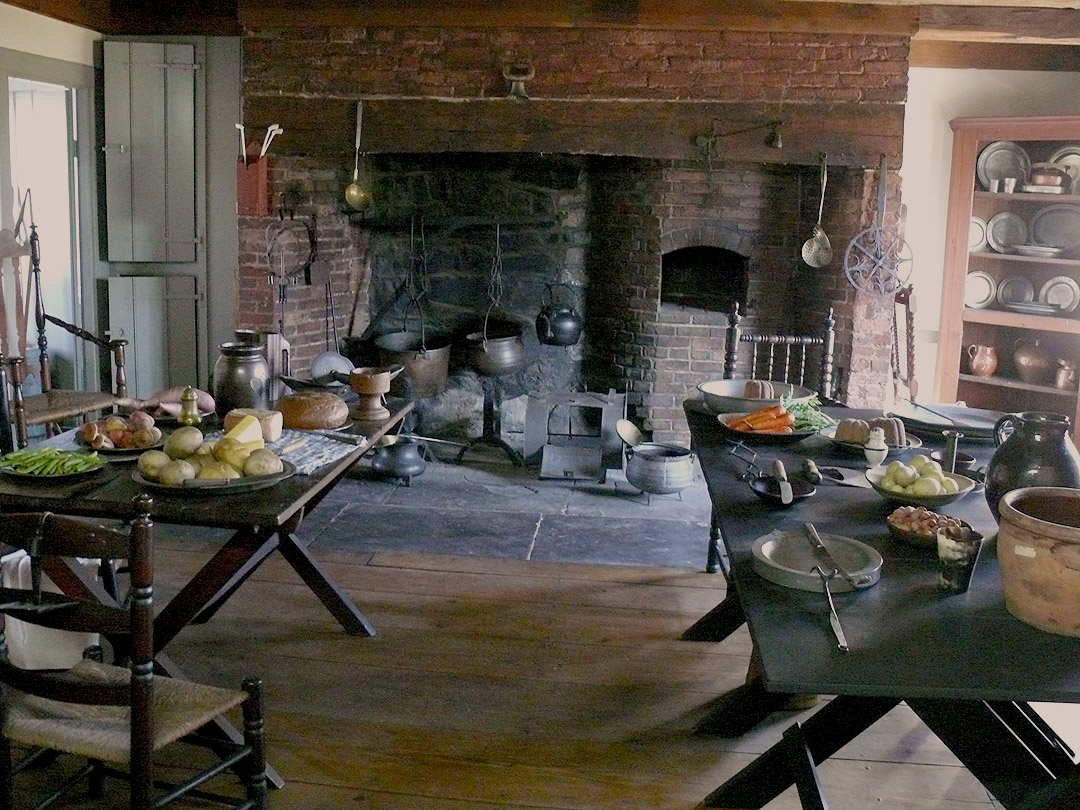
Having discovered, however, that we were not at Washington’s Headquarters as we originally thought (no tours here, no sir!) we drove up Rte. 202 to the Ford Mansion, just a few turns off the main square of Morristown.  Our strapping first President and his closest aides and servants rented (aka took over) this large Georgian house for seven months, managing the war, cuddling with Martha (who called him “Old Man”), entertaining up to 100 guests at a time, preparing huge meals and generally making a nuisance of themselves to homeowner and widow Theodosia Ford and her four children.  The imposing abode, situated directly in front of the Washington Headquarters Museum, is now lovingly maintained as an historic site by the National Park Service.

The kitchen looked inviting

Washington Headquarters Museum

We purchased tour tickets ($4 each) and viewed half the museum before our guide, Kevin, arrived.  A throwback to Jellystone Park down the the last detail, Kevin tried in vain to corral the garrulous and unruly pair of toddlers who would haunt the remainder of our experience.

Eventually he gave up, provided some background and walked us up to the mansion, the door of which he opened with a comically large key.

Key of a size befitting our first Prez

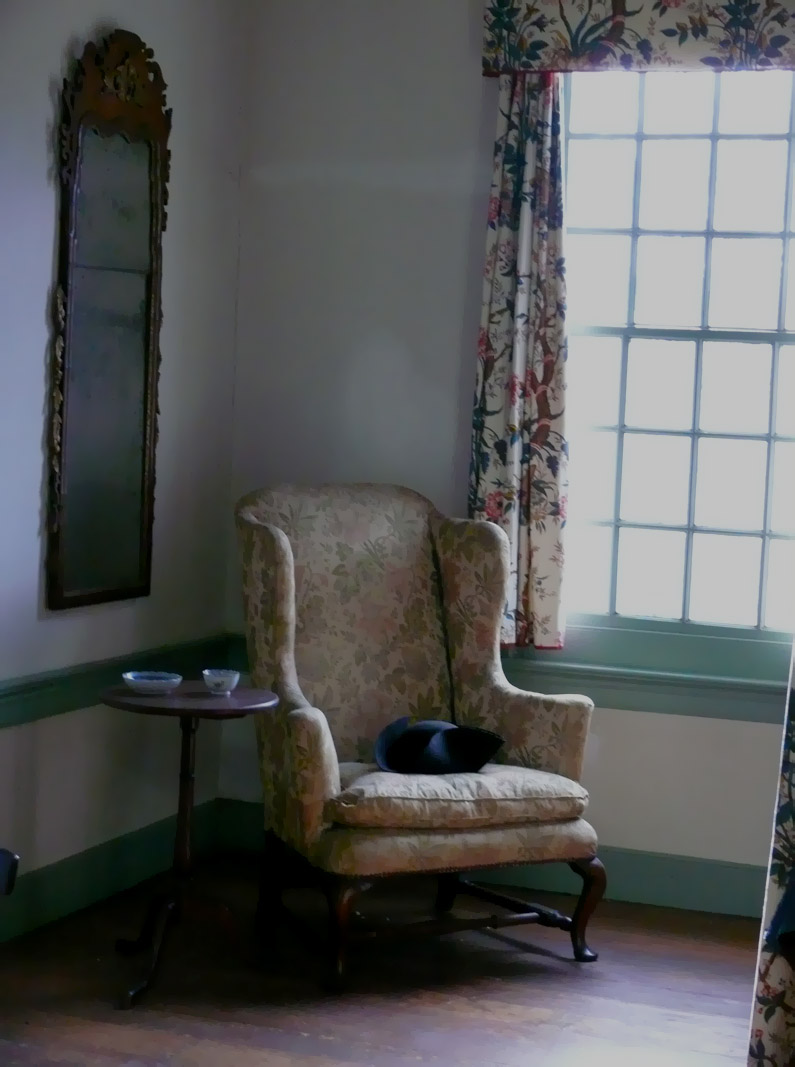
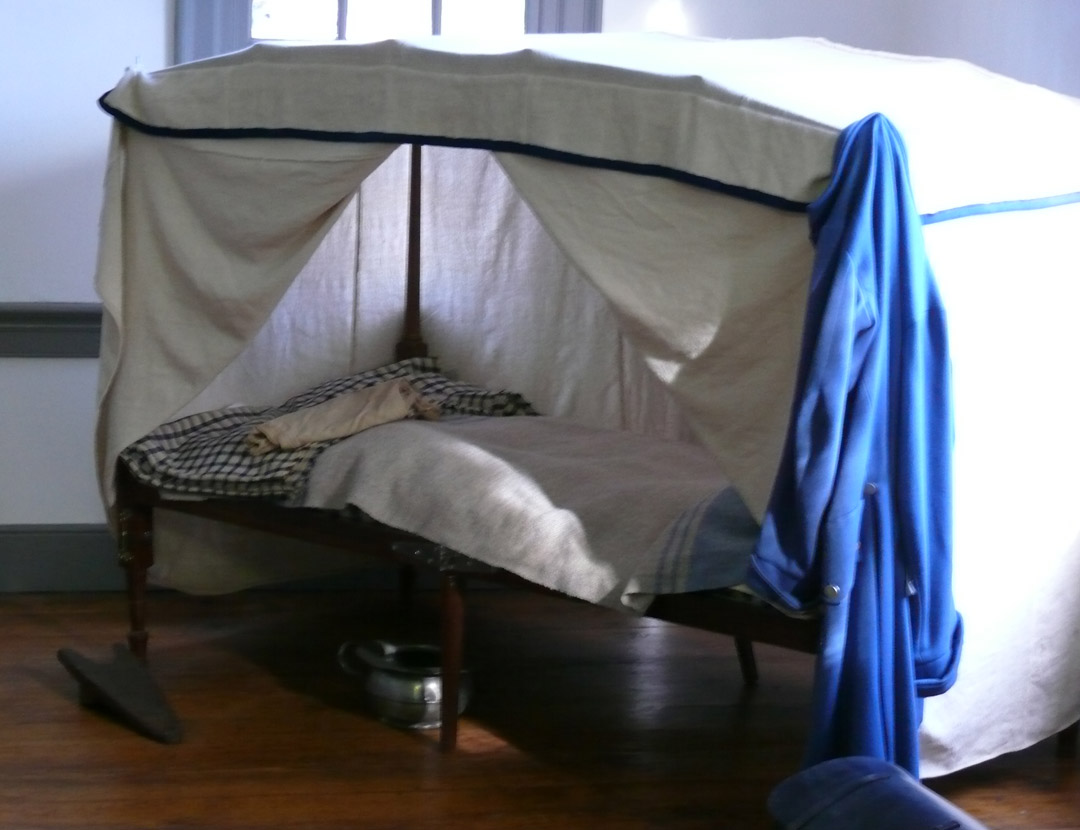
Inside was a trove of Washington and time period artifacts—writing desks, kitchen accoutrements, eyebrow windows, mini beds, armoires and so forth—accessed via plank oak floors and winding staircases. Kevin narrated with gusto for our little group, though at times our patience ran out for the undisciplined children with their infernal tootling and inane question-asking. That aside, the tour was informative and neither too long nor too short in length, giving us a few minutes to finish perusing the museum and purchase a small tome of GW’s wisdom.

The mirror is an original and likely used by GW

Tiny beds, not for dwarves, but for people who slept nearly upright due to fears they would stop breathing

Doors everywhere

Kevin of Jellystone Park

Statue of GW and his horse, Blue

Final stop:  Fort Nonsense.  Great name, but less going on at the site.  Apparently  George W. ordered his troops to build an earthen fortification on an overlook above Morristown, so as to be able to keep watch for the British.  It never really amounted to a hill of beans, seeing no action whatsoever.  People speculated that perhaps the fort was busywork for the soldiers, hence the name, but historians say this was highly unlikely and rather GW placed great value in “holding higher ground” as a matter of principle.

Stone marker

What better for Fort Nonsense? Soldier Ben mans the cannon.

It was a fun and educational day for almost zero cost. Click here for more information about Washington’s Headquarters, Jockey Hollow and Fort Nonsense.

More Cows and Graves

04 Sunday Mar 2012

Posted by newjerseyology in Main Event

≈ 2 Comments

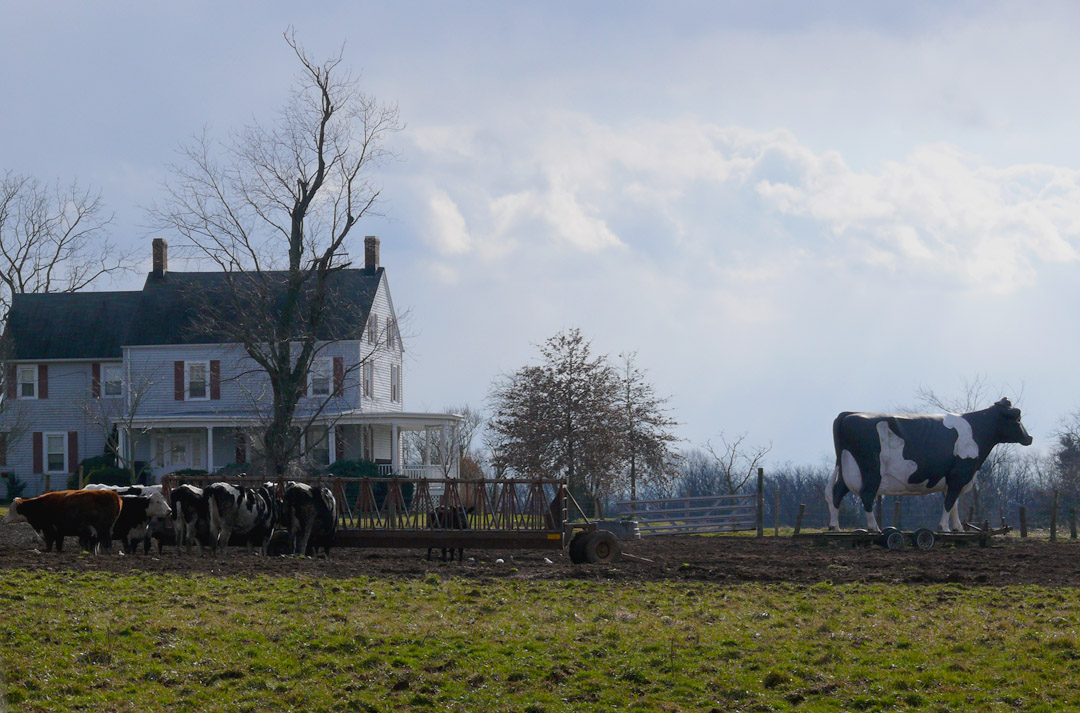
Is it real or is it fiberglass?

In a stretch of road dominated by power lines and energy plants, one might think a giant cow standing in a field is an outcome of technology gone haywire.  Not so.  A dairy farm on Bennett’s Lane in Franklin Township is home to an enormous fiberglass bovine statue on wheels, known as the “Big Cow of Middlebush,” where she is simply beloved eye candy.  Like any good wheeled cow, she moves (or is moved?) around the field randomly to keep things fresh.  Previously brown and white, she got a new coat of paint and literally changed her spots to black in 2009.  Her real, living pasture mates seem totally nonplussed by her presence; Elsie no doubt would be proud to know her. The farm is private property, so we had to pull over into one of the power stations across the street (perhaps…also private property) and scamper up to the barbed wire fence to snap a photo.

She's probably seen 27,847 movies by now

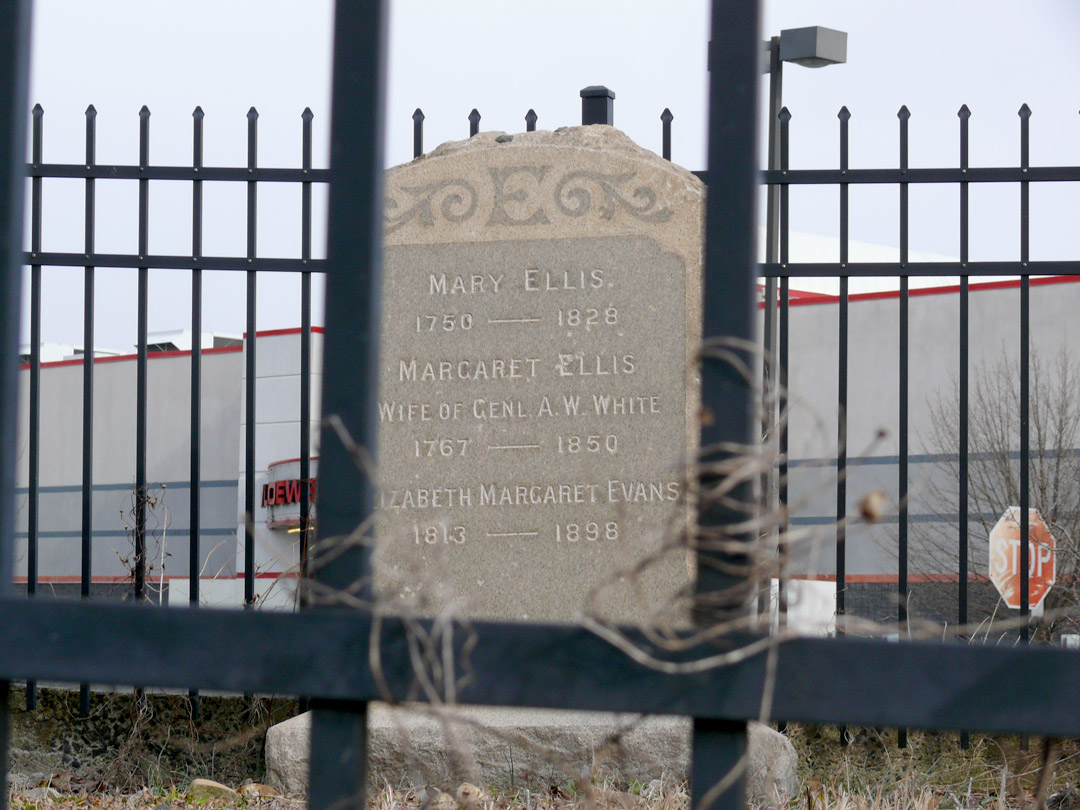
A few jogs through New Brunswick and we arrived at the Loews Theater on Rte. 1–not to see the latest laughable Hollywood moneymaker–but to view the somewhat infamous resting place of Mary Ellis, a spinster from the late 1700s.  Mary, alas, was duped by a cad sea captain who seduced and promised to marry her, only never to return.  Legend has it that she stood like a sentinel on this piece of land to watch for his ship coming in on the Raritan River.  She got a pretty bum deal.  Not only did the jerk never write, take her dancing or show up whatsoever, but many years after her death and burial in 1827, her family property was sold to commercial interests.  Her remains have since been witness to the operation of the Great Eastern Supermarket, the Rte. 1 Flea Market (bulldozed circa 1995) and finally the Loews Theater that currently stands.

Sea captains always seem to be cads

The grave marker of Ms. Ellis is in a stone-walled structure behind the theater, about 7 feet above ground and surrounded by cemetery-style fence.  We haven’t yet been able to find explanation of the many names appearing on the headstone.  During our visit nobody seemed to be giving a second glance to this somber island in the center of the asphalt parking lot, and we were able to climb up the stone sides for photo opps without even the circulating security guard blinking an eye.

Even Ben paid his respects

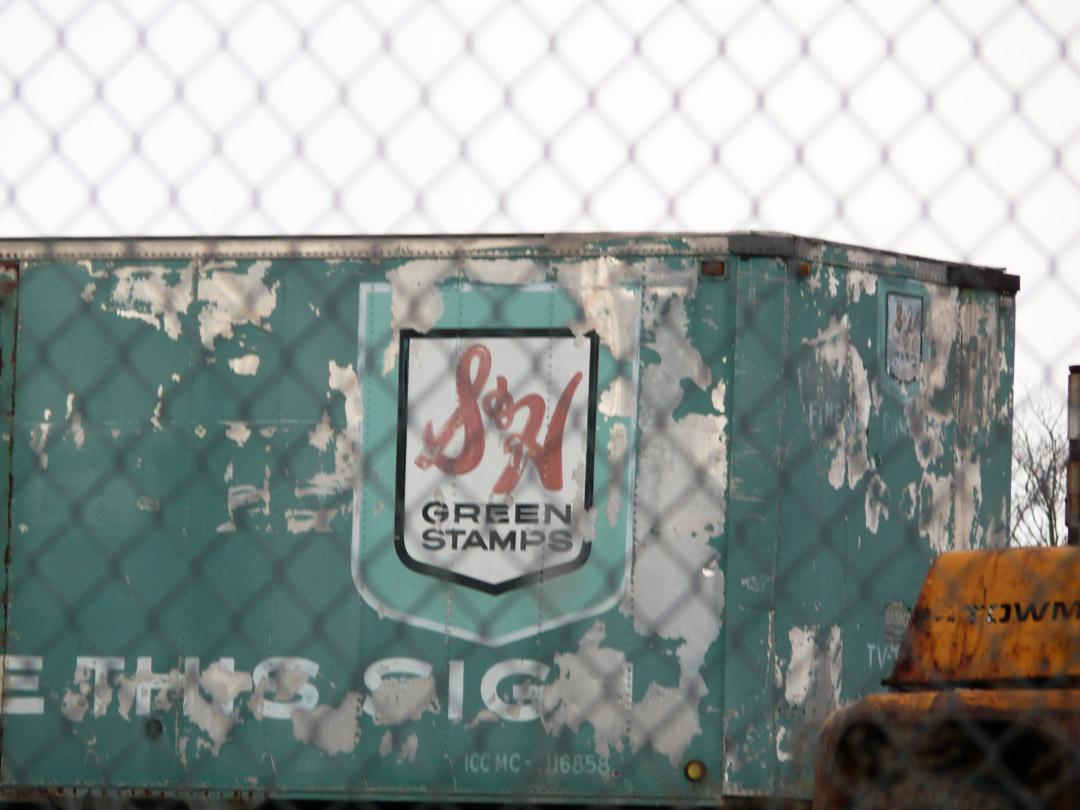
Wanting to lighten the mood, we thought we’d make our last stop for the day at the Shipwrecked Ferry of East Brunswick (by no accounts the ship of Mary Ellis’ cad sea captain) that was visible for many years from the NJ Turnpike.  This rusting hull sat polluting the Raritan River just beneath a Rte. 1 overpass, and was reportedly able to be seen from a vantage point near the Edgeboro landfill.  Doing our duty as New Jerseyologists, we drove over to the area and proceeded through several no no-trespassing gates in search of this legendary watercraft.  We saw many Gotham-city like pipes, rotting wood piles, dilapidated Winnebagos and the below ancient truck container advertising Green Stamps.  The ferry eluded us, and for good reason:  We later heard from an unconfirmed source that the ill-fated ship had been hauled away and scrapped some time ago. RIP, shipwrecked ferry!

Ancient truck container

Elsie the Cow

04 Sunday Mar 2012

Posted by newjerseyology in Main Event

≈ Leave a comment

Our next stop was just a few miles away in Plainsboro, to pay our respects to that great bovine marketing icon, Elsie the Cow.

Walker Gordon farm was not always the sprawling mass of willy-nilly “single family homes” that it is now—it once was a working dairy farm owned by the Borden company.  Some background:  In 1938, Borden introduced a cartoon spokescow known as Elsie to the milk-buying public, a marketing tactic intended to soften the company’s image after bad press over its dealings with striking farmers in New York State. It worked. Around the same time, Borden was also looking to build excitement over their invention of the “rotolactor,” a rotating platform/demented carousel that could auto-milk 50 unfortunate cows in 12.5 minutes, at the 1939 World’s Fair. Shockingly, nobody at the World’s Fair, or in the world, gave a flying leap about the rotolactor, especially between demonstration milkings.  Something had to be done, and fast.  Re-enter Borden’s crack marketing team.

Moo

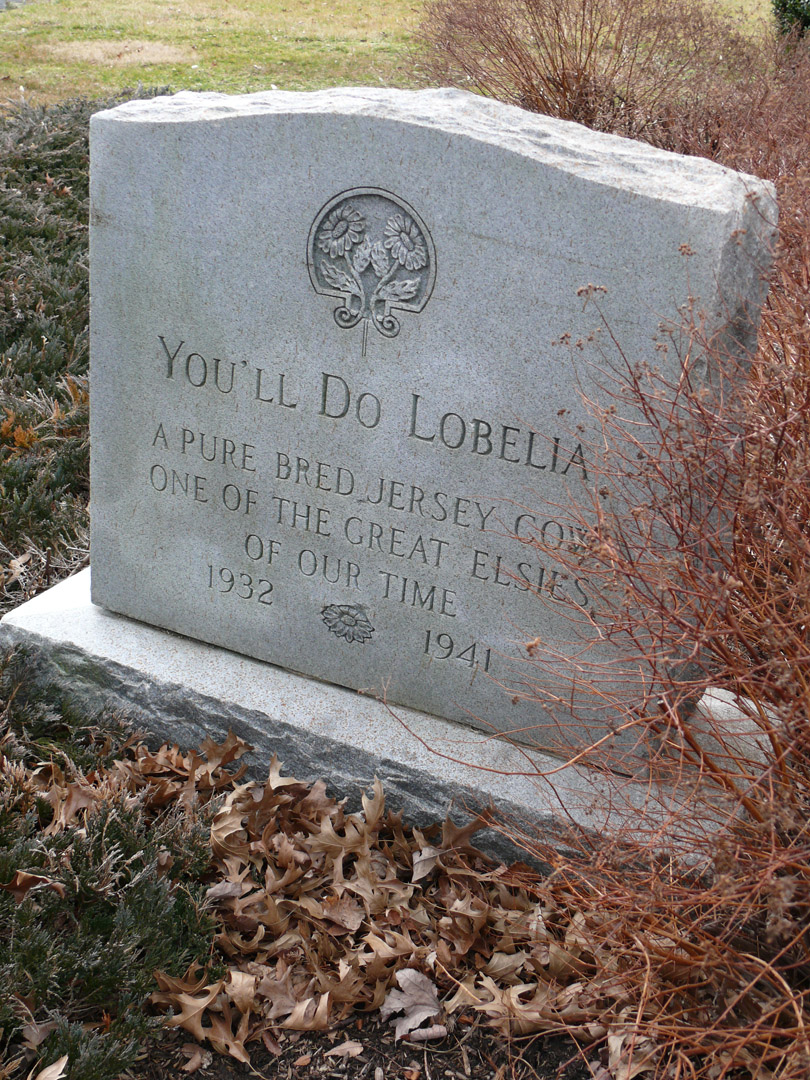
Some poor schlump who drew the short straw of monitoring the rotolactor exhibit all day was also tasked with noting down questions asked by the visiting public.  A whopping 60% of the questions were the same:  which cow is Elsie?  “Aha!” thought the devious marketers, and in short order one of the cows (a Jersey heifer born in Massachusetts under the name “You’ll Do Lobelia” to be exact) was picked from the herd, outfitted with a necklace of daisies and placed on the rotolactor during non-demonstration times.  And as usual, the public fell for it.  Elsie soon had a milking “boudoir,” a husband named Elmer (he appears on the glue bottles and other Borden household products) and was traveling to promotional appearances all over the country in her own “Cowdillac.”

Like many celebrities after her, Elsie’s flame burned bright but short.  In 1941, she was en route to an appearance at New York City’s Schubert Alley Theater when her Cowdillac was rear-ended by a truck in Rahway (a fate we’ve all feared at some time or another).  She was very badly injured, and ultimately euthanized back at Walker Gordon farm.

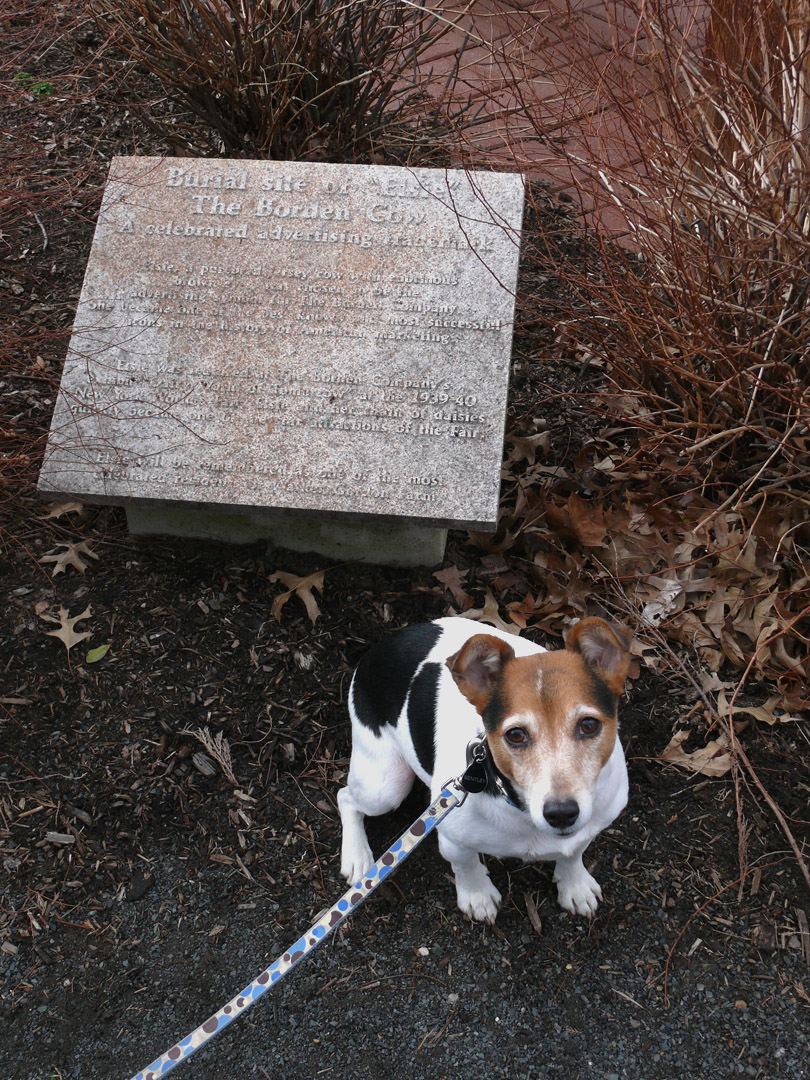
Ben next to the illegible granite slab

Elsie was buried on the farm grounds, and her grave marked by a traditional headstone.  According to reports, this headstone has been moved around a bit, so who really knows which precise patch of grass Elsie’s remains are fertilizing today?  Respects can still be paid at the headstone, knowing she’s not more than a few hundred feet away.

We had a spot of trouble finding the grave marker, and spent about 10 minutes first traversing and re-traversing the neighborhood’s overpopulated streets with bucolic names.  It really shouldn’t be that difficult…because if you enter through the main gate, the first right is Heron Court, and then the grave marker is pretty much right in front of your face—just look for the gazebo off to the right—the headstone and commemorative plaque (which was a bit hard to read) are directly next to it. The wind really whipped up during our stop, somewhat unfortunately bringing with it strongly perfumed odors from the nearby Firmenich plant.  We wondered how people live in the neighborhood not knowing which falsified aroma will greet them each morning…

War of the Worlds

04 Sunday Mar 2012

Posted by newjerseyology in Main Event

≈ Leave a comment

An even later start and whipping 50-mile per hour winds did not deter us from seeking out some notable New Jersey sites on another particular weekend.

First stop, an unassuming little corner of West Windsor Township called Grovers Mill.  It is not uncommon to witness mass hysteria on the particular stretch of Cranbury Neck Road that arcs in front of Van Nest Park—just take a look at the chaos of traffic in and around the area every rush hour afternoon. But in 1938, the populace of the area reached singular heights of hysteria when a radio broadcast announced rather convincingly that the village was being overrun by hostile Martian invaders.  We know today that it was just an actor, Orson Welles, reading from a science fiction novel by, well, H.G. Wells.  At the time, however, townsfolk interpreted as real the reports of pulsating aliens, heat rays, civilian casualties, martial law declarations and so forth, and reacted with appropriate levels of distress.  It made the front page of the New York Times, catapulted Orson Welles to fame and put Grovers Mills on the map of the country’s collective consciousness.  Listen to the original broadcast.

Welles v. Wells

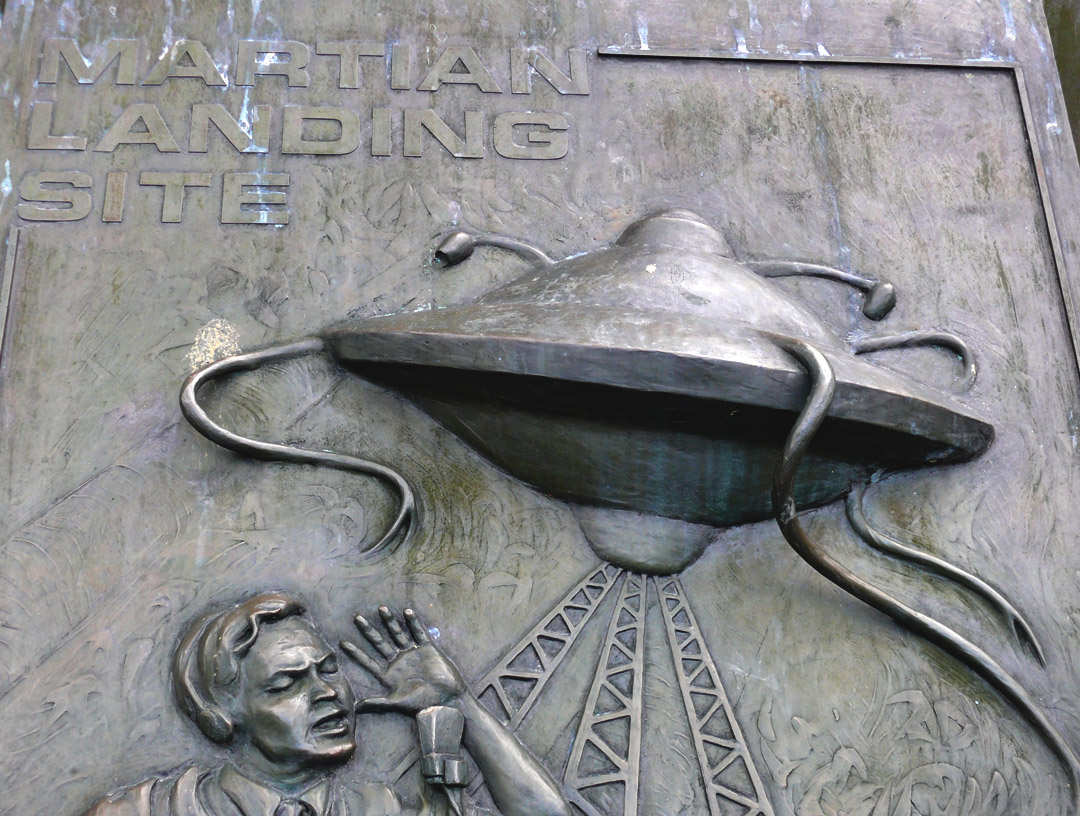
We’re ashamed to admit that some of us have been passing Van Nest park by car for upwards of two decades without realizing its significance.  It was a vindication of sorts, therefore, to make a pointed pilgrimage to see the War of the Worlds monument (designed by NJ resident Thomas Jay Warren), which the township erected in 1988 as an homage to the public safety debacle. Situated about 20 steps past the kiddie playground and picnic tables, the bronze memorial immortalizes the event, depicting in sculpted relief Welles at the microphone, an average American family listening to the broadcast and most importantly, a tentacled, careening space ship dispensing death rays from overhead.  In a word:  cool!

Martian tentacles

Millions fell for the hoax

Ben after full rotation

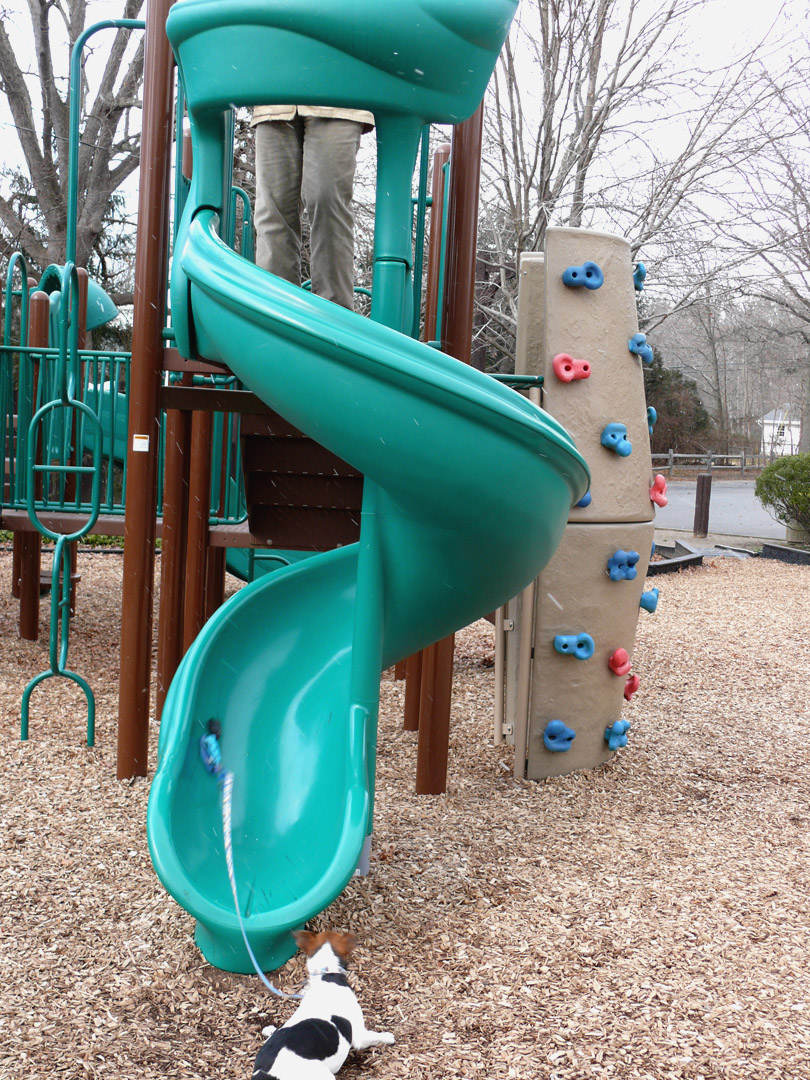
Aside from a cute little waterfront and some barbecue pits there is not much else to see or do at Van Nest Park, but as New Jersey’s Roswell, it is a must to visit.  For our part, for some added entertainment before leaving, we put Ben on the playground’s spiral slide—he descended quickly down, inverted on his back with paws flailing in the air, and ker-thumped on the ground in shock a second later, unhurt but anxious to get back to his travel crate.

Sterling Hill Mining Museum

03 Saturday Mar 2012

Posted by newjerseyology in Main Event

≈ Leave a comment

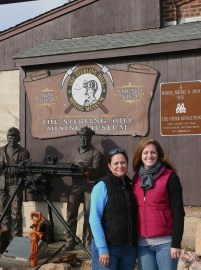
Outside the mine offices

Despite a late start we made perfect time to the Sterling Hill Mining Museum in Ogdensburg, located about midway between Route 80 and the New York State border.

A little background:  This zinc mine was operational from 1913 until 1986, when low zinc prices at market combined with a township back-taxes dispute forced The New Jersey Zinc Company to forfeit the property back to the Borough of Ogdensburg. In 1989 it the site was purchased at public auction by brothers Robert and Richard Hauck, who opened the site as a museum in 1990 despite it still containing 10 years worth of zinc ore; it is now run by a dedicated group of employees and volunteers.

It’s a bit of a rag-tag entrance, with what look like giant carriage wheels painted different colors, a seemingly incongruous astronomical observatory, and random piles of rubble greeting your arrival.  The drive leads you past the main mine shaft and underneath the ore conveyor to an unassuming group of buildings, mine entrances, heavy equipment, mining statues and fenced areas for fossil digging.

We pulled into the little parking lot and like all good tourists immediately made a bee-line for the restrooms and snack bar, which charmingly offered a “traditional miner’s lunch” of Cornish meat pies and multi-hued rock candy in addition to a variety of chips, candy and incredibly tiny, limp, pizzas. (In fairness, the Sterling Hill website itself readily admits that the snack bar is for “the hungry and desperate.”) We opted for the safety of bagged trail mix, candy and mini versions of the Linden’s chocolate chip cookies we’d grown up on in elementary school…mmm…and noted that the bare-bones facility was humming with activity.

A crooked donkey toiling in the mines

Next we perused the gift shop, which was nicely stocked with all sorts of ore samples, rock-based statuettes, books, mineral collecting supplies, high-quality black lights and the curious piece of decor pictured left. We purchased only tickets—$10 a pop—and headed outside.
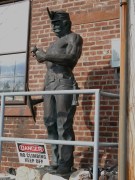
Nature’s steroids

Next to a pile of good-sized rocks with beautiful striations and crystal formations ($4 a pound, tempting for the garden, but we resisted) we met this eye-popping miner statue.

Honestly, who needed steroids when you worked 10 hour days, 6 days a week smashing through Earth’s crust?  Oh and hey, real men are kind to canaries too!

Our guide (for the moment) then directed all 58 or so of us past random two-legged horse statues into the Zobel Exhibit Hall, where we got an introduction to the mine’s history and some background on zinc and the other minerals found onsite.  It was very interesting despite the several young children on the tour complaining of being cold and making general annoyances of themselves.
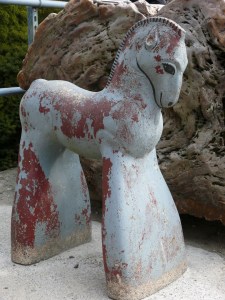
Two legged horse

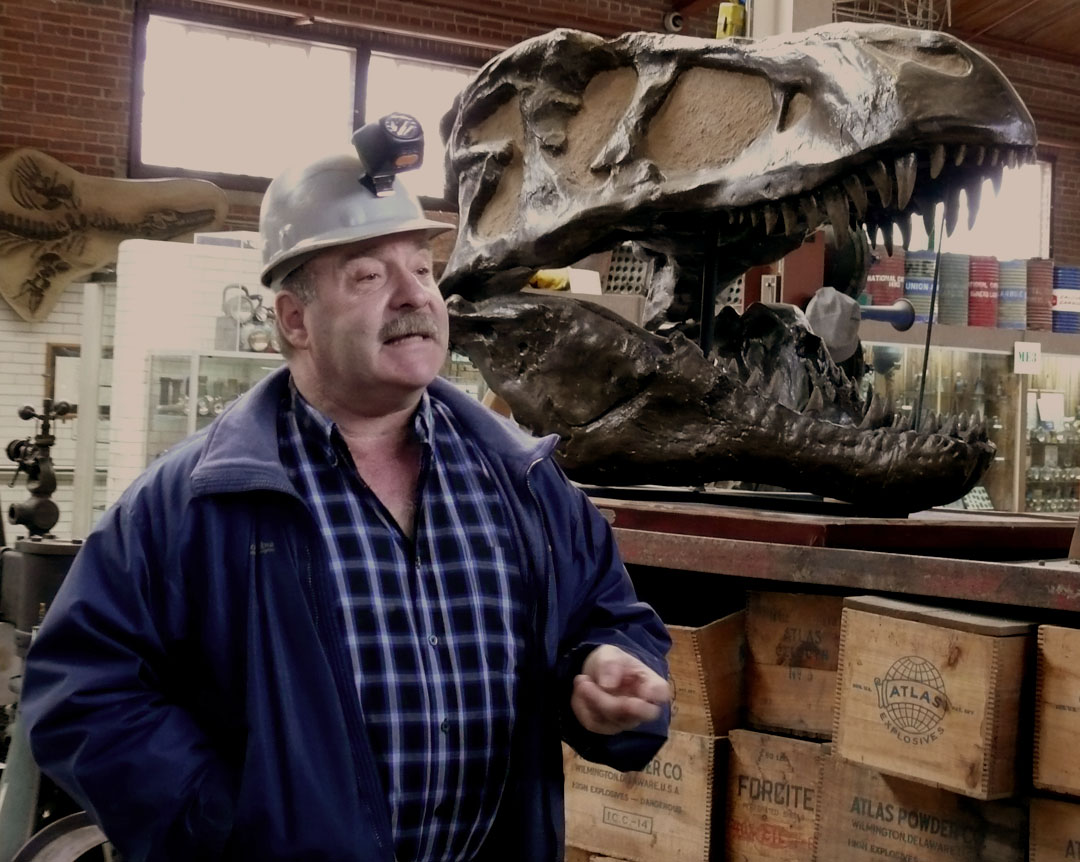
Our first guide, with dino-pal

Kaboom!

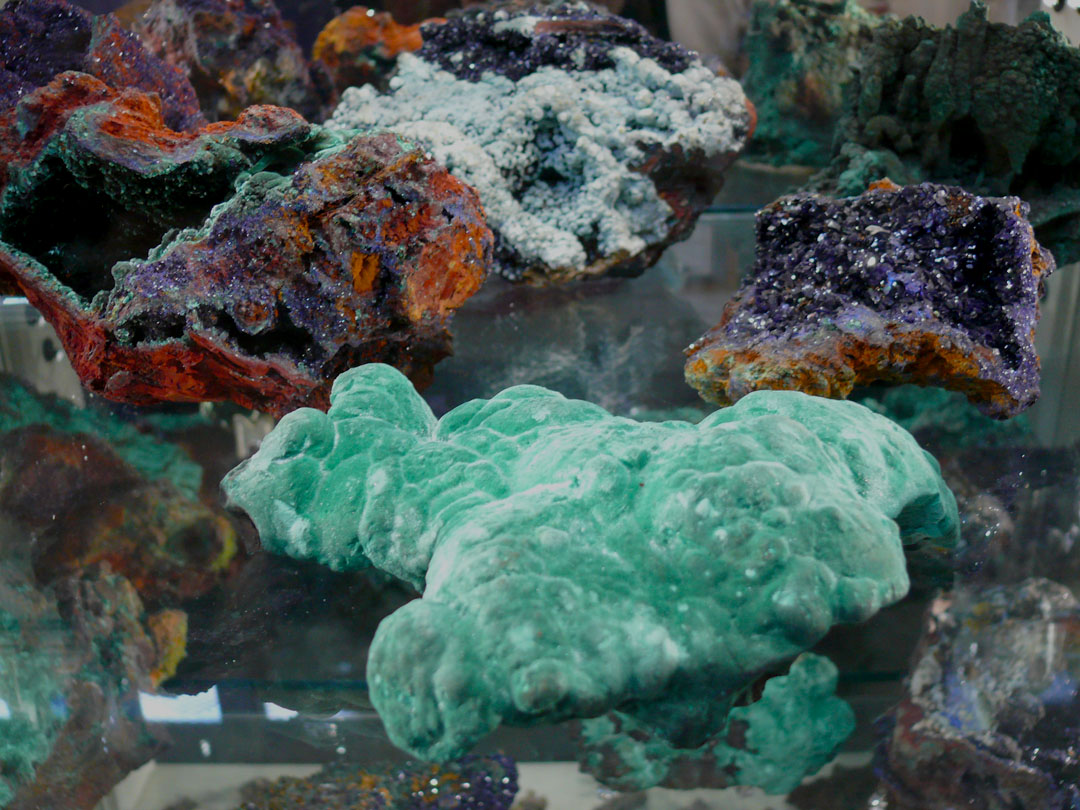
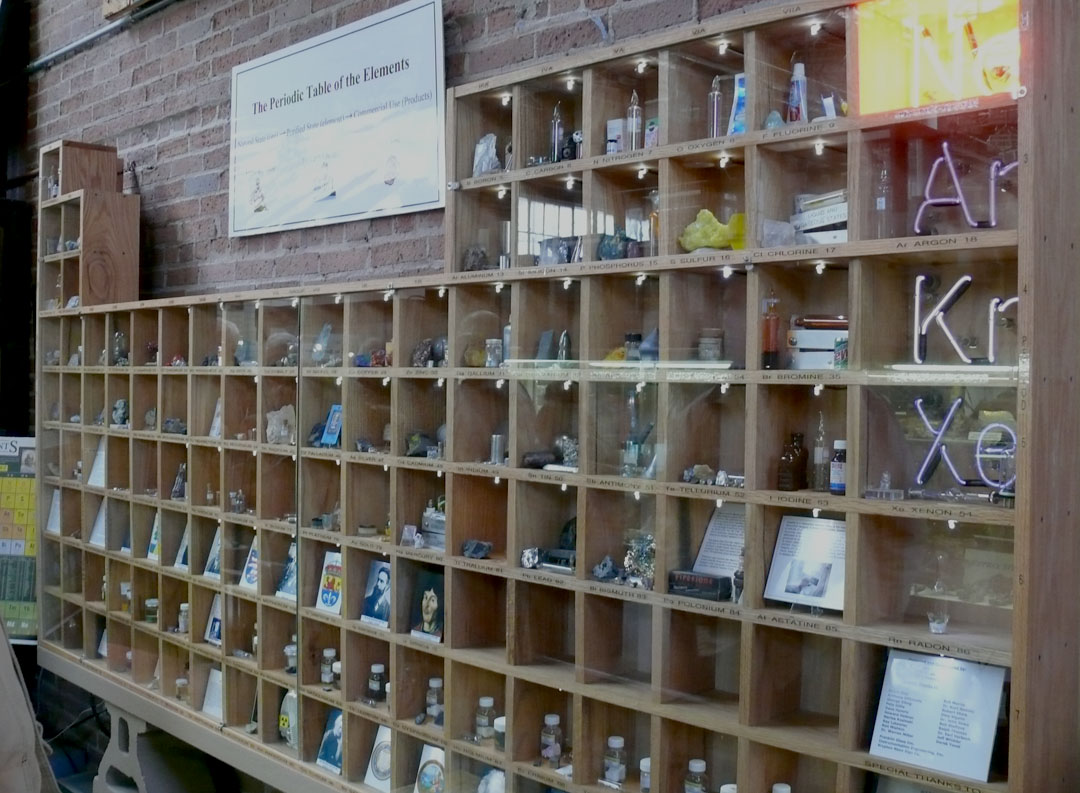
Apparently, the many boxes of now-empty blasting explosives were not enough to stop the Exhibit Hall from being robbed of a significant purse of gold a few years back.  It nonetheless remains packed with riches, including an exotic collection of mineral specimens donated by guy who owns the Oreck vacuum cleaner company (of all people), and one of the world’s most impressive Periodic Table of Elements.  Thankfully, no reports so far of thieves targeting the Table’s samples of Uranium and Plutonium.
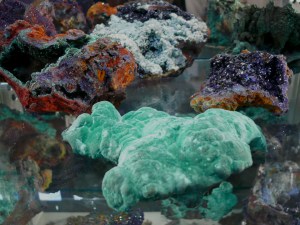
Sampling of Oreck’s minerals

Periodic table of elements

Oopsie!
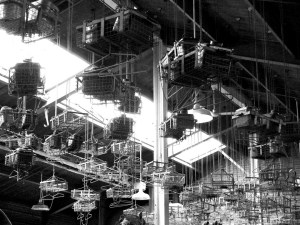
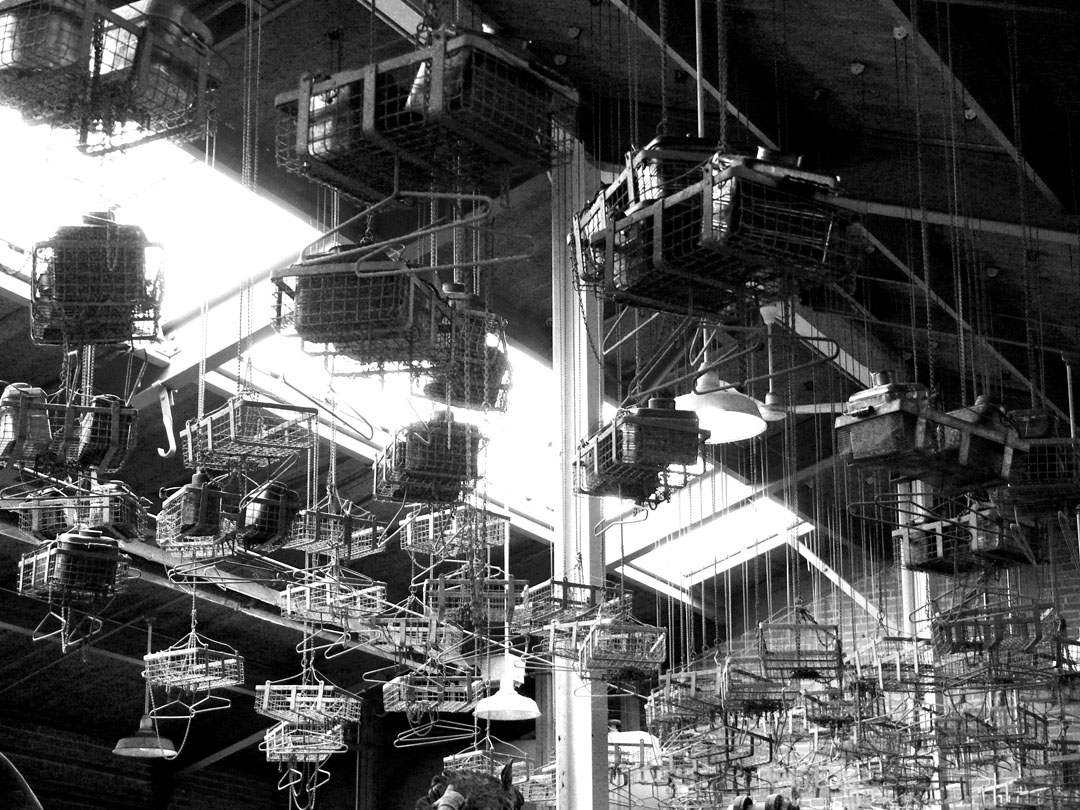
Laundry baskets

The Exhibit Hall is festooned with innumerable cage-like contraptions hanging on chains from the ceiling—not traps for underground blue claw crab-dwellers, as would be a natural supposition by any SyFy watcher worth their salt—but rather a way for miners to send their clothing to the surface for laundering by other people. Every teenager’s (ok, and adult’s) dream!

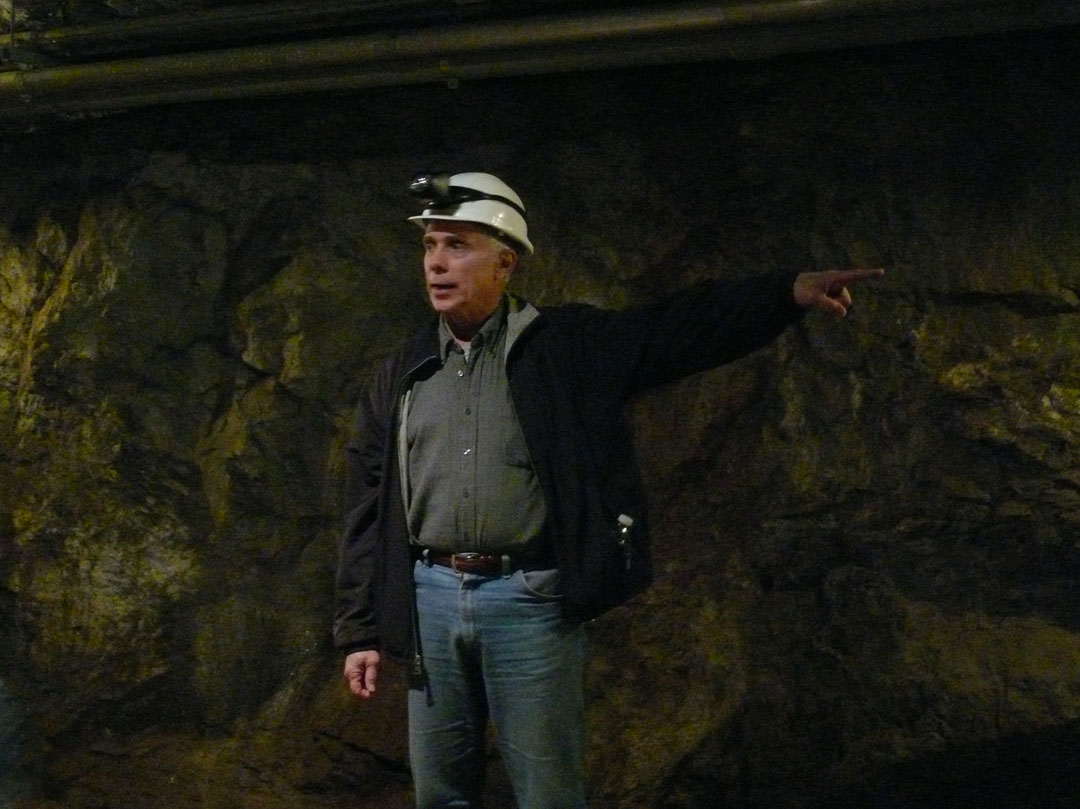
We broke into two groups and headed for the mine proper with our new and sassy guide, Gordon, a consultant engineer at the nearby Picatinny Arsenal, a military research and manufacturing facility specializing in small arms cartridge ammunition and home of the US Army’s Explosive Ordnance Disposal Technology Directorate. Mines, arsenals, buff statues…surely Sylvester Stallone has filmed a movie here?  According to Gordon, no, only Ben Stiller, who set a scene in one of the mine’s rooms for Zoolander…

Gordon, our trusty guide

As soon as the steel door clanged shut, we couldn’t help but feel a tiny urge to…claw our hands raw, Edgar Allan Poe-style, digging back out into the fresh air and sunlight. But the pang quickly passed and we moved onward, into the 1300 feet of dank, dripping tunnels.  We passed a lot of things that we can’t remember the names of now…but all decidedly fascinating:  Stalactites that look eerily like teeth, water-filled shafts, mineral drips on the walls, bucket-of-lime toilets, arm-shearing transport systems, and a “mock” detonation demonstration of precisely 9 explosions performed in the nerve-wracking dark (Gordon has a sick sense of humor).  And we learned:  about light-up hats from candles to LED, the infamous tag system for monitoring staff whereabouts, gas leaks and black lung and respirators, technological advances in drill bits, mine flooding and much more.  (Well, we did stump Gordon with one question about harvesting core samples…but we shall overlook it in deference to his charm.)

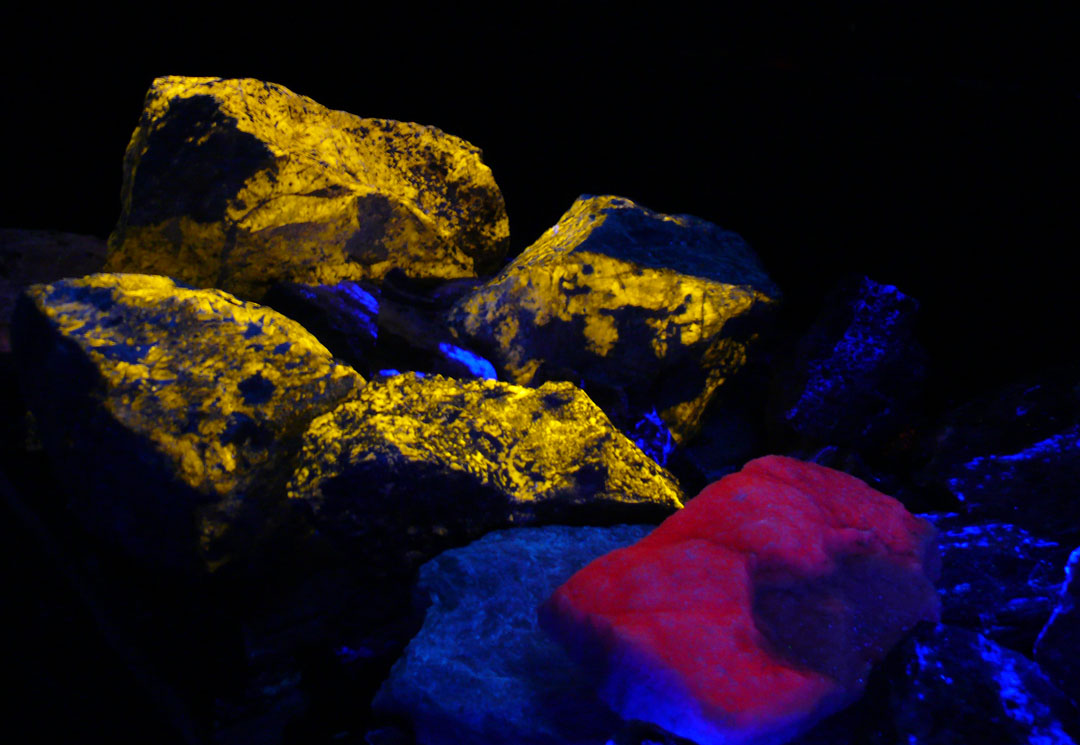
The mine’s Rainbow Room is a far cry from, and frankly an improvement over, New York’s now-defunct opulent restaurant-lounge (okay, it is now called Top of the Rock and still has fairly cool views too…).  Its carved-out walls are inlaid with veins of fluorescent red and green zinc and willemite, which flared into spectacular view at the switch of the black light. To boot, everyone got their own little glowing chunk to take home, which made us all feel like happy schoolchildren despite some of us having graduated <unintelligible> years ago.

Fluorescence!

The Rainbow Room is just a precursor to the highlight around the dank, dripping corner:  The Thomas S. Warren Museum of Fluorescence.  Few things are as cool as this grouping of four rooms.  The seemingly unremarkable collection turns into a prehistoric rave of phosphorescent color, shape and texture under black light. In addition to the minerals, there are a bunch of fluorescent household items (think wine glasses and cookie tins) on display, and also a black-lit mirror that horrifyingly revealed our mottled purple skin, straw-like hair, ping-pong ball eyes, lime green teeth and lint-covered hoodies.  Fluorescent Funhouse, anyone?

Load of fuzzy cuteness!

A short jog through the Geotechnology Center, where we correctly identified a meteor and Earth-based rock to Gordon’s glee, and the tour was over.  We took a moment to force Ben into one of the old mine cars outside of Edison’s Tunnel (named so for Thomas Alva, who seemingly has had a hand in all things in New Jersey, including this mine) for a photo opp and headed off for an early dinner.

Synopsis:  The Sterling Hill Mining Museum was a NJ venue well worth the trip and price of admission.  We got our money’s worth, with a really unique 2+ hour tour (flat walking surface a plus for those with old broken ankle injuries), take-home rock sample and ample entertainment from feisty guides.
Newer posts →

Recent Posts

  • Artsy Photo–Dinersaur
  • Culinary Sidebar–Pete & Elda’s
  • Culinary Sidebar–Kaya’s Kitchen
  • Artsy Photo–New Jersey Sugar Cookie
  • Windy Farm Alpacas, Chesterfield

Archives

  • March 2013
  • December 2012
  • November 2012
  • October 2012
  • September 2012
  • August 2012
  • April 2012
  • March 2012

Categories

  • Artsy Photo
  • Culinary Sidebar
  • Main Event
  • Uncategorized

Meta

  • Create account
  • Log in
  • Entries feed
  • Comments feed
  • WordPress.com

Create a free website or blog at WordPress.com.

Privacy & Cookies: This site uses cookies. By continuing to use this website, you agree to their use.
To find out more, including how to control cookies, see here: Cookie Policy
  • Subscribe Subscribed
    • NewJerseyology
    • Already have a WordPress.com account? Log in now.
    • NewJerseyology
    • Subscribe Subscribed
    • Sign up
    • Log in
    • Report this content
    • View site in Reader
    • Manage subscriptions
    • Collapse this bar
 

Loading Comments...